


 Visualizar na parede
 Compartilhar
 Compartilhar
 Detalhes
 Guia
Guia

 Baixar imagem
 Semelhantes
 Raio X
 Ver diaporama
 Q&A
Q&A Estatísticas
Profane Love (Vanity)


 Ler mais
Giclée / Impressão de Arte
Impressão giclée ou em tela de qualidade de museu, com produção rápida e opções flexíveis de acabamento. ( Comprar pintura feita à mão Alternar para Imagem Digital)




P118B €10

P118H €10

P118W €10

P438Z €10

P508JH €12

P508YH €12

P805H €10

P805Z €10

P919BZ €10

P919G €10

P919XJ €10

P959ZH €10

P968JZ €12

W106C €8

W218G €10

W218JH €8

W218Y €10

W307PJ €10

W316G €10

W316PJ €8

W316Y €10

W398PJ €8

W4111J €10

W500HY €15

W500JH €15

W692G €12

W849H €8

W940BG €15

W953PJ €8




Escolha entre os nossos tamanhos pré-definidos que respeitam as proporções originais da obra de arte.

Insira a largura e a altura desejadas para se ajustarem à sua moldura ou parede. Uma impressão pode ser apenas cortada, nunca ampliada além da imagem original; portanto, um tamanho com proporções diferentes resultará na perda de parte da imagem. Enviamos uma maquete digital para sua aprovação antes de realizarmos a impressão. A imagem exibida nesta página não mostra o corte real — apenas a maquete o faz.
Entrega mundial () em 2 semanas, em vez das 4/5 semanas padrão. (31 Outubro)

Envio expresso gratuito para todo o mundo

Tela de Linho de Alta Qualidade

Seguro de transporte completo

Garantia de Reembolso de Impostos Alfandegários

Garantia de Fidelidade Cromática

Política de Devolução em 100 Dias (Apenas para Defeitos)

Garantia de reembolso de 100%

Oferta de desconto por quantidade
 A opção de vidro está disponível apenas para tamanhos inferiores a 110 cm

Profane Love (Vanity)
Giclée / Impressão de Arte
Tamanho da Reprodução
-


Preço Total
€ 57
The Allure of the Unresolved: Titian's Masterpiece
Titian’s Sacred and Profane Love, painted in 1514 during the artist’s formative years, isn’t merely a portrait; it’s an invitation to a profound meditation on desire, mortality, and the very nature of love itself. Commissioned for the wedding celebration of Niccolò Aurelio, a secretary within Venice's powerful Council of Ten, the painting immediately captivated viewers with its arresting composition and enigmatic figures. Yet, beyond the initial visual impact lies a complex web of symbolism that has fueled centuries of debate among art historians – a testament to Titian’s genius and his willingness to challenge conventional representations.
The scene unfolds within a meticulously rendered Roman sarcophagus, transformed into an unexpected water trough. Two women, their identities deliberately obscured, occupy this liminal space, seemingly adrift between the earthly and the divine. One, draped in luxurious fabrics and adorned with jewels, embodies the sensual pleasures of worldly love – a vibrant celebration of beauty and indulgence. Her pose is relaxed, almost languid, suggesting an enjoyment of the present moment. The other woman, starkly nude and holding a torch, represents a more austere form of devotion, perhaps hinting at spiritual purity or even mourning. The contrast between these two figures immediately establishes a tension—a dialogue between earthly desires and higher aspirations.
A Symphony of Color and Technique
Titian’s mastery of color is instantly apparent in Sacred and Profane Love. He employs a rich, velvety palette – deep reds, blues, and greens – that imbues the scene with an almost palpable sense of warmth and luxury. His brushwork is loose and expressive, characteristic of his mature style, yet remarkably controlled, particularly in the rendering of the fabrics and the subtle gradations of light and shadow. The use of *sfumato*, a technique perfected by Titian himself, creates a hazy, atmospheric effect that softens the edges of the figures and blurs the boundaries between reality and illusion.
Technically, the painting demonstrates a shift in Titian’s approach. While earlier works showcased his meticulous detail and precise rendering, here we see a move towards greater spontaneity and emotional intensity. The background landscape—a dramatic vista of mountains, shepherds, and a distant church—is painted with broad, confident strokes, creating a sense of depth and perspective that anchors the figures within their environment. The inclusion of classical motifs – the sarcophagus, the Roman ruins – further reinforces the painting’s connection to Renaissance ideals of beauty, harmony, and intellectual inquiry.
Decoding the Symbols: A Layered Narrative
The symbolism embedded within Sacred and Profane Love is notoriously complex and open to interpretation. The sarcophagus itself—a symbol of death and transition—suggests a contemplation of mortality and the fleeting nature of earthly pleasures. The water flowing from the spout, nourishing a plant, could represent fertility, renewal, or even the cyclical nature of life and death. The cherubic figure swirling the water adds to this sense of mystery, hinting at divine intervention or perhaps simply the playful spirit of youth.
- The Women: Often interpreted as representing different aspects of love – earthly passion versus spiritual devotion.
- The Torch: Symbolizes enlightenment, guidance, and potentially a warning against worldly temptations.
- The Sarcophagus: Represents the passage from life to death, prompting reflection on mortality and legacy.
- The Landscape: A complex tapestry of classical and biblical imagery, suggesting themes of virtue, sin, and redemption.
Interestingly, the painting’s title itself—*Sacred and Profane Love*—is debated. Some scholars believe it reflects the dual nature of love as both a divine gift and a source of earthly desire. Others argue that it simply represents two different types of love – one based on physical attraction and the other on spiritual connection. The painting’s enduring appeal lies in its refusal to offer easy answers, inviting viewers to engage in their own interpretations.
A Timeless Reflection on Human Experience
Sacred and Profane Love remains a profoundly moving work of art, captivating audiences with its beauty, mystery, and emotional depth. It’s more than just a portrait; it's a meditation on the complexities of human experience—a reminder that love takes many forms and that even in moments of pleasure, we are inevitably confronted with the shadow of mortality. Its enduring power lies not only in Titian’s technical brilliance but also in his ability to capture the essence of our deepest desires and anxieties.
Perguntas e Respostas
Por quais outros nomes Tiziano Vecellio é conhecido(a)?
Outros nomes registrados para Tiziano Vecellio, criador de "Profane Love (Vanity)", incluem Titian.
"Profane Love (Vanity)" encontra-se no país de seu criador?
Não – a obra de arte encontra-se no exterior. Tiziano Vecellio nasceu em Itália, e o original de "Profane Love (Vanity)" encontra-se num museu em Alemanha.
Que sensação "Profane Love (Vanity)" transmite ao ser oferecida como presente?
O tom Mysterious de "Profane Love (Vanity)", de Tiziano Vecellio combina com a ocasião de presente recomendada: Wedding.
Obras Relacionadas


Biografia do Artista
The Venetian Titan: A Life in Color and Canvas
Tiziano Vecellio, mundialmente conhecido como Titian, emerge como uma figura monumental do Renascimento italiano – talvez sua mais celebrada colorista e um mestre que redefiniu as possibilidades da pintura a óleo. Nascido por volta de 1490 em Pieve di Cadore, aninhado entre os dramáticos cenários das montanhas Dolomitas venezianas, sua jornada de origens humildes ao reconhecimento internacional é um testemunho do talento prodigioso e de uma dedicação inabalável à inovação artística. Os detalhes sobre a vida inicial de Titian permanecem em certa medida envoltos em mistério, mas sabemos que ele era um dos filhos de Gregorio Vecellio, um militar, e Lucia. Reconhecendo o potencial de seus filhos, a família organizou para que jovens Tiziano e seu irmão Francesco aprendessem com um artista em Veneza – uma decisão que alteraria irrevogavelmente o curso da história da arte. Veneza, no início do século XVI, era um centro vibrante de comércio, cultura e fermento artístico. O treinamento inicial de Titian ocorreu dentro do ateliê de Sebastiano Zuccato, um mosaicista, seguido por breves períodos sob a tutela de Gentile Bellini e, crucialmente, seu irmão Giovanni. No entanto, sua associação com Giorgione – um pintor veneziano cuja obra possuía uma qualidade poética etérea – provou ser a mais formativa. Os dois artistas colaboraram em vários projetos, incluindo os afrescos externos para o Fondaco dei Tedeschi, um movimentado centro comercial para comerciantes alemães. Mesmo nessas obras iniciais, a excepcional habilidade de Titian se tornou evidente, ganhando-lhe reconhecimento entre seus contemporâneos e prenunciando o brilho que logo floresceria.A Evolução do Estilo de um Mestre
O desenvolvimento artístico de Titian pode ser caracterizado por uma versatilidade notável e uma exploração contínua das técnicas pictóricas. Suas obras iniciais, fortemente influenciadas por Giorgione, exibem lirismo delicado e um uso magistral da cor para criar efeitos atmosféricos. Pinturas como *A Man with a Quilted Sleeve* (cerca de 1509) demonstram seu talento emergente para o retrato, capturando não apenas a semelhança física de seus assuntos, mas também sua essência interior. À medida que amadurecia, Titian começou a se afastar das tonalidades sutis de Giorgione e a abraçar uma abordagem mais ousada e dramática à cor. *The Visitation of Mary and Elizabeth* (agora na Galleria Accademia, Veneza) exemplifica essa mudança, mostrando sua crescente confiança no manejo de composições complexas e cores vibrantes. Ao longo de sua longa carreira, Titian consistentemente desafiou os limites da expressão artística. Ele experimentou com diferentes pinceladas – desde superfícies suaves e fundidas até marcas soltas e expressivas – e desenvolveu uma técnica única para sobrepor cores para criar efeitos luminosos. Seus retratos tornaram-se renomados por sua profundidade psicológica e representação realista de texturas e tecidos. Simultaneamente, ele se destacou em temas mitológicos e religiosos, imbuindo-os com uma sensualidade e intensidade dramática que cativavam o público. *Venus of Urbino* é um exemplo primário dessa maestria, uma obra-prima que redefiniu a representação do corpo feminino nu e estabeleceu Titian como uma figura de destaque na pintura veneziana.Patrocínio, Prestígio e Influência Duradoura
O talento de Titian atraiu a atenção de poderosos mecenas em toda a Europa. Ele serviu como pintor de corte para o Imperador Carlos V, o Rei Filipe II da Espanha e o Papa Paulo III, entre outros. Esse patrocínio não apenas lhe proporcionou segurança financeira, mas também permitiu que ele criasse obras monumentais que exibissem sua habilidade artística em grande escala. Sua capacidade de adaptar seu estilo aos gostos de diferentes cortes, ao mesmo tempo em que mantinha sua própria voz distinta, é um testemunho de sua excepcional habilidade e diplomacia. Titian faleceu em Veneza em 1576, deixando para trás um extraordinário corpo de trabalho que continua a inspirar admiração e apreço. Suas pinturas podem ser encontradas em museus ao redor do mundo, incluindo a Galleria Palatina em Florença, o Prado Museum em Madri e a National Gallery em Londres. Para experimentar uma obra de Titian é encontrar um mestre artesão no auge de seus poderes – um pintor que possuía uma habilidade incomparável para capturar a beleza, o drama e a complexidade da condição humana.Explorando Mais
- Museus & Coleções: Descubra as obras de Titian na Scuola del Santo em Pádua e San Salvador em Veneza, ambas exibindo seus deslumbrantes afrescos.
- Artistas Relacionados: Explore a influência de Giorgione no estilo inicial de Titian e o impacto posterior de Titian em artistas como Rubens e Delacroix.
- Contexto Histórico: Mergulhe no mundo da Renascença Italiana e da pintura veneziana para apreciar plenamente as conquistas artísticas de Titian.
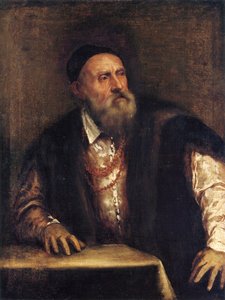
Tiziano Vecellio
1490 - 1576 , Itália
Dados Rápidos
- Artistic Movement Or Style: Renascimento, Pintura Veneziana
- Artists Or Movements Influenced By This Artist:
- Pintores Ocidentais
- Renascimento Tardio
- Artists Who Influenced This Artist:
- Giovanni Bellini
- Giorgione
- Date Of Birth: c. 1490
- Date Of Death: 1576
- Full Name: Tiziano Vecellio
- Nationality: Italiano
- Notable Artworks:
- A Man com Mangas Quilted
- Assunção da Virgem
- Place Of Birth: Pieve di Cadore, Itália
Artigos Relacionados

Titian: Innovation, Technique & the Venetian Renaissance Portrait Tradition
Explore the revolutionary techniques & enduring legacy of Titian, the master of Venetian Renaissance portraiture. Discover insights for collectors & appreciate his impact on art history.

The Enduring Motif of Love in Art History: A Cross-Cultural Exploration of Representation and Emotion
Explore the rich history of love in art! Discover iconic masterpieces, artistic techniques & cultural symbolism from antiquity to modern times. Expert analysis for collectors.

As 10 Obras de Arte Mais Românticas para Inspirar sua Decoração
Descubra as 10 obras de arte mais românticas da história, de Monet a Klimt! Explore o amor, a paixão e a beleza em pinturas icônicas. Encontre reproduções de alta qualidade para inspirar sua decoração em AllPaintingsStore.com.

25 Obras-Primas da National Gallery: Arte, História e Decoração Exclusiva
Descubra as 25 obras primas da National Gallery, Londres! Explore a história de Van Gogh, Monet, Rembrandt e outros mestres. Encontre reproduções de arte exclusivas para decorar sua casa com elegância. Inspire-se e explore a coleção completa em AllPaintingsStore.com.

Os 25 Tesouros da National Gallery of Art: Arte, História e Decoração Exclusiva
Descubra os 25 tesouros da National Gallery of Art, Washington! Explore a história de Cézanne, Matisse, Picasso e outros mestres. Encontre reproduções de arte exclusivas para decorar sua casa com elegância. Inspire-se e explore a coleção completa em AllPaintingsStore.com.


