


 Visualizar em escala
 Enviar
 Compartilhar
 Ver detalhes
 Guia de Obras do Aluno

 Baixar imagem
 Semelhantes
 Raio X
 Apresentação de slides
 Estatísticas
St Jerome
 Oil On Canvas
- WallArt
- Late Renaissance
 1575
1575 184.0 x 177.0 cm
 Monastério de São Lourenço
 Ver mais
Reprodução em Óleo Feita à Mão
Óleo sobre tela pintado à mão no tamanho e moldura de sua escolha, feito sob encomenda pelos nossos artistas. ( Alternar para Impressão Ver Imagem Digital)




P118B €10

P118H €10

P118W €10

P438Z €10

P508JH €12

P508YH €12

P805H €10

P805Z €10

P919BZ €10

P919G €10

P919XJ €10

P959ZH €10

P968JZ €12

W106C €8

W218G €10

W218JH €8

W218Y €10

W307PJ €10

W316G €10

W316PJ €8

W316Y €10

W398PJ €8

W4111J €10

W500HY €15

W500JH €15

W692G €12

W849H €8

W940BG €15

W953PJ €8




Escolha entre os nossos tamanhos pré-definidos que respeitam as proporções originais da obra de arte.

Digite a largura e a altura de que necessita, para se ajustar à sua moldura ou à sua parede. Esta obra é pintada à mão, por isso, para um tamanho com uma proporção diferente, o artista pode pintar um pouco mais ao redor da imagem ou cortar um pouco — você escolhe. Enviamos-lhe uma maquete digital para aprovação antes de a pintura começar. A imagem exibida nesta página não mostra o resultado real — apenas a maquete mostra.
Após o pedido, a equipa AllPaintingsStore.com enviará um e-mail ao cliente para solicitar instruções e fornecer uma prévia do esboço.
Entrega mundial () em 3 a 4 semanas, em vez das 5 semanas padrão. (24 Outubro). Sem comprometer a qualidade.

Envio expresso gratuito para todo o mundo

Tela de Linho Premium

Seguro de transporte total

Garantia de Reembolso de Impostos Alfandegários

Garantia de Fidelidade de Cor

Política de Devolução em 100 Dias (Apenas para Defeitos)

Garantia de reembolso de 100%

Desconto para múltiplas unidades
 A opção de vidro está disponível apenas para tamanhos inferiores a 110 cm

St Jerome
Técnica de Reprodução
Dimensões da Reprodução
-


Preço Total
€ 226
The Weight of Silence: Titian’s St. Jerome
Titian's “St. Jerome,” painted circa 1575, isn’t merely a portrait; it’s an immersion into the profound solitude and spiritual struggle at the heart of one of Christianity’s most revered figures. This oil on canvas, now residing in the Museo Thyssen-Bornemisza in Madrid, transcends simple representation to become a deeply resonant meditation on time, mortality, and the relentless pursuit of divine grace. The painting immediately commands attention with its masterful use of light and shadow – a technique characteristic of Titian’s mature style, where color takes precedence over sharp detail, creating an atmosphere both somber and intensely luminous.
The scene depicts St. Jerome in his iconic study, a rugged cave overlooking a vast, desolate landscape. He is not presented as a triumphant saint, but rather as a man weathered by age and burdened by the weight of his earthly labors – translating the Bible into Latin, a task that consumed decades of his life. His posture is one of quiet contemplation; he’s hunched over a book, a quill resting on a simple wooden desk, yet his gaze is directed upwards, lost in prayer or perhaps wrestling with the immense responsibility of his vocation. The stark contrast between the darkness enveloping him and the faint, ethereal light filtering through the cave entrance speaks volumes about the internal battle he faces – a struggle between earthly desires and the promise of eternal salvation.
A Symphony of Earth Tones
Titian’s masterful manipulation of color is central to the painting's power. He eschews vibrant hues, opting instead for a carefully orchestrated palette dominated by muted browns, ochres, and greys – colors that evoke the textures of stone, wood, and worn leather. This monochromatic approach isn’t limiting; rather, it creates an astonishing depth and richness, drawing the viewer into the scene with subtle gradations of tone. Notice how he uses a delicate ash color to define the skull resting on the desk, its starkness amplified by the surrounding earth tones. The red of Jerome's tunic is not flamboyant but deeply saturated, acting as a focal point that anchors the composition and symbolizes his sacrifice and devotion.
The brushwork itself is remarkably loose and expressive, a hallmark of Titian’s later style. He employs rapid, gestural strokes to capture the textures of the landscape – the rough-hewn rock, the tangled branches of the trees, the folds of Jerome's cloak. This technique lends the painting a sense of immediacy and vitality, as if we are witnessing a moment frozen in time. The layering of paint is also evident, creating a tactile quality that invites close inspection.
Symbolism Woven into the Landscape
Beyond the central figure, “St. Jerome” is rich with symbolic elements, each contributing to the painting’s layered meaning. The lion at Jerome's feet – a traditional emblem of St. Jerome – represents strength and vigilance, reminding us of his role as a protector of the scriptures. The hourglass signifies the fleeting nature of time and the urgency of spiritual preparation for death. The two skulls are potent reminders of mortality, urging contemplation on the brevity of earthly life. Even the scattered bottles—a detail often overlooked—suggest the temptations that Jerome resisted during his years of asceticism.
The landscape itself is not merely a backdrop but an active participant in the scene. It’s wild and unforgiving, mirroring the arduous path of spiritual transformation. The distant horizon suggests hope and eternity, while the cave represents the solitary space where Jerome sought communion with God. It's a carefully constructed microcosm reflecting both the inner turmoil and the ultimate aspiration of the saint.
A Legacy of Reflection
“St. Jerome” is more than just a religious painting; it’s a profound exploration of human experience – the struggle between earthly desires and spiritual longing, the acceptance of mortality, and the enduring power of faith. Painted in the twilight years of Titian's career, this work embodies his mastery of color, composition, and symbolism, solidifying his place as one of history’s greatest artists. Reproductions capture only a fraction of the painting’s emotional depth and nuanced beauty, but they offer a tangible connection to this extraordinary masterpiece—a testament to the enduring power of art to illuminate the human condition.
Perguntas e Respostas
A qual estilo pertence "St Jerome"?
O movimento associado a "St Jerome" de Tiziano Vecellio é Late Renaissance. Esta classificação situa a obra entre artistas e obras de arte relacionados.
Em que ano foi criado "St Jerome"?
"St Jerome" de Tiziano Vecellio foi criado em 1575.
Qual é a proporção de "St Jerome" de Tiziano Vecellio e quais são as suas dimensões?
"St Jerome" de Tiziano Vecellio possui as proporções de uma obra em Portrait de 184 x 177 cm.
Obras Relacionadas


Biografia do Artista
The Venetian Titan: A Life in Color and Canvas
Tiziano Vecellio, mundialmente conhecido como Titian, emerge como uma figura monumental do Renascimento italiano – talvez sua mais celebrada colorista e um mestre que redefiniu as possibilidades da pintura a óleo. Nascido por volta de 1490 em Pieve di Cadore, aninhado entre os dramáticos cenários das montanhas Dolomitas venezianas, sua jornada de origens humildes ao reconhecimento internacional é um testemunho do talento prodigioso e de uma dedicação inabalável à inovação artística. Os detalhes sobre a vida inicial de Titian permanecem em certa medida envoltos em mistério, mas sabemos que ele era um dos filhos de Gregorio Vecellio, um militar, e Lucia. Reconhecendo o potencial de seus filhos, a família organizou para que jovens Tiziano e seu irmão Francesco aprendessem com um artista em Veneza – uma decisão que alteraria irrevogavelmente o curso da história da arte. Veneza, no início do século XVI, era um centro vibrante de comércio, cultura e fermento artístico. O treinamento inicial de Titian ocorreu dentro do ateliê de Sebastiano Zuccato, um mosaicista, seguido por breves períodos sob a tutela de Gentile Bellini e, crucialmente, seu irmão Giovanni. No entanto, sua associação com Giorgione – um pintor veneziano cuja obra possuía uma qualidade poética etérea – provou ser a mais formativa. Os dois artistas colaboraram em vários projetos, incluindo os afrescos externos para o Fondaco dei Tedeschi, um movimentado centro comercial para comerciantes alemães. Mesmo nessas obras iniciais, a excepcional habilidade de Titian se tornou evidente, ganhando-lhe reconhecimento entre seus contemporâneos e prenunciando o brilho que logo floresceria.A Evolução do Estilo de um Mestre
O desenvolvimento artístico de Titian pode ser caracterizado por uma versatilidade notável e uma exploração contínua das técnicas pictóricas. Suas obras iniciais, fortemente influenciadas por Giorgione, exibem lirismo delicado e um uso magistral da cor para criar efeitos atmosféricos. Pinturas como *A Man with a Quilted Sleeve* (cerca de 1509) demonstram seu talento emergente para o retrato, capturando não apenas a semelhança física de seus assuntos, mas também sua essência interior. À medida que amadurecia, Titian começou a se afastar das tonalidades sutis de Giorgione e a abraçar uma abordagem mais ousada e dramática à cor. *The Visitation of Mary and Elizabeth* (agora na Galleria Accademia, Veneza) exemplifica essa mudança, mostrando sua crescente confiança no manejo de composições complexas e cores vibrantes. Ao longo de sua longa carreira, Titian consistentemente desafiou os limites da expressão artística. Ele experimentou com diferentes pinceladas – desde superfícies suaves e fundidas até marcas soltas e expressivas – e desenvolveu uma técnica única para sobrepor cores para criar efeitos luminosos. Seus retratos tornaram-se renomados por sua profundidade psicológica e representação realista de texturas e tecidos. Simultaneamente, ele se destacou em temas mitológicos e religiosos, imbuindo-os com uma sensualidade e intensidade dramática que cativavam o público. *Venus of Urbino* é um exemplo primário dessa maestria, uma obra-prima que redefiniu a representação do corpo feminino nu e estabeleceu Titian como uma figura de destaque na pintura veneziana.Patrocínio, Prestígio e Influência Duradoura
O talento de Titian atraiu a atenção de poderosos mecenas em toda a Europa. Ele serviu como pintor de corte para o Imperador Carlos V, o Rei Filipe II da Espanha e o Papa Paulo III, entre outros. Esse patrocínio não apenas lhe proporcionou segurança financeira, mas também permitiu que ele criasse obras monumentais que exibissem sua habilidade artística em grande escala. Sua capacidade de adaptar seu estilo aos gostos de diferentes cortes, ao mesmo tempo em que mantinha sua própria voz distinta, é um testemunho de sua excepcional habilidade e diplomacia. Titian faleceu em Veneza em 1576, deixando para trás um extraordinário corpo de trabalho que continua a inspirar admiração e apreço. Suas pinturas podem ser encontradas em museus ao redor do mundo, incluindo a Galleria Palatina em Florença, o Prado Museum em Madri e a National Gallery em Londres. Para experimentar uma obra de Titian é encontrar um mestre artesão no auge de seus poderes – um pintor que possuía uma habilidade incomparável para capturar a beleza, o drama e a complexidade da condição humana.Explorando Mais
- Museus & Coleções: Descubra as obras de Titian na Scuola del Santo em Pádua e San Salvador em Veneza, ambas exibindo seus deslumbrantes afrescos.
- Artistas Relacionados: Explore a influência de Giorgione no estilo inicial de Titian e o impacto posterior de Titian em artistas como Rubens e Delacroix.
- Contexto Histórico: Mergulhe no mundo da Renascença Italiana e da pintura veneziana para apreciar plenamente as conquistas artísticas de Titian.
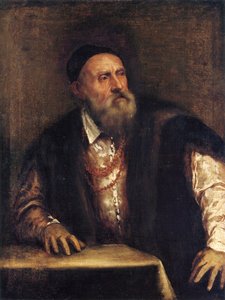
Tiziano Vecellio
1490 - 1576 , Itália
Informações Rápidas
- Artistic Movement Or Style: Renascimento, Pintura Veneziana
- Artists Or Movements Influenced By This Artist:
- Pintores Ocidentais
- Renascimento Tardio
- Artists Who Influenced This Artist:
- Giovanni Bellini
- Giorgione
- Date Of Birth: c. 1490
- Date Of Death: 1576
- Full Name: Tiziano Vecellio
- Nationality: Italiano
- Notable Artworks:
- A Man com Mangas Quilted
- Assunção da Virgem
- Place Of Birth: Pieve di Cadore, Itália
Artigos Relacionados

The Enduring Power of Painting: A Historical & Contemporary Exploration of Form and Emotion
Explore the rich history & enduring techniques of oil painting with AllPaintingsStore. Discover masterpieces, learn about art collecting, and find authentic handmade reproductions crafted by skilled artists.
Os 25 Tesouros do Hermitage: Arte Clássica para Decorar com Elegância
Descubra os 25 tesouros do Museu Hermitage em São Petersburgo! Explore a história de Rembrandt, Leonardo da Vinci e outros mestres. Encontre reproduções de arte clássica para decorar sua casa com elegância. AllPaintingsStore.com: a beleza atemporal ao seu alcance.

The Enduring Legacy of Oil on Canvas: Technique, History & Aesthetic Impact
Explore the rich history & techniques of oil painting – from Renaissance masters to Impressionism. Discover pigments, layering methods, and why this timeless medium endures. Expert insights for artists & art enthusiasts.

Oil on Canvas: A Historical & Technical Exploration of a Timeless Artistic Medium
Explore the rich history & enduring techniques of oil painting on canvas. Discover the science behind its longevity, conservation practices, and contemporary relevance. Expert insights for art enthusiasts.
El Greco: As 25 Obras-Primas que Definem um Gênio da Pintura | AllPaintingsStore
Descubra as 25 obras-primas de El Greco, o mestre renascentista espanhol! Explore a história, técnica e emoção por trás de quadros icônicos como 'O Enterro do Conde Orgaz'. Encontre reproduções de arte exclusivas e inspire sua decoração em AllPaintingsStore.com.


