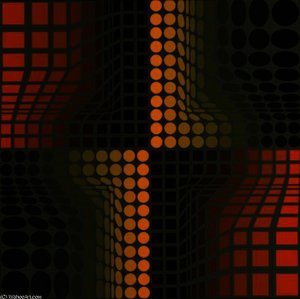
1969. Screenprint.

§ 1Dados do catálogo


Esta obra está protegida por direitos autorais
A obra de arte exibida nesta página é protegida por leis de direitos autorais, o que significa que não podemos criar ou vender legalmente uma reprodução idêntica. Esta proteção é aplicada por meio de acordos internacionais, tais como a Convenção de Berna e pelas leis nacionais, incluindo as estabelecidas por Lei de Direitos Autorais dos EUA - Título 17.
Como uma alternativa respeitosa e legal, oferecemos obras de arte personalizadas e pintadas à mão, inspiradas na obra original. Nossos artistas profissionais e experientes estudam cuidadosamente o estilo, a atmosfera e a essência artística da obra original para criar uma peça nova e única que evoque a mesma sensação — permanecendo como uma criação original por direito próprio.
Este método cumpre plenamente as regulamentações de direitos autorais, pois não envolve a cópia ou duplicação da obra protegida. Em vez disso, trata-se de uma reinterpretação criativa — uma nova pintura que é influenciada pela original, mas não idêntica a ela.
 Leia mais
§ 2Abstrato
Descrição do Item
Experience the vibrant optical illusions of Victor Vasarely's 1969 Op Art masterpiece, Torony-Nagy, featuring geometric towers that play with depth and color; discover this modern vision today.
Biografia do Artista
Explore o universo geométrico de Victor Vasarely (1906-1997), pioneiro da Op Art e da arte cinética! Descubra suas abstrações óticas, ilusões visuais e influência duradoura na arte moderna.
§ 3Comentário
The Illusion of Structure: Exploring Vasarely's Geometric Vision
To stand before Victor Vasarely’s "Torony-Nagy" is not merely to observe paint on canvas; it is to engage in a sophisticated dialogue with perception itself. This vibrant 1969 composition plunges the viewer into a world governed by pure geometry, where structure becomes both subject and illusion. The piece presents four stylized tower forms arranged in a meticulously balanced square. These are not representations of buildings as we know them, but rather abstract meditations on architectural permanence and visual dynamism. Vasarely, a master cartographer of the eye, uses color and line to construct an environment that seems simultaneously solid and utterly ephemeral.
Mastery of Op Art: Technique and Visual Vibration
The defining characteristic of "Torony-Nagy" is its unwavering commitment to Op Art. This style, which flourished in the mid-20th century, challenges the viewer's assumptions about pictorial space. Vasarely achieves this breathtaking effect through rigorous geometric construction. Notice how the grid-like patterns within each tower appear to recede into an impossible depth, despite the flatness of the surface. The artist employs a bold, contrasting palette—vivid blues against sharp greens, punctuated by warm yellows and reds—all held together by crisp white lines that define every plane. This precise application of color and line creates what art historians call optical vibration; your eye is forced to work overtime, oscillating between recognizing pattern and experiencing the dizzying sense of depth.
A Dialogue with Modernity: Symbolism and Context
Created in 1969, this work sits at a fascinating intersection of post-war modernism and burgeoning technological optimism. The towers themselves can be interpreted as allegories for the skyscraper age—symbols of human ambition, industrial scale, and the relentless march of progress. However, Vasarely resists simple narrative reading. Instead, he invites contemplation on how we perceive reality itself. Are these structures real? Do they exist in physical space or only within the mechanics of our vision? This ambiguity is the core strength of the piece; it speaks to the intellectual currents of the era—the rise of abstract thought and man's increasing reliance on constructed systems.
Bringing Geometric Brilliance Home
For collectors, interior designers, or anyone seeking a focal point imbued with intellectual energy, "Torony-Nagy" offers unparalleled visual impact. Reproducing this piece allows one to incorporate high art that is both visually arresting and conceptually rich into any space. Its bold color blocking means it anchors a room without adhering to traditional decorative motifs. It demands attention while simultaneously inviting quiet study. Owning a reproduction of this work is acquiring not just decoration, but a conversation starter—a testament to the enduring power of abstract thought rendered in breathtaking, vibrant form.
Perguntas e Respostas
De que forma o tema de "Torony-Nagy" se relaciona com os temas habituais de Victor Vasarely?
Os temas recorrentes de Victor Vasarely incluem bauhaus geometric abstraction influence, exploration of visual perception, modernist architectural representation, key op art period work; "Torony-Nagy" foca em op art, geometric, abstract, towers, pattern, illusion, modernism.
As cores de "Torony-Nagy", de Victor Vasarely são saturadas ou suaves?
"Torony-Nagy", de Victor Vasarely apresenta uma saturação de Balanced Soft.
"Torony-Nagy", de Victor Vasarely é uma composição em formato retrato, paisagem ou quadrada?
"Torony-Nagy", de Victor Vasarely possui um formato Square. O formato descreve as proporções da composição.


 Alternar para Impressão


 Para obras de arte ou reproduções com mais de 105 cm (aproximadamente 41 polegadas) em qualquer um dos lados, a moldura será enviada como um kit desmontado. Este método garante uma entrega segura e evita danos durante o transporte.