


 Visualizar em escala
 Enviar
 Compartilhar
 Ver detalhes
 Guia
Guia

 Baixar imagem
 Semelhantes
 Raio X
 Apresentação de slides
 Estatísticas
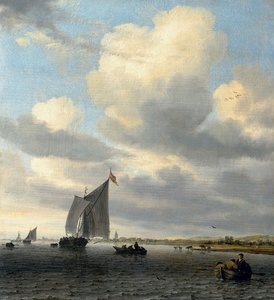
A Dutch Hoeker at Anchor near a Pier
 Acrylic On Canvas
- WallArt
- Golden Age Dutch
 1655
1655 41.0 x 55.0 cm
 English Heritage
 Ver mais
Reprodução em Óleo Feita à Mão
Óleo sobre tela pintado à mão no tamanho e moldura de sua escolha, feito sob encomenda pelos nossos artistas. ( Alternar para Impressão Ver Imagem Digital)




P118B $10

P118H $10

P118W $10

P438Z $10

P508JH $12

P508YH $12

P805H $10

P805Z $10

P919BZ $10

P919G $10

P919XJ $10

P959ZH $10

P968JZ $12

W106C $8

W218G $10

W218JH $8

W218Y $10

W307PJ $10

W316G $10

W316PJ $8

W316Y $10

W398PJ $8

W4111J $10

W500HY $15

W500JH $15

W692G $12

W849H $8

W940BG $15

W953PJ $8




Escolha entre os nossos tamanhos pré-definidos que respeitam as proporções originais da obra de arte.

Pode inserir as suas próprias dimensões para se adequar a uma moldura ou espaço específico. Se o tamanho selecionado não corresponder às proporções da imagem original, iremos cortar a obra de arte ou estender a pintura com elementos adicionais pintados à mão. Um esboço digital será enviado para sua aprovação antes do início da produção.
Tenha em atenção que a pré-visualização no ecrã não reflete o corte ou extensão real. Apenas o esboço mostrará com precisão a composição final.
Embora tamanhos personalizados estejam disponíveis, recomendamos selecionar uma dimensão da lista predefinida para preservar as proporções originais.
Após o pedido, a equipa AllPaintingsStore.com enviará um e-mail ao cliente para solicitar instruções e fornecer uma prévia do esboço.
Entrega mundial () em 3 a 4 semanas, em vez das 5 semanas padrão. (21 Setembro). Sem comprometer a qualidade.

Envio expresso gratuito para todo o mundo

Tela de Linho Premium

Seguro de transporte total

Garantia de Reembolso de Impostos Alfandegários

Garantia de Fidelidade de Cor

Política de Devolução em 100 Dias (Apenas para Defeitos)

Garantia de reembolso de 100%

Desconto para múltiplas unidades
 A opção de vidro está disponível apenas para tamanhos inferiores a 110 cm

A Dutch Hoeker at Anchor near a Pier
Técnica de Reprodução
Dimensões da Reprodução
-


Preço Total
$ 258
A Dutch Hoeker at Anchor near a Pier – A Window into Golden Age Maritime Life
Willem van de Velde the Elder’s “A Dutch Hoeker at Anchor near a Pier,” painted circa 1655, isn't merely a seascape; it’s a meticulously crafted tableau of 17th-century Dutch life, brimming with subtle details that whisper tales of commerce, leisure, and the profound connection between humanity and the sea. This remarkable work, now available as a stunning reproduction, offers a captivating glimpse into a pivotal era of European art and maritime history.
The painting immediately draws the eye to the tranquil harbor scene – a carefully orchestrated composition dominated by the gentle sway of three elegant sailboats. These aren’t dramatic battleships or tempestuous waves; instead, they represent the heart of Dutch prosperity: their burgeoning trade network. The boats themselves are rendered with exquisite precision, showcasing Van de Velde's mastery of pen and ink technique, a hallmark of his style. Notice how each sail is delineated with painstaking detail, capturing the subtle nuances of light and shadow – a testament to the artist’s dedication to realism. The small boat near the center, occupied by a solitary figure, adds an element of intimate observation, suggesting a moment of quiet contemplation amidst the bustling activity of the harbor.
The Art of Penschilderij: Technique and Innovation
Van de Velde’s technique – known as “penschilderij” or ‘pen painting’ – was revolutionary for its time. Rather than relying solely on brushstrokes, he built up layers of incredibly fine lines with pen and ink, creating an effect remarkably similar to a detailed drawing. This method allowed him to achieve astonishing levels of detail and texture, capturing the shimmering surface of water, the billowing fabric of sails, and even the weathered wood of the docks. The result is not just a painting; it’s a meticulously rendered study, imbued with a sense of immediacy and observation. The use of black ink on panel created a durable and remarkably stable artwork, capable of enduring for centuries.
A Reflection of Dutch Golden Age Prosperity
“A Dutch Hoeker at Anchor near a Pier” is deeply rooted in the context of the Dutch Golden Age (roughly 1600-1700), a period of unprecedented economic and cultural flourishing. The Netherlands, having gained independence from Spain, became a global maritime power, dominating trade routes across the Atlantic and Asia. This era witnessed an explosion of artistic creativity, fueled by wealth generated through commerce. Van de Velde’s work reflects this prosperity – not with grand battles or heroic figures, but with the quiet dignity of everyday life centered around the sea. The presence of the hoeker (a fisherman) highlights the vital role played by ordinary people in this thriving economy.
Symbolism and Emotional Resonance
Beyond its technical brilliance, the painting is rich in symbolic meaning. The calm waters and gentle light evoke a sense of peace and tranquility – a welcome contrast to the turbulent times of the era. The solitary figure on the smaller boat could represent contemplation or perhaps simply the appreciation of beauty. More broadly, the scene embodies the Dutch spirit of pragmatism, industry, and connection with nature. It’s a celebration of a nation that had mastered its environment and built an empire upon it. The painting invites us to slow down, observe, and appreciate the simple pleasures of life – a timeless message that resonates even today.
Bringing Van de Velde's Masterpiece Home
Today, “A Dutch Hoeker at Anchor near a Pier” is available as a high-quality reproduction, allowing you to bring this exquisite work into your home or office. Whether adorning a study, a living room, or a corporate space, this painting will serve as a constant reminder of the beauty and ingenuity of the Dutch Golden Age – a testament to the enduring power of art to capture both history and emotion.
Obras Relacionadas




Biografia do Artista
Early Life and Artistic Beginnings
Willem van de Velde the Elder, a name synonymous with Dutch Golden Age maritime painting, was born in Leiden, Netherlands, around 1611. His lineage held a unique connection to the sea; his father, Willem Willemsz van de Velde, was a Flemish skipper – a fact that profoundly shaped young Willem’s destiny and instilled within him an enduring fascination with ships and their world. While formal artistic training remained elusive for many of his era, it seems Willem's early years were marked by a more practical immersion in the maritime realm, possibly even serving as a sailor alongside his father. This formative experience would later become the bedrock upon which he built his distinctive style, imbuing his paintings with an unparalleled realism and understanding of naval life. The very air of Leiden, a bustling port city, likely contributed to this early exposure – a constant reminder of the power and allure of the ocean.Artistic Style and Revolutionary Techniques
Van de Velde’s artistic legacy rests primarily on two groundbreaking innovations: his mastery of “penschilderij” (pen painting) and his ability to capture the dynamism of naval battles with breathtaking precision. Unlike many of his contemporaries who favored oil paints, Van de Velde pioneered a technique utilizing ink on vellum or panel. This method allowed him to create incredibly detailed, durable artworks that resembled elaborate drawings – a remarkable feat considering the scale and complexity of his subjects. The resulting images possessed an astonishing level of clarity and nuance, capturing every ripple of water, every fold in a sail, and every detail of a ship’s construction. Furthermore, Van de Velde's compositions were often monumental in size, further enhancing their impact and conveying a sense of grandeur and drama. His work wasn’t merely representation; it was an immersive experience for the viewer, transporting them directly into the heart of a tumultuous naval engagement.Notable Works and Royal Patronage
Van de Velde's career reached its zenith during the turbulent years of the Dutch Republic’s struggle against England in the late 17th century. He served as an official artist for the Dutch fleet, meticulously documenting pivotal battles such as the Battle of Texel (1687) and the Burning of the Royal James at the Battle of Solebay (1672). These works weren't simply records; they were artistic statements – powerful depictions of courage, strategy, and the brutal realities of naval warfare. Crucially, Van de Velde’s talent caught the eye of Charles II of England, who appointed him as a court painter in 1672. This royal patronage provided him with unprecedented opportunities and resources, allowing him to refine his techniques and produce some of his most celebrated works. He continued to serve James II after Charles' death, solidifying his position as one of the foremost maritime artists of his time. His paintings became highly sought-after by collectors and patrons across Europe, cementing his reputation for excellence.Museum Collections and Lasting Influence
Today, Van de Velde’s masterpieces are proudly displayed in some of the world's most prestigious museums, offering a tangible connection to this remarkable artist and the era he inhabited. The Mauritshuis in The Hague houses an impressive collection of his works, including several key pieces that exemplify his distinctive style. The Kremer Collection in The Hague also holds significant examples of his oeuvre. Beyond these institutions, Van de Velde’s influence can be traced throughout the history of maritime art. His innovative techniques and dramatic compositions continue to inspire artists today, while his meticulous attention to detail serves as a benchmark for realism and accuracy. The museum universiteitsbibliotheek (Leiden, Netherlands) – a comprehensive guide on AllPaintingsStore.com – provides further insight into the cultural context of Van de Velde’s work, illuminating the complex interplay between art, history, and maritime power. His legacy endures as a testament to the enduring fascination with the sea and the artistic genius that captures its beauty and brutality.
Willem van de Velde
1611 - 1693 , Holanda
Informações Rápidas
- Artistic Movement Or Style: Pena e marinha
- Artists Or Movements Influenced By This Artist: ['Pintores holandeses']
- Artists Who Influenced This Artist:
- Seu pai (Willem Willemsz)
- Cornelis Liefrinck
- Date Of Birth: 1611, Leiden, Holanda
- Date Of Death: 1693, Londres, Inglaterra
- Full Name: Willem van de Velde
- Nationality: Holandês (G.D.A.)
- Notable Artworks:
- Batalha de Texel
- Queima...
- Navios em Mar Tempestoso
- Place Of Birth: Leiden, Holanda
Artigos Relacionados

The Allure of the Horizon: A Comprehensive Exploration of Seascape Art Through History & Emotion
Explore the captivating world of seascape art! Discover its history, key artists & movements – from Dutch Masters to Impressionism. Expert insights for collectors and enthusiasts at AllPaintingsStore.

Willem van de Velde the Elder: Master of Maritime Painting & Chronicler of the Dutch Golden Age
Discover the captivating maritime paintings of Willem van de Velde the Elder, a master chronicler of the Dutch Golden Age. Explore his unparalleled realism and lasting influence on naval art history.
Rembrandt van Rijn: As 25 Obras-Primas que Definem um Mestre da Luz e Sombra | AllPaintingsStore
Descubra as 25 obras-primas de Rembrandt van Rijn, o mestre da luz e sombra! Explore a história por trás de 'A Ronda Noturna', seus auto-retratos e muito mais. Encontre reproduções de arte exclusivas para decorar sua casa com AllPaintingsStore.com.
Goya: As 25 Obras-Primas que Definem um Mestre da Arte Espanhola | AllPaintingsStore
Descubra as 25 obras-primas de Francisco Goya, o mestre espanhol do Romantismo. Explore retratos icônicos, gravuras impactantes e a história por trás de 'Saturno Devorando seu Filho' e 'A Majas'. Encontre reproduções de arte exclusivas para decorar sua casa com AllPaintingsStore.com.

Jan van Goyen: Master of Dutch Landscape & Atmospheric Perspective
Discover Jan van Goyen, the master of Dutch landscape painting. Explore his subtle technique, atmospheric realism & lasting influence on art history. Learn about this 17th-century pioneer at AllPaintingsStore.


