


 Visualizar em escala
 Enviar
 Compartilhar
 Ver detalhes
 Guia de Obras do Aluno

 Baixar imagem
 Semelhantes
 Raio X
 Apresentação de slides
 Estatísticas
William Cowper


 Ver mais
Reprodução em Óleo Feita à Mão
Óleo sobre tela pintado à mão no tamanho e moldura de sua escolha, feito sob encomenda pelos nossos artistas. ( Alternar para Impressão Ver Imagem Digital)




P118B €10

P118H €10

P118W €10

P438Z €10

P508JH €12

P508YH €12

P805H €10

P805Z €10

P919BZ €10

P919G €10

P919XJ €10

P959ZH €10

P968JZ €12

W106C €8

W218G €10

W218JH €8

W218Y €10

W307PJ €10

W316G €10

W316PJ €8

W316Y €10

W398PJ €8

W4111J €10

W500HY €15

W500JH €15

W692G €12

W849H €8

W940BG €15

W953PJ €8




Escolha entre os nossos tamanhos pré-definidos que respeitam as proporções originais da obra de arte.

Digite a largura e a altura de que necessita, para se ajustar à sua moldura ou à sua parede. Esta obra é pintada à mão, por isso, para um tamanho com uma proporção diferente, o artista pode pintar um pouco mais ao redor da imagem ou cortar um pouco — você escolhe. Enviamos-lhe uma maquete digital para aprovação antes de a pintura começar. A imagem exibida nesta página não mostra o resultado real — apenas a maquete mostra.
Após o pedido, a equipa AllPaintingsStore.com enviará um e-mail ao cliente para solicitar instruções e fornecer uma prévia do esboço.
Entrega mundial () em 3 a 4 semanas, em vez das 5 semanas padrão. (25 Outubro). Sem comprometer a qualidade.

Envio expresso gratuito para todo o mundo

Tela de Linho Premium

Seguro de transporte total

Garantia de Reembolso de Impostos Alfandegários

Garantia de Fidelidade de Cor

Política de Devolução em 100 Dias (Apenas para Defeitos)

Garantia de reembolso de 100%

Desconto para múltiplas unidades
 A opção de vidro está disponível apenas para tamanhos inferiores a 110 cm

William Cowper
Técnica de Reprodução
Dimensões da Reprodução
-


Preço Total
€ 226
William Cowper: A Portrait of Romantic Vision
This arresting watercolor portrait, attributed to the visionary William Blake, offers a compelling glimpse into the intellectual currents of late 18th-century England. The subject, a gentleman with meticulously styled curly hair, a prominent wig, and a carefully cultivated beard and mustache, embodies the burgeoning Enlightenment ideals of reason and observation while simultaneously hinting at the burgeoning spiritual anxieties that would define the Romantic movement. His direct gaze engages the viewer, creating an immediate connection – a silent dialogue across time between artist and observer.
- Subject & Appearance: The man depicted is not merely a portrait; he’s a carefully constructed symbol of learned society. The suit and tie denote status and profession, suggesting a scholar or perhaps a gentleman of the arts – a figure comfortable in the world of ideas. Blake's rendering emphasizes his features with an almost unsettling realism, highlighting both strength and vulnerability.
- Technique & Materials: Executed in watercolor, the painting showcases Blake’s mastery of delicate washes and layered textures. The medium lends itself beautifully to capturing subtle gradations of light and shadow, contributing to the overall sense of depth and atmosphere. The artist's use of a checkered background adds an unexpected layer of complexity, potentially representing the structured world of academia or perhaps hinting at the underlying chaos within the subject’s mind.
William Blake: Contextualizing the Vision
Born in London in 1757, William Blake was a profoundly individualistic artist and poet operating at the cusp of significant societal change. His early life, marked by an intensely imaginative spirit, foreshadowed his later explorations of mythology, religion, and the human psyche. Blake’s apprenticeship with James Basire provided him with foundational skills in engraving – a technique he would subsequently revolutionize through his innovative use of color and texture. This mastery allowed him to create intricate illuminated manuscripts and prints that blended artistic expression with spiritual conviction. The painting reflects this unique synthesis, blending technical skill with deeply held beliefs.
- Romantic Roots: Blake’s work anticipates many of the key themes of the Romantic movement – a focus on emotion, intuition, and the power of the imagination. His rejection of purely rational thought aligns perfectly with the burgeoning emphasis on subjective experience that would characterize this era.
- Symbolic Potential: The checkered background itself could be interpreted as a symbol of order versus chaos, or perhaps as a representation of the intellectual pursuits that occupied Blake’s life. Further research into Blake's other works reveals recurring motifs and symbols that enrich our understanding of this portrait’s deeper meaning.
Symbolism and Emotional Impact
Beyond its formal qualities, “William Cowper” resonates with a powerful emotional intensity. The subject’s direct gaze compels the viewer to confront questions about knowledge, identity, and the nature of reality. Blake's use of watercolor creates an ethereal quality, suggesting that the portrait is not merely a representation of a man but a window into his soul. The subtle details – the texture of the wig, the expression in his eyes – invite contemplation and evoke a sense of timelessness.
- Intrigue & Mystery: The painting’s ambiguity adds to its allure. Who *is* William Cowper? What are his thoughts and feelings? Blake deliberately leaves these questions unanswered, inviting the viewer to project their own interpretations onto the image.
- A Legacy of Vision: As a work by William Blake, this portrait stands as a testament to his extraordinary artistic vision – a vision that continues to captivate and inspire audiences today.
Perfect for Your Collection & Interior Design
This meticulously crafted hand-painted reproduction captures the essence of William Blake’s genius, offering an exceptional piece for art collectors, interior designers, or anyone seeking to infuse their space with a touch of Romantic drama and intellectual depth. Available in various sizes, this artwork is a timeless addition to any collection, guaranteed to spark conversation and evoke contemplation.
Perguntas e Respostas
Em que técnica foi executada a obra "William Cowper" de William Blake?
William Blake utilizou a técnica de Acrylic On Canvas para "William Cowper". A técnica define a natureza material da obra original.
Quão harmoniosas são as cores de "William Cowper" de William Blake?
A harmonia de cores de "William Cowper" é registrada como Unified Palette.
A que época pertence "William Cowper"?
"William Cowper" pertence à era 19th Century.
Obras Relacionadas


Biografia do Artista
A Visionary’s Journey: The Life and Art of William Blake
William Blake, born in London on November 28, 1757, was a figure perpetually out of step with his time, yet destined to become one of the most celebrated artists and poets of the Romantic Age. His life unfolded against the backdrop of a rapidly changing England—a world grappling with industrialization, political upheaval, and shifting spiritual beliefs. From humble beginnings as the son of a hosier, Blake’s early years were marked by an intensely vivid imagination and a propensity for visionary experiences that would profoundly shape his artistic trajectory. Though largely self-taught in formal academics, he received drawing instruction at a young age, quickly revealing a talent that hinted at the extraordinary path ahead. His apprenticeship with engraver James Basire proved pivotal, providing him not only with technical mastery but also an understanding of printmaking techniques he would later revolutionize. These early influences—the Gothic grandeur of Westminster Abbey, the classical forms of Raphael and Michelangelo—served as foundational elements in his developing aesthetic, though Blake was never one to remain bound by convention.The Illuminated World: Technique and Innovation
Blake’s artistic innovation wasn't merely about subject matter; it resided fundamentally in *how* he created. Dissatisfied with conventional engraving methods, he developed a unique process known as “illuminated printing.” This involved etching both text and illustrations onto copper plates, then hand-coloring the resulting prints—a laborious but deeply personal approach that allowed for complete artistic control. This wasn’t simply illustration accompanying poetry; it was an integrated art form where image and verse were inextricably linked, each enhancing the meaning of the other. His relief etching technique, born from a claimed visionary experience following his brother's death, further distinguished his work, granting it a distinctive textural quality and allowing for greater artistic freedom than traditional methods. Beyond printmaking, Blake also worked with watercolors and tempera paints, often depicting biblical scenes or fantastical subjects imbued with symbolic weight. A key characteristic of his style was a deliberate rejection of linear perspective in favor of a more emotive, symbolic representation—a flattening of space that drew the viewer into the heart of his visionary world. He sought to capture not just what he saw but what he *felt*, channeling spiritual insight into every brushstroke and line of text.Themes of Innocence, Experience, and Rebellion
The core of Blake’s artistic output lies in its exploration of profound themes: the duality of innocence and experience, the constraints of reason versus the liberating power of imagination, and a fierce critique of societal norms.- Songs of Innocence and of Experience (1794), perhaps his most accessible work, presents a contrasting vision of childhood—one idyllic and untainted, the other marked by hardship and corruption.
- The Marriage of Heaven & Hell (1793) is a provocative prose poem that challenges conventional morality, celebrating energy, desire, and rebellion against restrictive doctrines.
- His illustrations for Dante’s *Divine Comedy* showcase his dramatic vision and ability to translate complex narratives into powerful visual imagery.
A Legacy Rediscovered: Blake's Enduring Influence
During his lifetime, William Blake remained largely marginalized, misunderstood by many of his contemporaries. His work was often dismissed as eccentric or even mad. He struggled financially throughout much of his life, relying on commissions and the support of a small circle of patrons like Thomas Butts. However, in the decades following his death on August 12, 1827, Blake’s reputation began to grow steadily. The Pre-Raphaelites, captivated by his visionary style and symbolic imagery, embraced him as a kindred spirit. Later movements—Symbolism and Modernism—found resonance in his emphasis on imagination, subjective experience, and spiritual themes. Today, William Blake is recognized as a pivotal figure in the Romantic movement, an artist whose work continues to inspire poets, painters, and thinkers across disciplines. His exploration of complex philosophical and religious ideas through art remains profoundly relevant, challenging us to question conventional wisdom and embrace the power of individual vision. Blake’s legacy isn't simply about his artistic achievements; it is about his unwavering commitment to creative freedom—a testament to the enduring power of imagination in a world often dominated by reason and constraint.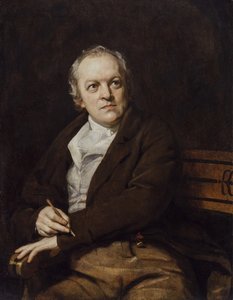
William Blake
1757 - 1827 , Reino Unido
Informações Rápidas
- Artistic Movement Or Style: Romantismo
- Artists Who Influenced This Artist:
- Rafael
- Michelangelo
- Date Of Birth: 1757
- Date Of Death: 1827
- Full Name: William Blake
- Nationality: Britânico
- Notable Artworks:
- Canções da Innocência e da Experiência
- O Casamento do Céu e do Inferno
- O Tigre
- Jerusalém
- Place Of Birth: Londres, Reino Unido
Artigos Relacionados

Watercolor Art Guide: Mastering Transparency and Light for Professional Hospitality Decor
Elevate hospitality interiors with our professional guide to watercolor art. Discover how transparency and light enhance hotel decor through expert selection of high-quality, custom reproductions and large-scale murals tailored for designers and procurement managers.


