Garantia de Reembolso · 100 dias Entrega gratuita para todo o mundo
449.564obras de arte 30.613artistas 4.660museus 32idiomas
Entrada de catálogo

Homework

1874. Acrylic On Canvas.

Fig. 1. Winslow Homer, Homework, 1874. Apresentado como a reprodução que você está especificando: , .

§ 1Dados do catálogo

§ 2Abstrato

Descrição do Item

Winslow Homer

Biografia do Artista

Winslow Homer (1836-1910): Pintor americano renomado por paisagens marcantes e obras sobre o mar. Descubra suas pinturas icônicas como 'O Fluxo' e 'Ventilando o Mar'.

§ 3Comentário

Homework by Winslow Homer: A Study in Quiet Observation

Winslow Homer’s “Homework,” painted in 1874, isn't merely a depiction of domestic life; it’s a masterful distillation of American Impressionism at its most poignant. This watercolor captures a moment of profound stillness—a young boy absorbed in his studies at a desk bathed in the soft glow of afternoon sunlight. Homer eschews grand narratives or dramatic gestures, instead favoring meticulous detail and subtle tonal shifts to convey an atmosphere of contemplative seriousness. The scene unfolds within a sparsely furnished room, dominated by a window that frames the exterior landscape – a muted expanse of greens and browns hinting at the natural world beyond the confines of the boy’s solitary pursuit.
  • Style: Homer's approach aligns perfectly with Impressionism, prioritizing capturing fleeting impressions rather than striving for photographic realism. He achieves this through loose brushstrokes and blended colors, creating an ethereal quality that softens the edges of form and emphasizes light—a technique he honed during his extensive excursions to Maine’s coastlines.
  • Technique: Homer's watercolor mastery is evident in his masterful control over pigment dispersion and layering. Notice how he builds up color gradually, achieving luminous effects through translucent washes that reveal underlying tones. The artist skillfully utilizes hatching and cross-hatching to sculpt form and create depth, subtly suggesting the contours of the desk and boy’s body.
  • Historical Context: Painted during Homer's formative years as an illustrator and artist, “Homework” reflects the burgeoning interest in capturing everyday life—a reaction against the academic conventions that dominated European art at the time. It speaks to a broader cultural shift toward valuing sincerity and observation over idealized representations.

Symbolism Within Simplicity

The painting’s quietude is laden with symbolic significance. The boy's posture—head bowed, hands clasped—represents diligence, focus, and the internalization of knowledge. Homer deliberately avoids portraying any outward emotion or dramatic action; instead, he invites viewers to contemplate the inner world of childhood experience. The window serves as a visual reminder of the natural world—a counterpoint to the boy’s indoor activity—suggesting an appreciation for harmony between human endeavor and the rhythms of nature. This juxtaposition reinforces Homer's belief that beauty can be found in the simplest of subjects, rendered with unwavering honesty.

Similar Works by Winslow Homer: Exploring Themes of Domesticity and Observation

Homer’s artistic vision extended beyond individual portraits; he consistently explored themes of rural life and human connection. Consider his celebrated paintings like “Children on a Fence,” housed at the Williams College Museum of Art, which similarly captures a moment of serene contemplation amidst the pastoral landscape—a testament to Homer's ability to distill profound emotion into understated visual language. Similarly, "Fresh Eggs," part of the National Gallery of Art’s collection, exemplifies his fascination with capturing the beauty of ordinary objects and scenes. These works underscore Homer’s enduring legacy as an artist who championed observation and empathy, qualities that continue to resonate powerfully with audiences today.

Owning a Piece of Homer's Vision: Reproductions Available at AllPaintingsStore.com

For those seeking to experience the beauty and contemplative spirit of “Homework” firsthand, high-quality reproductions are available at AllPaintingsStore.com. Crafted with meticulous attention to detail, these prints allow you to bring Homer’s masterful technique and evocative imagery into your home—a tangible connection to one of America's greatest artistic achievements. Explore the Williams College Museum of Art and the National Gallery of Art for inspiration and further insight into Homer’s oeuvre.

Perguntas e Respostas

Qual artista e qual estilo estão por trás de "Homework"?

Por trás de "Homework" estão Winslow Homer e o movimento Other.

Como "Homework", de Winslow Homer conecta Other ao país de origem do artista?

"Homework" foi criada por Winslow Homer, nascido em Estados Unidos da América, dentro do movimento Other. A origem do artista vincula a obra ao Other, tal como praticado por artistas de Estados Unidos da América.

Quem é o artista por trás de "Homework"?

O artista por trás de "Homework" é Winslow Homer. A obra está catalogada sob o nome de Winslow Homer.
§ 4O artista

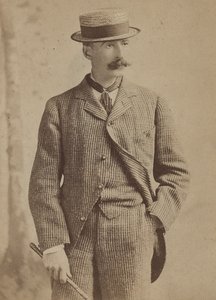
Winslow Homer

Winslow Homer

1836 - 1910, Estados Unidos da América

Informações rápidas sobre Winslow Homer

  • Artistic Movement Or Style: Realismo americano
  • Artists Or Movements Influenced By This Artist: ['American painters']
  • Artists Who Influenced This Artist:
    • Escola Barbizon
    • Courbet
    • Millet
  • Date Of Birth: 24 de fevereiro de 1836
  • Date Of Death: 29 de setembro de 1910
  • Full Name: Winslow Homer
  • Nationality: Americano
  • Notable Artworks:
    • Breezing Up (A Fair Wind)
    • O Fluxo Marinho
    • Inocência
  • Place Of Birth: Boston, Estados Unidos

Biografia do Artista

A Brush with the American Spirit: The Life and Art of Winslow Homer

Winslow Homer, born in Boston in 1836, wasn’t sculpted by the traditional European art academies that shaped so many of his contemporaries. Instead, he emerged from a distinctly American experience, one rooted in practicality and observation. His journey began not with grand historical canvases, but as a commercial illustrator at the tender age of twelve for Harper's Weekly. This early apprenticeship was formative, honing an exceptional ability to capture scenes with clarity and detail – skills that would become hallmarks of his mature work. He wasn’t learning perspective in Paris; he was learning to *see* America, its people, and its unfolding story. The bustling streets of Boston, the quiet dignity of rural New England life, these were his first subjects, rendered with a precision born of necessity for the demands of print media. This foundation allowed him to transition into painting, initially in watercolor, before fully embracing the expressive potential of oil paints.

Early Life and Artistic Beginnings

Winslow Homer’s childhood was marked by a profound connection to nature—a formative influence that would permeate his entire artistic career. Born Charles Savage Homer Jr., he descended from Captain John Homer, the Englishman who arrived in Boston in 1630 aboard the *Anne Dorcas*, establishing one of the earliest English settlements in Massachusetts Bay Colony. His father, Charles Savage Homer Sr., was a merchant and instilled in Winslow a strong work ethic and an appreciation for craftsmanship. Henrietta Maria Benson, his mother, possessed artistic talent herself—a passion for painting flowers that nurtured Winslow’s early fascination with visual representation. From a young age, he demonstrated remarkable drawing skills, sketching landscapes and portraits with astonishing accuracy. This innate aptitude was further cultivated by his brother, Charles S. Homer Jr., who worked as a chemist and encouraged Winslow's artistic pursuits. By 19, Homer secured an apprenticeship with John Bufford’s lithographic firm in Boston—a crucial step toward developing his skills as an illustrator and gaining experience in the burgeoning print media industry.

The Influence of Harper’s Weekly and Commercial Illustration

Winslow Homer’s initial professional endeavors centered around Harper's Weekly, where he began illustrating scenes from daily life and capturing the spirit of American society. This early engagement with printmaking instilled in him a meticulous attention to detail—a characteristic that would define his artistic style throughout his career. Unlike many artists of his time who pursued formal training abroad, Homer honed his observational skills through direct experience, immersing himself in the landscapes and communities of New England. His illustrations for Harper’s showcased his ability to convey emotion and narrative effectively—skills he would later translate into equally compelling paintings. The firm's demand for precise renderings solidified his technique and established a foundation for his future artistic endeavors. Homer’s early works depicted Boston’s elite, capturing the elegance and sophistication of Victorian society with remarkable realism. He quickly gained recognition as a talented illustrator, securing commissions from prominent publishers and establishing himself as a respected figure in the American art world.

The Civil War Years: Witnessing History Through Art

The outbreak of the American Civil War profoundly impacted Winslow Homer’s artistic vision—transforming his focus from idyllic landscapes to confronting the brutal realities of conflict. Recognizing Harper's Weekly's need for visual documentation, Homer volunteered as a war correspondent, traveling extensively throughout Virginia and documenting the experiences of soldiers and civilians alike. Unlike many artists who glorified warfare, Homer eschewed heroic narratives and grand strategies—instead, he sought to portray the human cost of the war with unflinching honesty. His sketches from Camp Douglas and Richmond captured the grim conditions endured by Union prisoners—a poignant reminder of the suffering inflicted upon ordinary people during wartime. Homer’s depictions of battle scenes were notable for their lack of romanticism—he eschewed heroic poses and idealized imagery, opting instead for gritty realism that conveyed the psychological impact of combat. His photographs from Gettysburg and Petersburg powerfully documented the devastation wrought by the war—capturing the solemnity of remembrance and conveying the profound grief experienced by those who had lost loved ones. Homer’s Civil War illustrations stand as testament to his commitment to portraying history with compassion and accuracy—a legacy that continues to inspire artists today.

A Master of Landscape Painting and Symbolism

Winslow Homer's artistic style evolved dramatically after the Civil War, embracing a bolder approach characterized by textured surfaces and expressive brushstrokes. He moved from Boston to Gloucester, Massachusetts, establishing a studio overlooking Cape Ann—a location that would serve as his home for decades and inspire countless paintings depicting the rugged beauty of the Maine coast. Homer’s landscapes are imbued with a palpable sense of atmosphere—capturing the shifting moods of sea and sky with remarkable sensitivity. He skillfully employed color to convey emotion—using vibrant hues to depict sunsets ablaze with glory or muted tones to evoke feelings of melancholy and solitude. Homer's technique involved layering paint thickly onto canvas—creating tactile surfaces that mirrored the textures of the natural world. His paintings often explored themes of isolation, resilience, and humanity’s relationship with nature—reflecting his own contemplative spirit and conveying profound philosophical insights. Breezing Up (A Fair Wind) exemplifies Homer's masterful command of light and color—a celebration of maritime life that captures the exhilaration of sailing under a brilliant summer sun. Similarly, *The Gulf Stream*, painted in 1899, portrays a lone fisherman battling the forces of nature—a powerful metaphor for human struggle against overwhelming odds. Homer’s enduring legacy rests on his ability to transform observation into art—creating images that resonate with viewers across generations and capturing the essence of American identity.
  • His paintings are celebrated for their emotional depth and psychological insight
  • Homer's technique—thick impasto—became synonymous with American Realism

§ 5Obras relacionadas

§ 6Perguntas

Informações Rápidas

  • Influences: American Landscape Painting
  • Medium: Watercolor on paper
  • Artist: Winslow Homer
  • Title: Homework
  • Subject or theme: Domestic life

Quiz de Arte

Cada pergunta possui apenas uma resposta correta.

Pergunta 1:
What artistic style is prominently featured in Winslow Homer’s ‘Homework’?
Pergunta 2:
The painting depicts a scene of everyday life. What element contributes to the artwork's quiet contemplation?
Pergunta 3:
'Homework' showcases Homer’s mastery of watercolor technique. What characteristic is particularly notable about his approach?
Pergunta 4:
Where can viewers experience ‘Homework’ firsthand?
Pergunta 5:
Besides Homer, which other artist's paintings share similar themes of rural life and observation?

§ 7Cite esta entrada

AllPaintingsStore.com, “Winslow Homer, Homework (1874)”, https://allpaintingsstore.com/pt/art/winslow-homer-homework-8BX2LA-en/ArtistReproduction/ (acessado em 7 Outubro 2026).

§ 8A reprodução

Reprodução em Óleo Feita à Mão

Óleo sobre tela pintado à mão no tamanho e moldura de sua escolha, feito sob encomenda pelos nossos artistas. ( Alternar para Impressão Alternar para Imagem Digital)

Está especificado na margem da folha de pedido; o estado atual dessa folha é o seguinte.

Homework

Técnica de Reprodução

Tamanho da Reprodução

-

Artista Sênior de Elite

Mais detalhes, refinamento e tempo de produção adicional

-

Moldura para Reprodução

-

-

Para obras de arte ou reproduções com mais de 105 cm (aproximadamente 41 polegadas) em qualquer um dos lados, a moldura será enviada como um kit desmontado. Este método garante uma entrega segura e evita danos durante o transporte.

Montagem profissional necessária — este não é um produto DIY (faça você mesmo).
O kit deve ser montado e a tela esticada por um profissional de molduraria experiente, utilizando cola de madeira (não inclusa), um alicate de esticar tela e grampos para manter as travessas alinhadas enquanto a cola seca. A montagem incorreta ou a tensão desigual da tela podem danificar permanentemente a obra de arte e não estão cobertas pela nossa garantia.

  • Todas as barras de madeira maciça estão incluídas, precisamente cortadas ao tamanho certo.

  • Montado com os parafusos fornecidos, além de cola para madeira para as junções dos cantos, que não está inclusa e deve ser providenciada pelo seu moldurista.

  • São necessárias ferramentas profissionais não incluídas: um alicate de estiramento de tela (esticador) e grampos para manter as ripas alinhadas enquanto a cola seca.

Importante:
As junções dos cantos requerem cola para madeira, as ripas devem ser mantidas com grampos até que a cola esteja completamente seca, e o estiramento da tela na moldura montada requer um alicate de esticar tela. Nenhum destes itens está incluído no kit. Por favor, certifique-se de contar com um profissional de molduraria experiente antes de encomendar este tamanho.

Etiqueta de identificação

-

-

Verniz de Proteção

Verniz brilhante (realça as cores e protege contra a luz e a umidade)

-

Personalizar minha obra

Exemplos de alterações possíveis: Substituir o rosto por uma foto do cliente; Adicionar um animal de estimação (ex.: substituir gato por cachorro); Incluir uma mensagem oculta no fundo; Alterar a paisagem ou os elementos do fundo.

-

Urgente

Entrega mundial () em 3 a 4 semanas, em vez das 5 semanas padrão. (4 Novembro). Sem comprometer a qualidade.

-

Envio Expresso

Entrega mundial para em 5 semanas. (11 Novembro).

Com envio incluído

Preço Total

€ 230

Incluído em todos os pedidos

  • Envio expresso gratuito para todo o mundo
  • Tela de Linho de Alta Qualidade
  • Seguro de transporte completo
  • Garantia de Reembolso de Impostos Alfandegários
  • Garantia de Fidelidade Cromática
  • Política de Devolução em 100 Dias (Apenas para Defeitos)
  • Garantia de reembolso de 100%
  • Oferta de desconto por quantidade
Folha de pedido