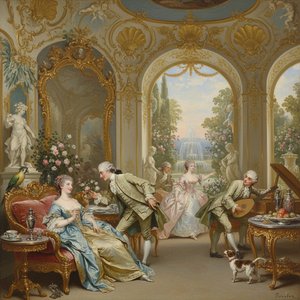
Michel Barthélémy Ollivier: A Master of Rococo Idyllic Landscapes
Michel Barthélémy Ollivier (August 24, 1712 – June 15, 1784) stands as a significant figure in French Rococo art, particularly renowned for his captivating depictions of serene landscapes interwoven with aristocratic scenes. Born in Marseille, Ollivier’s artistic lineage traced back to a family deeply rooted in painting traditions—a legacy that profoundly shaped his own creative trajectory. He honed his skills at the Académie de Saint-Luc and under the tutelage of Charles-André van Loo, absorbing the stylistic nuances of the era's leading artists.- Early Life & Training: Ollivier’s formative years were marked by exposure to artistic excellence. His father, Louis Ollivier, was himself a painter, establishing a familial connection to the visual arts that instilled in Michel a passion for observation and representation. Studying alongside van Loo ensured he grasped the principles of Baroque French Art and Classical French Art.
- Madrid Years & Artistic Influences: Ollivier’s journey took him to Madrid during Louis-Michel van Loo's tenure as court painter to King Philip V, where he absorbed influences from Spanish artistic conventions. This experience broadened his perspective and enriched his stylistic repertoire.
Notable Works & Artistic Style
Ollivier’s oeuvre comprises approximately five artworks that exemplify the hallmarks of Rococo painting—characterized by delicate brushstrokes, pastel hues, asymmetrical compositions, and an emphasis on idealized beauty. His landscapes frequently feature tranquil waterscapes populated by shepherds and nymphs, reflecting a fascination with pastoral themes prevalent in the period. Simultaneously, he skillfully rendered aristocratic interiors adorned with opulent furnishings and portraits conveying elegance and refinement.- “Afternoon Tea at the Temple” (1766): This celebrated piece showcases Ollivier’s mastery of capturing atmospheric subtleties—particularly light—within a meticulously crafted scene depicting an aristocratic gathering amidst lush greenery.
Recognition & Legacy
Ollivier’s work gained recognition throughout Europe, notably displayed at the Royal Academy of London in 1772. His paintings reside in prestigious institutions such as the Musée des beaux-arts de Bordeaux and the Louvre, ensuring his artistic legacy continues to inspire admiration and scholarly study. Michel Barthelemy Ollivier's contribution to French Rococo painting remains invaluable—a testament to his dedication to capturing the sublime beauty of nature and portraying aristocratic life with unparalleled grace.Further Exploration
For more detailed information about Michel Barthélémy Ollivier’s artistic achievements, visit WikiArt: WikiArt.org. You can also delve into his biographical details on Wikipedia: Wikipedia.Perguntas e Respostas
Posso ordenar as obras de Michel Barthélémy Ollivier por cor?
As obras de Michel Barthélémy Ollivier podem ser exploradas por cor na página Índice de Cores do artista.
Existe uma lista completa das obras de Michel Barthélémy Ollivier?
Todas as obras de Michel Barthélémy Ollivier no este site podem ser exploradas na página de Todas as obras do artista.
Onde posso ver as obras de Michel Barthélémy Ollivier organizadas por atmosfera?
A página de Coleção por Humor do artista apresenta as obras de Michel Barthélémy Ollivier organizadas por sua atmosfera.