Garantia de Reembolso · 100 dias Entrega gratuita para todo o mundo
646.446obras de arte 53.409artistas 5.406museus 32idiomas

The Late Medieval shortlist

99 Famous Late Medieval Artistas: The Complete List

Simone Martini (1284–1344) is the most famous Late Medieval artista, best known for Maestà (Madonna with Angels and Saints) e A Anunciação e Dois Santos. Then Andrei Rublev, Ambrogio Lorenzetti, Pietro Lorenzetti e Hubert Van Eyck. The list covers 99 artistas born between 1271 and 1366 in 20 countries, from Yuan Dynasty to Hubert Van Eyck.

Method. Scope: artists filed under Late Medieval in our catalogue. Order: our artist fame ranking. Excluded: artists born after 1955 without a Wikidata identifier. Wikipedia figure: languages with an article, out of our 32.

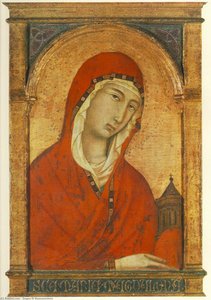
  1. Maestà (Madonna with Angels and Saints) de Simone Martini1Simone Martini
  2. Holy Trinity de Andrei Rublev2Andrei Rublev
  3. O efeito bom do governo na cidade de Ambrogio Lorenzetti3Ambrogio Lorenzetti

Key data

Late Medieval: key data

  • 99Artistas
  • 1271–1366Anos de nascimento
  • 20Países de origem
  • 1Mulheres
  • 5Artistas vivos
  • 1.514Obras em nosso catálogo
Cidades com mais nascimentos
Siena (13), Florence (9), Florença (7), Modena (3)
Museus que detêm as principais obras
Metropolitan Museum of Art (18), Harvard Art Museums (5), National Gallery (5), Galleria degli Uffizi (4)
As mulheres desta lista
Mother Julian

Ranked list

99 Late Medieval Artistas, ranked with key works

1/ 99

Simone Martini

Italiano b. Siena Gótico Internacional Wikipedia 28/32
Simone Martini

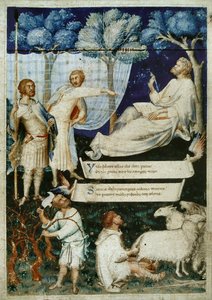
Saint Louis of Toulouse Crowning His Brother Robert of Anjou, 1317. Em 1333, ele pintou a Anunciação com Santa Margarida e Santo Ansanus, uma obra que reside atualmente na Galleria degli Uffizi, em Florença. Em 1342, ele concluiu o Cristo Encontrado no Templo, uma pintura que pode ser encontrada na Walker Art Gallery, em Liverpool.

Trained Lippo Memmi #10

Key works · Top 100 works

2/ 99

Andrei Rublev

Russo b. Grão-Principado de Moscou Pintura de Ícones Russos Wikipedia 31/32

Andrei Rublev

Em 1405, ele uniu forças com Teófanes e Prokhor de Gorodets para decorar a Catedral da Anunciação, um momento crucial na pintura de ícones russa. O Ícone da Trindade: Possivelmente a obra mais celebrada de Rublev, o ícone da “Trindade” (c. 1420-1428) é um testemunho de seu gênio artístico.

Key works · Top 100 works

3/ 99

Ambrogio Lorenzetti

b. Siena Wikipedia 29/32

Ambrogio Lorenzetti

Ambrogio Lorenzetti, nascido por volta de 1290 no coração de Siena, Itália, emergiu como uma figura fundamental na transição das tradições artísticas medievais para o florescente Renascimento.

Key works · Top 100 works

4/ 99

Pietro Lorenzetti

Italiano b. Siena Início do Renascimento Wikipedia 27/32

Pietro Lorenzetti

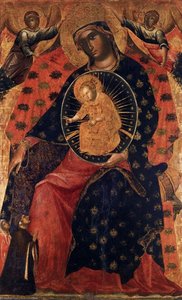
Pietro Lorenzetti (c. 1280 – 1348) posiciona-se como uma figura fundamental na arte sienense, marcando a profunda transição do formalismo gótico para os ideais humanistas emergentes do início do Renascimento. Nascido na vibrante paisagem cultural de Siena por volta de 1280, a jornada artística de Lorenzetti desenrolou-se durante um período de significativa transformação intelectual e artística na Toscana.

Key works · Top 100 works

5/ 99

Hubert Van Eyck

Holandês b. Maaseik Primitivos Flamengos Wikipedia 20/32

Hubert Van Eyck

No coração desta transformação encontrava-se Hubert van Eyck, uma figura cujo próprio nome está gravado nos alicerces da arte do Renascimento Nórdico. Nascido em Maasik por volta de 1385 ou 1390, ele fazia parte de uma formidável dinastia artística; as suas ligações familiares, incluindo o seu renomado irmão Jan e os irmãos Lambert e Margaret, criaram um cadinho de criatividade que alteraria para sempre a trajetória da pintura europeia.

Key works · Top 100 works

6/ 99

Taddeo Gaddi

Italiano b. Florença Início do Renascimento Wikipedia 23/32

Taddeo Gaddi

Como um dos discípulos mais distintos do lendário Giotto di Bondone, Gaddi não apenas herdou um estilo; ele expandiu o vocabulário visual de sua época.

Trained Agnolo Gaddi #7, Jacopo Del Casentino (Jacopo Landino) #51

Key works · Top 100 works

7/ 99

Agnolo Gaddi

Italian b. Florença Gothic, Early Renaissance Wikipedia 20/32

Agnolo Gaddi

The influence is palpable in Agnolo’s earliest works: the monumental figures, the emotionally resonant compositions, and the narrative clarity—hallmarks of Giotto’s frescoes—are faithfully reproduced in paintings like The Resurrection of Lazarus, executed around 1375 for San Jacopo tra i Fossi.

Trained by Taddeo Gaddi #6

Key works · Top 100 works

8/ 99

Teófanes, O Grego

Grego b. Constantinopla Iconografia Bizantina Wikipedia 22/32

Teófanes, O Grego

Nascido em Constantinopla por volta de 1340, embora frequentemente associado à Grécia devido às suas atividades posteriores, Teófanes foi uma figura fundamental que uniu o florescimento final da arte bizantina às tradições emergentes da Rússia. Por volta de 1395, ele chegou a Novgorod, um poderoso estado dentro da Rússia, junto com Andrei Rublev, outra figura icônica da arte ortodoxa russa.

Trained Andrei Rublev #2

Key works · Top 100 works

9/ 99

Paolo Veneziano

Italiano b. Veneza Influência bizantina e arte gótica Wikipedia 15/32

Paolo Veneziano

Paolo Veneziano (c. 1333 – 1358) ergue-se como uma figura monumental na história da arte veneziana, reconhecido universalmente como o pintor veneziano mais importante do século XIV. Nascido em uma linhagem artística no coração de Veneza — sendo seu pai um artista renomado — a breve, porém brilhante carreira de Veneziano coincidiu com um período transformador na pintura europeia.

Key works · Top 100 works

10/ 99

Lippo Memmi

b. Siena Wikipedia 17/32

Lippo Memmi

Lippo Memmi, nascido por volta de 1291 no coração de Siena, Itália, destaca-se como uma figura crucial na transição das tradições bizantinas da pintura medieval para a elegância florescente do estilo Gótico Internacional. Talvez a mais celebrada delas seja a Anunciação com Santa Margarida e Santo Ansanus (1333), criada em colaboração com Simone Martini para a Galeria Uffizi.

Trained by Simone Martini #1

Key works · Top 100 works

11/ 99

Altichiero

Italiano b. Zevio Arte Gótica Wikipedia 20/32

Altichiero

Altichiero da Zevio, nascido perto da pacata cidade de Zevio, em Verona, por volta de 1330, não foi apenas um cronista de eventos sagrados, mas um pioneiro do estilo gótico veneziano.

Key works · Top 100 works

12/ 99

Spinello Aretino

Italiano b. Arezzo Elo entre a Escola de Giotto e a Escola de Siena Wikipedia 16/32

Spinello Aretino

Nascido no seio de uma família de ourives florentinos, o seu verdadeiro nome era Spinello Di Luca Spinelli, mas tornou-se conhecido pela história pelo apelido "Aretino", significando a sua ligação a Arezzo. Nos seus primeiros anos, trabalhou nas movimentadas oficinas de Florença, contribuindo para obras monumentais, como os frescos na igreja de Carmine e Santa Maria Novella.

Trained by Jacopo Del Casentino (Jacopo Landino) #51 · Trained Lorenzo di Bicci #32

Key works · Top 100 works

13/ 99

Bernardo Daddi

b. Florença Wikipedia 17/32

Bernardo Daddi

Bernardo Daddi, nascido em Florença por volta de 1290 e falecido em 1348, ergue-se como uma figura fundamental na transição do final do período Gótico para o florescente Renascimento Italiano. Suas obras primordiais demonstram uma conexão clara com os seguidores de Giotto — mestres como o “Mestre de Santa Cecília” e outros pintores florentinos do primeiro quarto do século XIV — refletindo uma linhagem direta de influência artística.

Key works · Top 100 works

14/ 99

Andrea Pisano

Italiano b. Pontecorvo Gótico

Andrea Pisano

Andrea Pisano (c. 1290 – 1348 Orvieto) ergue-se como uma figura monumental na escultura do Renascimento italiano, embora o seu legado artístico esteja inextricavelmente ligado à era gótica precedente e profundamente moldado pela influência revolucionária de Giotto di Bondone.

Key works · Top 100 works

15/ 99

Niccolò Di Tommaso

Italiano b. Florença Renascimento Inicial

Niccolò Di Tommaso

Niccolò Di Tommaso, um nome que ressoa suavemente nos anais da pintura italiana do século XIV, emergiu em Florença por volta de 1346. Os esforços conjuntos na Capela Strozzi, dentro da Basílica de Santa Maria Novella, representam um ponto de inflexão fundamental na trajetória artística de Niccolò Di Tommaso.

Key works · Top 100 works

16/ 99

Ni Zan

Chinês b. Wuxi Quatro Mestres da Dinastia Yuan Wikipedia 15/32

Ni Zan

Seu nome de cortesia era Yuan Zhen (元鎮), e ele adotou nomes artísticos como Yun Lin Zi (雲林子), Huan Xia Sheng (幻霞生) e Jing Man Min (荊蠻民). Ni Zan é amplamente reconhecido como um dos quatro mestres da Dinastia Yuan, ao lado de Huang Gongwang, Wu Zhen e Wang Meng.

Key works · Top 100 works

17/ 99

Andrea Di Cione (Orcagna)

Italiano b. Florença Gótico-Gótico Tardio

Andrea Di Cione (Orcagna)

Andrea Di Cione (Orcagna), conhecido pela história pelo evocativo apelido de Orcagna, destaca-se como uma das figuras mais influentes da arte florentina durante meados do século XIV — um período marcado por uma fascinante confluência de tradições artísticas Góticas e do Gótico Tardio. Uma de suas contribuições mais celebradas para a tradição florentina é o Retábulo Strozzi, uma deslumbrante obra-prima Gótica de 1354.

Key works · Top 100 works

18/ 99

Orcagna

Italian b. Florence Gothic-Late Gothic Wikipedia 20/32

Orcagna

The name Orcagna—a moniker bestowed upon him by local artisans—encompasses a remarkable figure in the history of Italian art: Andrea di Cione, a painter, sculptor, architect, and master craftsman who dominated the artistic landscape of Florence during the latter half of the 14th century.

Trained by Andrea Pisano #14

Key works · Top 100 works

19/ 99

Giovanni Di Milano

b. Lombardia

Giovanni Di Milano

Nascido Giovanni di Jacopo di Guido da Caversaccio na Lombardia por volta de 1346, sua jornada artística se desenrolou principalmente no vibrante cenário cultural de Florença durante um tempo de imensa mudança e inovação.

Key works · Top 100 works

20/ 99

Barna Da Siena

Italian b. Siena Gothic Art Wikipedia 14/32

Barna Da Siena

To traverse the hallowed halls of the Collegiata di San Gimignano is to encounter a ghost of the Trecento, an artist whose name, Barna da Siena, lingers in the air like incense in a medieval chapel. Known also as Berna di Siena, this figure remains one of the most tantalizing enigmas in the history of Italian art.

Key works · Top 100 works

21/ 99

Wang Meng

Chinese b. Huzhou Yuan Dynasty Landscape Painting Wikipedia 14/32

Wang Meng

Wang Meng’s compositions are often densely populated with elements—trees, rocks, mountains, streams—creating an immersive experience for the viewer. Wang Meng’s style was profoundly influenced by the landscape painters who preceded him – Wang Wei, Dong Yuan, and Juran – but he developed his own distinctive voice through his innovative use of brushwork and composition.

Key works · Top 100 works

22/ 99

Cresques Abraham

Spanish b. Palma de Mallorca Nautical cartography

Cresques Abraham

Background: Cresques was born into a Jewish family in Majorca, then part of the Crown of Aragon. Major Work: Cresques is most renowned for his authorship of the Catalan Atlas, completed around 1375 in collaboration with his son, Jehuda Cresques. Commissioned by: Prince John of Aragon, intended as a gift for Charles VI of France.

Key works · Top 100 works

23/ 99

Nicolas Bataille

French Medieval Art, Religious Paintings

Nicolas Bataille

His tapestries, particularly the famed “Seven Seals” cycle now housed in the Saint-Nicolas du Chardonnet church in Paris, offer a window into a world grappling with anxieties about mortality, divine judgment, and the impending end times – a perspective rarely found in contemporary art.

Key works · Top 100 works

24/ 99

Lorenzo Veneziano

Italiano b. Veneza Arte bizantina Wikipedia 11/32

Lorenzo Veneziano

O ano de 1336 ressoa profundamente na paisagem artística da Itália, intrinsecamente ligado a uma figura envolta em um mistério fascinante – o Mestre de 1336. Mais precisamente conhecido como Giovanni Lipini, o nome deste artista, derivado de um afresco milagroso que retrata a Virgem Maria em Santa Maria delle Grazie, em Pistoia, oferece um vislumbre instigante de suas origens e de sua influência duradoura.

Key works · Top 100 works

25/ 99

Segna Di Buonaventure

Italian Trecento

Segna Di Buonaventure

It’s believed that Segna spent time in Florence during this period, absorbing influences from the burgeoning Florentine school, which was beginning to experiment with linear perspective and naturalistic representation. Beyond these iconic portraits, he created a " Crucifix " (circa 1320), a powerfully emotive depiction of Christ on the cross, characterized by its stark simplicity and emotional directness.

Key works · Top 100 works

26/ 99

Cennino Cennini

Italian b. Colle di Val d'Elsa Late Gothic Wikipedia 18/32

Cennino Cennini

In the twilight of the Middle Ages and the dawn of the Italian Renaissance, few figures bridge the gap between the medieval workshop and the modern era as intimately as Cennino Cennini. Born around 1360 in the picturesque landscape of Colle di Val d'Elsa, Cennini was a man whose very existence was woven into the fabric of Florentine artistic tradition.

Trained by Agnolo Gaddi #7

Key works · Top 100 works

27/ 99

Ugolino Di Nerio

Italiano b. Siena Pintura sienense Wikipedia 13/32

Ugolino Di Nerio

Ugolino di Nerio, um nome amplamente ausente das narrativas históricas da arte convencional, ergue-se como uma figura fundamental no florescente cenário artístico de Siena e Florença durante a década de 1320.

Key works · Top 100 works

28/ 99

Taddeo di Bartolo

Italian b. Siena Early Renaissance Wikipedia 13/32

Taddeo di Bartolo

In works such as his Virgin and Child with Saints, one can witness the evolution of his hand—moving from the more rigid, ornamental patterns of the late Gothic style toward a more robust and naturalistic approach.

Key works · Top 100 works

29/ 99

Lippo Di Benivieni

Italian b. Florence Early Quattrocento

Lippo Di Benivieni

Despite the paucity of surviving paintings attributed to Lippo di Benivieni, his influence is palpable in several significant frescoes adorning churches throughout Siena and San Gimignano. Most notably, he collaborated with Bartolo di Fredi on the magnificent altar decoration of Santa Maria di Campagna, a testament to his skill as a muralist and his ability to synthesize Gothic and nascent Renaissance elements.

Key works · Top 100 works

30/ 99

Zhao Yuan

Chinese Landscape painting

Zhao Yuan

Beyond Wang Meng, echoes of earlier masters like Fan Kuan (c. 937-1020), renowned for his monumental landscapes and powerful brushwork, can also be detected in Zhao Yuan’s treatment of rock formations and atmospheric effects. His most celebrated works include Qingchuan Songbie (Farewell at Qingchuan) and Hexi Caotang (Grassland Cottage at Hexi).

Key works · Top 100 works

31/ 99

Andrea Di Bartolo

Italian b. Siena Sienese School Wikipedia 12/32

Andrea Di Bartolo

In the vibrant heart of the Sienese School, Andrea di Bartolo emerged as a master whose brush captured the profound spiritual intensity of his era. As the son and pupil of the prominent painter Bartolo di Fredi, Andrea’s artistic journey was deeply rooted in the traditions of his father's workshop.

Key works · Top 100 works

32/ 99

Lorenzo di Bicci

Italian Florentine School

Lorenzo di Bicci

He eschewed the heavy, dark backgrounds favored by many of his contemporaries, opting instead for lighter, more airy compositions that allowed figures to emerge with clarity and grace. Lorenzo's career was marked by numerous collaborations, often working alongside other prominent artists such as Agnolo Gaddi and Niccolò di Pietro Gerini.

Key works · Top 100 works

34/ 99

Lorenzo Di Bicci

Italiano b. Florença Escola Florentina Wikipedia 8/32

Lorenzo Di Bicci

Lorenzo di Bicci, nascido por volta de 1373 em Florença, ergue-se como uma figura fundamental na florescente Escola Florentina de pintura durante a segunda metade do século quatorze e o início do quinhentos. Vida Inicial e Treinamento: Os anos formativos de Lorenzo foram passados imerso na oficina de seu pai, Jacopo di Bicci—um artesão cujos próprios esforços artísticos prenunciavam a abordagem distinta de Lorenzo.

Key works · Top 100 works

35/ 99

Gherardo Starnina

Italian b. Florence Venetian Renaissance Wikipedia 12/32

Gherardo Starnina

Born in Florence around 1354, his early years were steeped in the prestigious traditions of the Florentine school. As an apprentice to the renowned Agnolo Gaddi, Starnina was immersed in a world where the emotional depth of Giotto met the delicate, lyrical elegance of Simone Martini. The trajectory of Starnina’s life took a transformative turn when he migrated toward Venice around 1380.

Key works · Top 100 works

36/ 99

Jean Pucelle

French Early Gothic painting

Jean Pucelle

Jean Pucelle remains one of the most captivating enigmas in the annals of medieval art, a figure whose name is whispered with reverence by those who study the delicate transition from the rigid structures of the Middle Ages to the burgeoning humanism of the Renaissance.

Key works · Top 100 works

37/ 99

Andrea de Bonaiuto

Italiano b. Florença Pintura toscana Wikipedia 12/32

Andrea de Bonaiuto

O meado do século XIV em Florença testemunhou um florescimento de talento artístico e, entre as suas figuras mais significativas, destacava-se Andrea Orcagna – um pintor, escultor, arquiteto e administrador cuja carreira multifacetada deixou uma marca indelével na paisagem visual da cidade.

Key works · Top 100 works

38/ 99

Guariento di Arpo

Italian b. Piove di Sacco Early Renaissance; Venetian painting; Gothic art Wikipedia 12/32

Guariento di Arpo

Guariento di Arpo (c. 1310–1370) stands as a monumental figure of the Trecento, acting as the essential bridge between the grounded, volumetric realism of Florence and the ethereal, ornamental splendor of the Venetian Gothic tradition. The foundations of Guariento’s genius were laid in the workshops of his contemporaries, where the shadows of masters like Giotto di Bondone and Giovanni Pisano loomed large.

Key works · Top 100 works

39/ 99

Giovanni Del Biondo

Italian b. Pratovecchio Gothic & Early Renaissance Wikipedia 10/32

Giovanni Del Biondo

The story of Giovanni del Biondo is one woven into the very fabric of 14th-century Florence, a period of profound transition where the rigid elegance of the Gothic tradition began to breathe with the nascent vitality of the Early Renaissance.

Key works · Top 100 works

40/ 99

Claus Sluter

Holandês b. Haarlem Realismo Norte

Claus Sluter

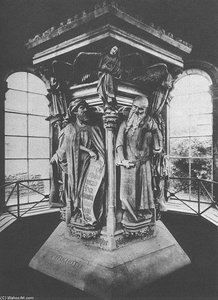
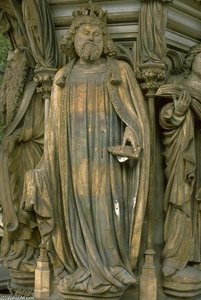
Claus Sluter (c. 1350-1406) posiciona-se como um dos escultores mais influentes de sua era, marcando uma conjuntura crucial entre as tradições artísticas góticas e renascentistas no norte da Europa. Primeiros Anos e Formação: Detalhes biográficos precisos permanecem esquivos, mas as evidências sugerem que Sluter recebeu treinamento nas oficinas das guildas de Haarlem, absorvendo as convenções estilísticas da escultura gótica prevalecente na época.

Key works · Top 100 works

41/ 99

Kokan Shiren

Japanese b. Kyoto Rinzai Zen, Gozan Bungaku

Kokan Shiren

Kokan Shiren (虎関師錬; 9 May 1278 – 11 August 1347), a pivotal figure in 14th-century Japan, stands as a unique confluence of artistic expression, philosophical depth, and historical scholarship. Shiren’s influence extends far beyond his own lifetime, shaping the landscape of Gozan bungaku (the Literature of the Five Mountains) and leaving an indelible mark on the development of Japanese Zen aesthetics.

Key works · Top 100 works

42/ 99

Jacopo di Cione

Italian b. Florence Gothic Wikipedia 7/32

Jacopo di Cione

Jacopo's dedication extended beyond commissions; he actively participated in shaping Florence’s cultural landscape through his involvement with the cathedral workshop and his role as consul of the Arte dei Medici e Speziali (1384, 1387, 1392).

Key works · Top 100 works

43/ 99

Bartolo Di Fredi

Italian b. Siena Sienese School Wikipedia 13/32

Bartolo Di Fredi

No coração da Toscana do século XIV, um período definido pela transição entre a graça etérea da era Gótica e o humanismo emergente do Renascimento, Bartolo di Fredi surgiu como um mestre da luz e da narrativa. Em 1355, ele ingressou oficialmente na Arte dei Maestá di Tavola e Dipinto, um marco que lhe garantiu acesso às redes de patronato mais significativas da Itália.

Key works · Top 100 works

45/ 99

Tuthmosis

Egyptian b. Amarna Amarna art style

Tuthmosis

He primarily worked with fine-grained limestone, a material readily available in the quarries surrounding Amarna. Perhaps Tuthmosis’s most celebrated achievement is undoubtedly the magnificent Bust of Queen Nefertiti, completed around 1340 BC.

Key works · Top 100 works

46/ 99

Giovanni da Milano

Italian b. Valmorea Italian Gothic Wikipedia 13/32

Giovanni da Milano

In the bustling streets of Florence, where the air was thick with the scent of fresh pigment and the echoes of a changing era, a painter named Giovanni di Jacopo di Guido da Caversaccio began to make his mark. Hailing from Lombardy, he arrived in Tuscany as a man seeking his fortune, appearing in the city's records as Johannes Jacobi de Commo.

Key works · Top 100 works

47/ 99

Master Bertram

German b. Minden International Gothic Wikipedia 13/32

Master Bertram

While sharing similarities with other artists of the period, such as Master Francke (another prominent Hamburg painter), Bertram's work possesses a distinct character—a subtle restraint in emotional expression compared to Francke’s more overtly dramatic approach. The Victoria and Albert Museum in London houses a 45-scene depiction of the Apocalypse, likely created by Bertram's workshop, further demonstrating his influence within the artistic community.

Key works · Top 100 works

52/ 99

Musō Soseki

Japonês b. Província de Ise Budismo Zen Wikipedia 12/32

Musō Soseki

Musō Soseki, uma figura proeminente na arte e espiritualidade japonesa, nasceu em 1275 e faleceu em 20 de outubro de 1351. Como um monge e mestre budista Zen Rinzai, ele deixou uma marca indelével no mundo da caligrafia, da poesia e do design de jardins. As incursões artísticas de Musō Soseki foram caracterizadas por sua mistura única de espiritualidade e estética.

Key works · Top 100 works

57/ 99

Império Asteca

Mexicano b. Tenochtitlán Arte mesoamericana

Império Asteca

Nascidas no início do século XIV em Tenochtitlán, o coração do Império Asteca, as tradições artísticas dos astecas estavam profundamente enraizadas nos legados de civilizações mesoamericanas anteriores. A massiva Pedra do Sol (Calendário Asteca), descoberta em 1946, permanece como um testemunho de sua maestria neste meio — um relevo de pedra complexo e em camadas que combinava informações calendáرicas com simbolismo cosmológico.

Key works · Top 100 works

60/ 99

Matteo Di Ser Cambio

Italian b. Perugia Renaissance

Matteo Di Ser Cambio

In the golden twilight of the Middle Ages, as the rigid structures of the Byzantine tradition began to soften under the burgeoning light of the Renaissance, there emerged a figure of profound architectural and decorative significance in the heart of Italy. Matteo di Ser Cambio, an artist whose name echoes through the halls of Perugia and Florence, served as a vital bridge between the medieval past and the humanist future.

Key works · Top 100 works

62/ 99

Ferrer Bassa

Catalan b. Avinyonet del Penedès Gothic painting

Ferrer Bassa

Ferrer Bassa emerged from the artistic landscape of 14th-century Catalonia as a pivotal figure, bridging the gap between established Gothic traditions and the burgeoning Italianate styles that would reshape European painting. His early commissions included creating miniatures for significant manuscripts such as the Uses of Barcelona and Costumes of Catalonia, demonstrating his exceptional skill in rendering detail and decorative artistry.

Key works · Top 100 works

63/ 99

Tommaso Da Modena

Italian b. Modena Late Gothic Wikipedia 15/32

Tommaso Da Modena

His distinctive style, characterized by earthy realism blended with humanist ideals, cemented his reputation as a master craftsman and intellectual whose oeuvre continues to inspire admiration for its sensitivity and technical prowess. The fresco cycle commemorating Dominican scholars—a project undertaken at the behest of Cardinal Giovanni Buoncompagni—represents a pinnacle of Renaissance artistic achievement.

Key works · Top 100 works

65/ 99

Paolo Di Giovanni Fei

Italiano b. San Quirico d'Orcia Naturalismo, Proto-Renascimento Wikipedia 10/32

Paolo Di Giovanni Fei

Pietro Lorenzetti, nascido por volta de 1280 e tragicamente falecido em 1348 durante a devastadora pandemia da Peste Negra, permanece uma figura fundamental na evolução da pintura italiana.

Key works · Top 100 works

67/ 99

Wu Zhen

Yuan dynasty b. Jiashan County Wikipedia 12/32

Wu Zhen

The brush of Wu Zhen moved with a particular intent, seeking to capture the essence of the natural world through landscape paintings and the delicate forms of bamboo. His work Qing Jiang Chun Xiao remains a definitive example of how he achieved the integration of the Three Perfections, weaving together the intellectual weight of poetry and the fluid grace of calligraphy with the visual depth of his painting.

Key works · Top 100 works

68/ 99

Jacopo del Casentino

Florentine b. Florence Later Gothic Wikipedia 10/32

Jacopo del Casentino

While his roots remain firmly planted in the Florentine school, a distinct Sienese influence begins to emerge in his compositions.

Trained by Taddeo Gaddi #6 · Trained Spinello Aretino #12

Key works · Top 100 works

70/ 99

Jacquemart de Hesdin

French b. Hesdin International Gothic Wikipedia 13/32

Jacquemart de Hesdin

Très Belles Heures du Duc de Berry (Brussels Hours): Considered his most significant work, showcasing elaborate scenes and detailed miniatures. Grandes Heures: Another important illuminated manuscript commissioned by the Duke of Berry.

Key works · Top 100 works

71/ 99

Matteo Giovanetti

Italian b. Viterbo Early Italian Renaissance

Matteo Giovanetti

In the heart of fourteenth-century Italy, amidst the spiritual awakening of the early Renaissance, the name Matteo Giovanetti emerged as a beacon of devotional mastery. His Annunciation, dated to approximately 1345, stands as a breathtaking testament to his ability to render the miraculous.

Key works · Top 100 works

72/ 99

Reisai Gukyoku

Japanese b. Yamashiro Zen buddhism art

Reisai Gukyoku

He favored ink wash techniques (sumi-e), utilizing varying shades of black to create textured surfaces that mirrored the natural world—particularly landscapes reminiscent of Mount Yoshino, a sacred site venerated by Zen monks. Similarly, "Buddhist Maxim on the Saving Power of Amida" presents a concise koan inscription executed in elegant cursive script—a testament to Gukyoku's ability to distill complex philosophical concepts into visually arresting forms.

Key works · Top 100 works

73/ 99

Qingzhuo Zhengcheng, Ch'Ing-Cho Cheng-Ch'Eng

Chinese Zen Buddhism

Qingzhuo Zhengcheng, Ch'Ing-Cho Cheng-Ch'Eng

In the quiet, meditative corridors of history, few figures loom as large or as transformative as Seisetsu Shōchō (1274–1339). Born in China during the vibrant Yuan Dynasty, his life was a bridge between two worlds, spanning the intellectual rigor of Chinese scholarship and the spiritual revitalization of Japanese Zen.

Key works · Top 100 works

76/ 99

Barnaba Da Modena

Italian b. Modena Byzantine-influenced Lombard Painting Wikipedia 12/32

Barnaba Da Modena

Notable Works & Patronage: Barnaba’s prolific output encompassed around fifty paintings—a remarkable achievement considering the period—primarily focused on depictions of the Virgin Mary and Christ, often framed within elaborate architectural settings reminiscent of Byzantine churches.

Key works · Top 100 works

77/ 99

Peter Parler

German-Bohemian b. Schwaebisch Guemund Late Gothic

Peter Parler

In the heart of the Late Middle Ages, a period defined by soaring spires and profound devotion, Peter Parler emerged as one of the most influential architects and sculptors of his era. Known variously as Peter von Gemünd or Petr Parléř, his identity was inextricably linked to the Parler family, a lineage of craftsmen whose influence stretched across much of Central Europe.

Key works · Top 100 works

78/ 99

Bonanat Descoll I De Santcliment

Italiano b. Barcelona Renascimento Inicial

Bonanat Descoll I De Santcliment

Bonanat Descoll I De Santcliment foi um almirante catalão da Coroa de Aragão no século XIV. Nascido em Barcelona, Espanha, em 1310, e falecido em 1390, ele se consolidou como uma figura proeminente na arte catalã e na história, desempenhando um papel fundamental no desenvolvimento do patrimônio cultural e artístico da região. Bonanat Descoll I De Santcliment foi não apenas um habilidoso líder militar, mas também um artista consumado.

Key works · Top 100 works

79/ 99

Yuan Dynasty

Chinese b. Beijing Landscape Art

Yuan Dynasty

The Four Masters: The Yuan Dynasty is particularly renowned for its “Four Masters” – Huang Xuan, Zhao Menggui, Wang Meng, and Ni Zan —who redefined the conventions of landscape painting and established a new aesthetic centered on simplicity, spontaneity, and profound contemplation.

Key works · Top 100 works

80/ 99

Giovanni Di Rigino

Italian b. Verona Trecento art

Giovanni Di Rigino

Giovanni di Rigino, a name resonating softly through the annals of Trecento sculpture, emerged from the vibrant artistic milieu of Verona in approximately 1315 or 1320. He ascended to become the chancellor for both Cansignorio della Scala and his successor, Antonio – powerful lords who governed Verona with ambition and a keen eye for cultural prestige.

Key works · Top 100 works

85/ 99

Giovanni d'Agostino

b. Siena

Giovanni d'Agostino

A significant partnership was formed with Agnolo di Ventura, culminating in their joint execution of the cenotaph of Guido Tarlati in the Cathedral of Arezzo (signed and dated 1330). While individual attribution can be challenging due to collaborative practices, D'Agostino’s contributions are evident in several key works: Cenotaph of Guido Tarlati (Arezzo Cathedral): A prime example of his sculptural skill and collaboration with Agnolo di Ventura.

Key works · Top 100 works

86/ 99

Sesson Yūbai

Japanese b. Tokyo Zen Buddhism

Sesson Yūbai

Sesson Yūbai (雪村 友梅; 1290 – 14th day of the 1st month, 1347) stands as one of Japan’s most revered Zen Buddhist poets and monks—a figure inextricably linked to the profound aesthetic principles that define the Five Mountains School of Zen.

Key works · Top 100 works

87/ 99

Sultan Al-Malik Al-Zahir Abu Sa’Id Barquq

Egyptian b. Cairo Islamic Art

Sultan Al-Malik Al-Zahir Abu Sa’Id Barquq

Sultan Al-Malik Al-Zahir Abu Sa’id Barquq, a name resonating through the annals of Mamluk Egypt, stands as a pivotal figure in the 14th-century Islamic world. Born in Cairo in 1339, his ascent to power marked not merely a change in leadership but a transition into the Burji period—a new era defined by Circassian dominance within the Mamluk Sultanate.

Key works · Top 100 works

88/ 99

Giovanni Di Chellino Boccaccio

Italian b. Certaldo Humanism precursor

Giovanni Di Chellino Boccaccio

Born amidst the rolling landscapes of Certaldo in 1313, Giovanni Boccaccio emerged as a vital force in the cultural landscape of the fourteenth century. As one of the legendary "Three Crowns" of Italian literature—standing alongside the giants Dante Alighieri and Petrarch—his life served as a bridge between the medieval world and the dawning light of the Renaissance.

Key works · Top 100 works

90/ 99

Jakushitsu Genkō

Japanese b. Tokyo Rinzai Zen

Jakushitsu Genkō

Jakushitsu Genkō (寂室 元光, june 23, 1290 – september 25, 1367) stands as a singular figure in fourteenth-century Japan—a Rinzai Zen master whose artistic output transcended mere craftsmanship to embody the very essence of contemplative practice.

Key works · Top 100 works

91/ 99

Bernat Saulet I El Taller De Sant Joan De Les Abadesses

Italian b. Sant Joan de les Abadès Sienese painting, Gothic influence

Bernat Saulet I El Taller De Sant Joan De Les Abadesses

altarpiece of the passion, death, resurrection, and ascension of christ (1341-1342, museu episcopal de vic, spain) - a prime example of his alabaster sculpture work. virgin of boixadors (episcopal museum of vic, spain) - demonstrates his range in sculpting delicate, emotive pieces.

Key works · Top 100 works

93/ 99

Nardo di Cione

Italian b. Florence Renaissance Painting Wikipedia 10/32

Nardo di Cione

To study Nardo is to witness the evolution of the Florentine spirit: Technical Versatility: The seamless integration of sculptural depth with painterly fluidity.

Key works · Top 100 works

96/ 99

Filippo Calendario

Italian Venetian Gothic

Filippo Calendario

Filippo Calendario stands as a pivotal figure in the artistic landscape of fourteenth-century Venice, primarily recognized for his monumental contributions to the construction and decoration of the Doge’s Palace—a testament to Venetian architectural prowess during its golden age. Born around 1315, likely in Florence, Calendario’s early life was shaped by the rigorous traditions of Italian craftsmanship.

Key works · Top 100 works

98/ 99

Zekkai Chūshin

Italian b. Tosa Byzantine art

Zekkai Chūshin

Equally significant was the work of Maso di Banco, a prominent Sienese painter known for his dramatic compositions and expressive figures. His frescoes, particularly the depiction of the Madonna and Child in the Church of San Domenico in Pistoia, reveal a deep understanding of religious iconography and narrative.

Key works · Top 100 works

Best-known works

Famous Late Medieval paintings by artist

  1. Maestà (Madonna with Angels and Saints) de Simone Martini

    Maestà (Madonna with Angels and Saints)

    Simone Martini

    1315 · Palazzo Pubblico, Siena

  2. Holy Trinity de Andrei Rublev

    Holy Trinity

    Andrei Rublev

    1411 · Galeria Tretyakov, Moscovo

  3. O efeito bom do governo na cidade de Ambrogio Lorenzetti

    O efeito bom do governo na cidade

    Ambrogio Lorenzetti

    1338 · Palazzo Pubblico, Siena

  4. Madonna Enthroned with Angels de Pietro Lorenzetti

    Madonna Enthroned with Angels

    Pietro Lorenzetti

    1340 · Galleria degli Uffizi, Florença

  5. O Retrato de Ghent de Hubert Van Eyck

    O Retrato de Ghent

    Hubert Van Eyck

    1432

  6. Nativity de Taddeo Gaddi

    Nativity

    Taddeo Gaddi

    1325 · Fundación Colección Thyssen-Bornemisza, Barcelona

  7. The Crucifixion with the Virgin and Saint John de Agnolo Gaddi

    The Crucifixion with the Virgin and Saint John

    Agnolo Gaddi

    1380 · Museu de Belas Artes de Boston

  8. Medallion de Teófanes, O Grego

    Medallion

    Teófanes, O Grego

    200 · Rhode Island School of Design Museum of Art, Providence

Chronology

Late Medieval chronology

  1. 1315
  2. 1324
  3. 1324
  4. 1325
  5. 1336
  6. 1338
  7. 1339
  8. 1340
  9. 1340
  10. 1345
  11. 1350
  12. 1355
  13. 1359
  14. 1365

Statistics

Counts by country, period and museum

País de nascimento
Italy35
Itália20
Japan8
China5
Spain3
France3
Egypt3
People's Republic of China2
Década de nascimento
1270s4
1280s9
1290s11
1300s9
1310s8
1320s12
1330s13
1340s9
1350s15
1360s9
Museus que detêm suas obras principais
Metropolitan Museum of Art18
Harvard Art Museums5
National Gallery5
Galleria degli Uffizi4
Yale University Art Gallery4
Museu de Belas Artes de Boston4
Gemäldegalerie3
National Gallery of Art3

Index

Full list of 99 famous Late Medieval artistas

  1. 1Simone MartiniSimone MartiniItaliano · 1284–1344
  2. 2Andrei RublevAndrei RublevRusso · 1360–1430
  3. 3Ambrogio LorenzettiAmbrogio Lorenzetti1290–1348
  4. 4Pietro LorenzettiPietro LorenzettiItaliano · 1280–1348
  5. 5Hubert Van EyckHubert Van EyckHolandês · 1366–1426
  6. 6Taddeo GaddiTaddeo GaddiItaliano · 1300–1366
  7. 7Agnolo GaddiAgnolo GaddiItalian · 1350–1396
  8. 8Teófanes, O GregoTeófanes, O GregoGrego · 1335–1410
  9. 9Paolo VenezianoPaolo VenezianoItaliano · 1333–1358
  10. 10Lippo MemmiLippo Memmi1291–1356
  11. 11AltichieroAltichieroItaliano · 1330–1390
  12. 12Spinello AretinoSpinello AretinoItaliano · 1350–1410
  13. 13Bernardo DaddiBernardo Daddi1290–1348
  14. 14Andrea PisanoAndrea PisanoItaliano · 1290–1348
  15. 15Niccolò Di TommasoNiccolò Di TommasoItaliano · 1346–1376
  16. 16Ni ZanNi ZanChinês · 1301–1374
  17. 17Andrea Di Cione (Orcagna)Andrea Di Cione (Orcagna)Italiano · 1308–1368
  18. 18OrcagnaOrcagnaItalian · 1315–1368
  19. 19Giovanni Di MilanoGiovanni Di Milano1346–1369
  20. 20Barna Da SienaBarna Da SienaItalian · 1330–1380
  21. 21Wang MengWang MengChinese · 1308–1385
  22. 22Cresques AbrahamCresques AbrahamSpanish · 1325–1387
  23. 23Nicolas BatailleNicolas BatailleFrench · 1330–1405
  24. 24Lorenzo VenezianoLorenzo VenezianoItaliano · 1336–1379
  25. 25Segna Di BuonaventureSegna Di BuonaventureItalian · 1298–1326
  26. 26Cennino CenniniCennino CenniniItalian · 1360–1440
  27. 27Ugolino Di NerioUgolino Di NerioItaliano · 1280–1330
  28. 28Taddeo di BartoloTaddeo di BartoloItalian · 1362–1422
  29. 29Lippo Di BenivieniLippo Di BenivieniItalian · 1296–1327
  30. 30Zhao YuanZhao YuanChinese · nascido(a) em 1350
  31. 31Andrea Di BartoloAndrea Di BartoloItalian · 1360–1428
  32. 32Lorenzo di BicciLorenzo di BicciItalian · 1350–1427
  33. 33Melchior BroederlamMelchior BroederlamBelgian · 1355–1410
  34. 34Lorenzo Di BicciLorenzo Di BicciItaliano · 1350–1427
  35. 35Gherardo StarninaGherardo StarninaItalian · 1354–1413
  36. 36Jean PucelleJean PucelleFrench · 1300–1334
  37. 37Andrea de BonaiutoAndrea de BonaiutoItaliano · 1343–1379
  38. 38Guariento di ArpoGuariento di ArpoItalian · 1310–1370
  39. 39Giovanni Del BiondoGiovanni Del BiondoItalian · 1356–1399
  40. 40Claus SluterClaus SluterHolandês · 1355–1406
  41. 41Kokan ShirenKokan ShirenJapanese · 1278–1346
  42. 42Jacopo di CioneJacopo di CioneItalian · 1325–1399
  43. 43Bartolo Di FrediBartolo Di FrediItalian · 1330–1410
  44. 44Conrad von SoestConrad von SoestGerman · 1360–1423
  45. 45TuthmosisTuthmosisEgyptian · 1340–1300
  46. 46Giovanni da MilanoGiovanni da MilanoItalian · 1325–1370
  47. 47Master BertramMaster BertramGerman · 1345–1415
  48. 48Agostino Di GiovanniAgostino Di GiovanniItalian · 1285–1347
  49. 49Ashikaga YoshimitsuAshikaga Yoshimitsu1358–1408
  50. 50André BeauneveuAndré BeauneveuNetherlandish · 1335–1403
  51. 51Jacopo Del Casentino (Jacopo Landino)Jacopo Del Casentino (Jacopo Landino)Italian · 1330–1380
  52. 52Musō SosekiMusō SosekiJaponês · 1275–1351
  53. 53Francesco TrainiFrancesco TrainiItalian · 1321–1365
  54. 54Vitale Da BolognaVitale Da BolognaItalian · 1289–1359
  55. 55Sheikh Zain Al-DinSheikh Zain Al-DinKurdish · nascido(a) em 1325
  56. 56Pere SerraPere SerraSpanish · 1357–1406
  57. 57Império AstecaImpério AstecaMexicano · 1300–1521
  58. 58Liaoan QingyuLiaoan QingyuChinese · 1288–1363
  59. 59Marco Di Paolo VenezianoMarco Di Paolo VenezianoItalian · nascido(a) em 1362
  60. 60Matteo Di Ser CambioMatteo Di Ser CambioItalian · 1351–1424
  61. 61Zhu DiZhu Di1360–1424
  62. 62Ferrer BassaFerrer BassaCatalan · 1285–1348
  63. 63Tommaso Da ModenaTommaso Da ModenaItalian · 1326–1379
  64. 64Jacopo AvanziJacopo AvanziItalian · 1350–1416
  65. 65Paolo Di Giovanni FeiPaolo Di Giovanni FeiItaliano · 1345–1411
  66. 66GiottinoGiottinoItalian · 1324–1372
  67. 67Wu ZhenWu ZhenYuan dynasty · 1280–1354
  68. 68Jacopo del CasentinoJacopo del CasentinoFlorentine · 1297–1358
  69. 69Giusto De' MenabuoiGiusto De' MenabuoiItalian · 1330–1393
  70. 70Jacquemart de HesdinJacquemart de HesdinFrench · 1350–1410
  71. 71Matteo GiovanettiMatteo GiovanettiItalian · 1322–1368
  72. 72Reisai GukyokuReisai GukyokuJapanese · 1363–1452
  73. 73Qingzhuo Zhengcheng, Ch'Ing-Cho Cheng-Ch'EngQingzhuo Zhengcheng, Ch'Ing-Cho Cheng-Ch'EngChinese · 1274–1339
  74. 74Bartolommeo BulgariniBartolommeo BulgariniItalian · 1305–1378
  75. 75Gikō TettōGikō TettōJapanese · 1295–1369
  76. 76Barnaba Da ModenaBarnaba Da ModenaItalian · 1328–1386
  77. 77Peter ParlerPeter ParlerGerman-Bohemian · 1330–1399
  78. 78Bonanat Descoll I De SantclimentBonanat Descoll I De SantclimentItaliano · 1310–1390
  79. 79Yuan DynastyYuan DynastyChinese · 1271–1368
  80. 80Giovanni Di RiginoGiovanni Di RiginoItalian · nascido(a) em 1315
  81. 81Domenico Di AgostinoDomenico Di AgostinoItalian · 1317–1366
  82. 82Agnolo Di VenturaAgnolo Di VenturaItalian · 1290–1349
  83. 83Giovanni Da CampioneGiovanni Da CampioneItalian · 1320–1375
  84. 84Francesco Di PetraccoFrancesco Di PetraccoItalian · 1304–1374
  85. 85Giovanni d'AgostinoGiovanni d'Agostino1285–1347
  86. 86Sesson YūbaiSesson YūbaiJapanese · 1290–1347
  87. 87Sultan Al-Malik Al-Zahir Abu Sa’Id BarquqSultan Al-Malik Al-Zahir Abu Sa’Id BarquqEgyptian · 1339–1399
  88. 88Giovanni Di Chellino BoccaccioGiovanni Di Chellino BoccaccioItalian · 1313–1375
  89. 89Emperor KōgonEmperor KōgonJapanese · 1313–1364
  90. 90Jakushitsu GenkōJakushitsu GenkōJapanese · 1290–1367
  91. 91Bernat Saulet I El Taller De Sant Joan De Les AbadessesBernat Saulet I El Taller De Sant Joan De Les AbadessesItalian · 1341–1342
  92. 92Mother JulianMother JulianEnglish · nascido(a) em 1343
  93. 93Nardo di CioneNardo di CioneItalian · 1320–1366
  94. 94TutankhamenTutankhamenEgyptian · 1345–1327
  95. 95Serafino SerafiniSerafino SerafiniItalian · 1324–1393
  96. 96Filippo CalendarioFilippo CalendarioItalian · 1315–1355
  97. 97Antonio Baboccio Da PipernoAntonio Baboccio Da PipernoItalian · 1351–1435
  98. 98Zekkai ChūshinZekkai ChūshinItalian · 1336–1405
  99. 99Ryūshū ShūtakuRyūshū ShūtakuJapanese · 1307–1388

FAQ

Late Medieval: quick answers

Guides

AllPaintingsStore.com guides

Other lists

Famous artists by movement

By period

Famous artists by period

Related lists

Related rankings