William Aiken Walker: A Life in Paint
William Aiken Walker (March 11, 1839 – January 3, 1921) was an American artist renowned for his genre paintings, particularly those capturing the lives of African Americans in the post-Reconstruction South. His work offers a poignant glimpse into a pivotal period of American history.
Early Life and Influences
Born in Charleston, South Carolina, to an Irish Protestant father and a mother with deep roots in South Carolina society, Walker’s early life was marked by relocation following his father's death in 1842. The family moved to Baltimore, Maryland, before returning to Charleston in 1848. This exposure to different environments likely shaped his artistic perspective.
Artistic Development and Career
Walker’s artistic journey began with formal training, though details remain scarce. He is primarily self-taught. During the American Civil War, he enlisted in the Confederate Army, serving under General Wade Hampton. Wounded at the Battle of Seven Pines in 1862, his subsequent assignment to picket duty unexpectedly provided him with time to paint.
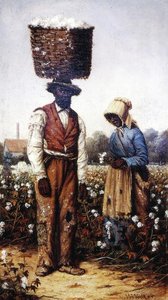
He became celebrated for his depictions of everyday life, focusing particularly on the experiences of Black sharecroppers and laborers. His paintings are characterized by a realistic style and an empathetic portrayal of his subjects. Two of his most recognized works – depicting scenes from rural Southern life – were reproduced as chromolithographs by Currier and Ives, significantly expanding their reach.
Notable Works
- Bombardment of Fort Sumter, Charleston Harbor, Charleston, South Carolina, 1863: A powerful depiction of a key event initiating the Civil War. Walker meticulously rendered the siege, conveying both the drama and the devastation of this historic confrontation.
- St. Finebar's Church, Broad Street, Charleston: Showcasing Walker’s skill in architectural painting and capturing the essence of Charleston’s cityscape. He skillfully portrayed the grandeur of St. Finebar’s, emphasizing its ornate details and highlighting the spiritual significance of the location.
- Cotton Gin, Adams County, Mississippi: A representative example of his genre scenes focusing on agricultural labor. Walker's depiction captures the arduous toil of cotton pickers with remarkable accuracy, conveying a sense of dignity and perseverance amidst challenging circumstances.
- Cabin Scene 1: Illustrating the living conditions of Black families in rural Mississippi. This painting exemplifies Walker’s commitment to portraying the realities of African American life with sensitivity and honesty.
Themes and Style
Walker’s work is distinguished by its focus on genre painting, a style that depicts scenes from everyday life. He masterfully captured the dignity and resilience of his subjects, offering a nuanced perspective on post-Reconstruction Southern society. His paintings often portray the hardships faced by African Americans while also highlighting their strength and community spirit.
Historical Significance & Legacy
Walker’s art provides valuable historical documentation of a complex period in American history. He offers insights into the social, economic, and racial dynamics of the post-Civil War South that are often absent from more formal historical accounts. His paintings serve as visual testimonies to the lives of those who lived through this era.
He continued painting until his death on January 3, 1921, in Charleston, where he is buried in the family plot at Magnolia Cemetery. Today, his work can be found in museums such as the Gibbes Museum of Art in Charleston, South Carolina, ensuring that his legacy continues to inspire and inform future generations.
Influences
While specific artistic influences are not extensively documented, Walker’s realism suggests an awareness of contemporary American genre painters. His focus on social commentary aligns with a broader trend in 19th-century art towards addressing issues of class and inequality.
Perguntas e Respostas
Existe uma visão geral de todos os temas que William Aiken Walker pintou?
As obras de William Aiken Walker podem ser exploradas por tema na página Atlas de Temas do artista.
De onde é William Aiken Walker?
William Aiken Walker nasceu em Estados Unidos da América.
Onde posso ver todas as obras de William Aiken Walker?
Todas as obras de William Aiken Walker no este site podem ser exploradas na página de Todas as obras do artista.