Garanție de rambursare în 100 de zile Livrare gratuită în toată lumea
449.564opere de artă 30.613artişti 4.658muzee 32limbi
Intrare în catalog

Lovers

1530. Fresco, 36.0 x 40.0 cm. Muzeul de Artă Fine din Budapesta.

Fig. 1. Albrecht Altdorfer, Lovers, 1530. Prezentat ca reproducerea specificată de dumneavoastră: , .

§ 1Date catalog

Dimensiuni
36.0 x 40.0 cm

§ 2Abstract

Descriere obiect de colecție

Experience the serene intimacy of Albrecht Altdorfer's 1530 Danube School masterpiece, capturing nature's sublime beauty; discover this Renaissance vision today.

Biografie artist

Albrecht Altdorfer (1480-1538): Pionier al picturii de peisaj renascentistei germane, figura cheie a școlii Danubei. Explorează gravurile sale, opere religioase și arta inovatoare.

§ 3Comentariu

A Tender Encounter in the Heart of the Danube School

In the quiet intimacy of Albrecht Altdorfer’s Lovers, painted around 1530, we are invited into a private moment that transcends the centuries. This masterpiece of the Northern Renaissance does not rely on grand, sweeping landscapes to command attention; instead, it finds its power in the subtle, magnetic pull between two souls. The painting captures a man and a woman caught in a delicate dance of connection, their presence nestled within the verdant embrace of a dense forest. As they stand close, engaged in an intimate moment, the viewer is drawn into a world where human emotion and the natural environment are inextricably linked.

Housed in the Budapest Museum of Fine Arts, this fresco fragment serves as a profound emblem of the Danube School—an artistic movement that revolutionized landscape painting. Altdorfer, a pioneer of this era, moved away from the flat, stylized backgrounds of previous Byzantine conventions to embrace a technique defined by meticulous observation. He painstakingly rendered the textures of foliage, bark, and stone, capturing not just the physical reality of the forest, but the way light dances across every surface. This mastery of atmospheric perspective creates a sense of depth that makes the scene feel alive, breathing with a quiet, spiritual significance.

Symbolism and the Eternal Strength of Nature

Beyond its immediate romantic appeal, Lovers is laden with symbolic resonance rooted in medieval tradition. The composition uses the surrounding landscape to mirror the internal state of the subjects. The towering trees, rendered with Altdorfer's signature attention to detail, represent strength and resilience—symbols deeply ingrained in Christian iconography that suggest the enduring power of love. As the dappled sunlight filters through the thick canopy, it evokes biblical references to divine illumination, hinting at a transformative grace descending upon this earthly union.

For the discerning collector or interior designer, this piece offers more than mere decoration; it provides a window into a meditative state. The interplay of light and shadow creates a rhythmic, almost musical quality that can bring a sense of profound serenity to any space. Whether viewed as a study in Renaissance technique or as a poetic tribute to intimacy, the artwork possesses a monumental impact that belies its modest dimensions of 36 x 40 cm.

An Inspiration for Modern Interiors

Integrating a high-quality reproduction of Altdorfer’s work into a contemporary setting allows for a sophisticated dialogue between history and modern aesthetics. The organic textures and earthy color harmonies found in the Danube School style complement a wide array of decor, from classical European estates to minimalist modern apartments. The painting's ability to evoke wonder and contemplation makes it an ideal focal point for rooms designed for reflection, such as libraries, study alcoves, or quiet sitting rooms.

Owning a piece that captures such a delicate balance of realism and expressive impulse is a rare opportunity. It allows the inhabitant of a space to surround themselves with the legacy of the Northern Renaissance—a period where the landscape first became an independent subject, capable of expressing the deepest nuances of the human spirit.

Întrebări și răspunsuri

Ce atmosferă ar aduce într-o încăpere o reproducere a operei "Lovers" de Albrecht Altdorfer?

Cu atmosfera sa Romantic, „Lovers” este recomandată pentru o Living Room.

Ce spațiu este recomandat pentru "Lovers" de Albrecht Altdorfer?

"Lovers" de Albrecht Altdorfer este recomandată pentru o Living Room. Această sugestie se bazează pe subiectul, culorile și atmosfera lucrării.

Ce origine națională stă la baza German Renaissance Landscape Painting-ului din "Lovers"?

"Lovers" face legătura între mișcarea German Renaissance Landscape Painting și Germania, prin locul de naștere al creatorului său.
§ 4Artistul

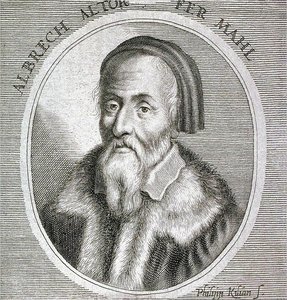
Albrecht Altdorfer

Albrecht Altdorfer

1480 - 1538, Germania

Informații rapide despre Albrecht Altdorfer

  • Artistic Movement Or Style: Danube School, Rena.
  • Artists Or Movements Influenced By This Artist: ['Romantici Germani']
  • Artists Who Influenced This Artist:
    • Giorgione
    • Cranach cel Bătrân
  • Date Of Birth: c. 1480
  • Date Of Death: 1538
  • Full Name: Albrecht Altdorfer
  • Nationality: German
  • Notable Artworks:
    • Bătălia lui Alexander
    • Pădurea Mare
  • Place Of Birth: Regensburg, Germania

Biografie artist

A Pioneer of the Northern Renaissance Landscape

Albrecht Altdorfer, born around 1480 in Regensburg, Germany, stands as a pivotal figure bridging the late Gothic period and the burgeoning German Renaissance. He wasn’t merely an artist *of* his time; he actively reshaped its artistic trajectory, particularly in the realm of landscape painting. Coming from a family deeply rooted in artistic tradition—his father, Ulrich Altdorfer, was a painter and miniaturist—the younger Altdorfer quickly distinguished himself not as a follower, but as an innovator. Regensburg, a free imperial city strategically positioned on the Danube River, provided a vibrant cultural backdrop for his formative years. This location profoundly shaped his artistic sensibilities, fostering a connection to the natural world that would become central to his oeuvre. Beyond his artistry, Altdorfer was a man of civic duty, serving as both town architect and council member—a testament to his versatile talents. However, it was through his art—particularly his early engravings and drawings from around 1506, such as *Stygmata of St. Francis* and *St. Jerome*—that he first revealed a unique artistic voice, hinting at the emotional intensity and meticulous detail that would characterize his mature style. His work immediately demonstrated an unusual sensitivity to light and shadow, capturing the atmosphere of the natural world with unprecedented realism and feeling.

The Danube School and a Revolutionary Vision

Altdorfer is most prominently recognized as a leading member of the Danube School, an influential group of artists active in southern Germany during the early 16th century. This artistic circle shared a common fascination with exploring the expressive potential of landscape, elevating it from a mere backdrop to become a central subject in its own right. Before Altdorfer, landscapes primarily served as settings for religious or historical narratives; he dared to depict nature *for itself*, imbued with atmosphere and emotional resonance. A transformative journey down the Danube River and into the Alps around 1511 proved crucial to his artistic development. The dramatic vistas, dense forests, and imposing mountains ignited within him a passion for depicting nature with unprecedented fidelity and feeling. He became, arguably, the first modern landscape painter, not simply replicating what he saw but conveying an emotional response—a sense of awe, mystery, and even spiritual connection. This wasn’t topographical accuracy alone; it was about capturing the *experience* of being within a landscape. His work, like “The Large Spruce,” exemplifies this shift, offering a serene and intricate depiction of nature's beauty. The Danube School artists, including Altdorfer, sought to move beyond the stylized representations of earlier periods, embracing a more direct and emotionally charged approach to their subjects.

Masterpieces and Artistic Influences

Throughout his career, Altdorfer produced a diverse body of work encompassing paintings, engravings, drawings, and architectural designs. Among his most celebrated achievements is *The Battle of Alexander at Issus* (1529), commissioned by Duke William IV of Bavaria. This monumental painting showcases not only his mastery of composition and detail but also his innovative use of landscape to heighten the dramatic tension of the battle scene. The swirling clouds, jagged mountains, and chaotic melee of soldiers create a sense of overwhelming energy and spectacle. It’s a testament to Altdorfer's ability to integrate narrative with atmospheric effect, transforming a historical event into a powerful visual experience. His collaboration with Emperor Maximilian I in Innsbruck from 1513 further expanded his artistic horizons and provided opportunities for large-scale projects. Altdorfer’s style wasn’t formed in isolation; he absorbed influences from various sources. The poetic lyricism of Giorgione, the expressive figures of Lucas Cranach the Elder, and the meticulous detail of Albrecht Dürer all left their mark on his work. However, he synthesized these influences into a uniquely personal vision, characterized by its emotional intensity, dramatic lighting, and evocative landscapes. His engravings, such as “Venus after the Bath”, demonstrate his skill in this medium, showcasing delicate lines and intricate details. The influence of German woodcut tradition is also evident in his work, particularly in his early prints.

Legacy and Lasting Impact

Albrecht Altdorfer’s artistic legacy extends far beyond the 55 panels, 120 drawings, and numerous engravings he created during his lifetime. He fundamentally altered the way artists approached landscape painting, paving the way for future generations to explore its expressive possibilities. His influence can be seen in the works of later German Romantic painters who similarly sought to capture the sublime beauty and emotional power of nature. Today, Altdorfer’s art is represented in major museum collections worldwide, including the Museum Ostdeutsche Galerie in Germany—which houses his *Madonna (Beautiful Maria of Regensburg)*—and the Kunstsammlungen und Museen Augsburg in Austria. His innovative spirit, technical skill, and profound connection to the natural world continue to inspire artists and captivate audiences centuries after his death in 1538. He remains a towering figure of the German Renaissance, a true pioneer who dared to see landscape not merely as scenery but as a powerful force capable of evoking deep emotion and spiritual meaning. His work serves as a testament to the enduring power of art to transform our perception of the world around us—a legacy that continues to resonate with viewers today.

Exploring Altdorfer’s Diverse Works

Beyond his iconic landscapes and battle scenes, Altdorfer's artistic range encompassed religious subjects, mythological narratives, and even architectural designs. His depictions of biblical stories, such as “Abraham’s Sacrifice”, are imbued with a dramatic intensity and emotional depth that set them apart from earlier interpretations. He wasn’t simply illustrating scripture; he was exploring the human condition through the lens of faith. His religious works often feature dynamic compositions and expressive figures, reflecting his broader artistic interests. His engravings frequently depict scenes from classical mythology, showcasing his ability to combine technical skill with imaginative storytelling. Furthermore, Altdorfer's architectural designs, particularly those related to the fortifications of Regensburg, demonstrate a practical understanding of urban planning alongside his artistic talent. His versatility as an artist and civic leader highlights the breadth of his influence on 16th-century Germany.

§ 5Lucrări similare

§ 6Întrebări

Informații rapide

  • Subject or theme: Romantic encounter
  • Influences: Danube School
  • Artistic style: Realistic portrayal
  • Dimensions: 36 x 40 cm
  • Location: Szépmûvészeti Múzeum, Budapest
  • Artist: Albrecht Altdorfer

Test de cunoștințe despre artă

Fiecare întrebare are un singur răspuns corect.

Întrebare 1:
What is the title of this artwork?
Întrebare 2:
In what museum is Albrecht Altdorfer's 'Lovers' currently housed?
Întrebare 3:
What artistic movement does Albrecht Altdorfer belong to?
Întrebare 4:
Approximately when was 'Lovers' painted?
Întrebare 5:
What is a prominent feature of Altdorfer’s artistic style, evident in 'Lovers'?

§ 7Citați această lucrare

AllPaintingsStore.com, “Albrecht Altdorfer, Lovers (1530)”, https://allpaintingsstore.com/ro/art/albrecht-altdorfer-lovers-8XZ8UM-en/ArtistReproduction/ (accesat la 11 Octombrie 2026).

§ 8Reproducția

Reproducere pictată manual în ulei

Pictură în ulei pe pânză, pictată manual de artiștii noștri la dimensiunea și ramele dorite de dumneavoastră, pe comandă. ( Comută pe versiunea Print Comută pe Imagine Digitală)

Este specificat în marginea foii de comandă; starea actuală a acelei foi este următoarea.

Lovers

Tehnică de reproducere

Dimensiune reproducere

-

Selecție de artiști de elită

Mai multe detalii, rafinament și timp suplimentar de execuție

-

Ramă pentru reproducere artistică

-

-

Pentru opere de artă sau reproduceri care depășesc 105 cm (aproximativ 41 de inch) pe oricare dintre laturi, cadrul va fi livrat demontat, sub formă de kit. Această metodă asigură o livrare sigură și previne deteriorarea în timpul transportului.

Este necesară asamblarea profesională – acest produs nu este de tip DIY (de făcut singur).
Kitul trebuie asamblat, iar pânza întinsă, de către un legător de cadre experimentat, utilizând adeziv pentru lemn (neinclus în colet), o cheie pentru întinderea pânzei și cleme pentru a menține barele la unghi drept în timp ce adezivul se usucă. Asamblarea incorectă sau tensiunea neuniformă a pânzei pot deteriora permanent opera de artă și nu sunt acoperite de garanția noastră.

  • Toate barele din lemn masiv sunt incluse, tăiate cu precizie la dimensiunea necesară.

  • Asamblat cu șuruburile incluse, plus adeziv pentru lemn pentru îmbinările de colț, care nu este furnizat și trebuie achiziționat de către tâmplarul dumneavoastră.

  • Sunt necesare unelte profesionale care nu sunt incluse: o șipte de întindere a pânzei (tensionator) și cleme pentru a menține barele la unghi drept în timp ce adezivul se usucă.

Important:
Îmbinările de colț necesită adeziv pentru lemn, barele trebuie fixate cu clești de strângere până când adezivul este complet uscat, iar întinderea pânzei pe cadrul asamblat necesită un clește pentru întins pânza. Niciunul dintre aceste elemente nu este inclus în kit. Vă rugăm să consultați un încadrator profesionist cu experiență înainte de a comanda această dimensiune.

Etichetă de prezentare

-

-

Lac de protecție

Lac lucios (intensifică nuanțele și oferă protecție împotriva luminii și a umidității)

-

Personalizează opera mea de artă

Exemple de elemente ce pot fi personalizate: Înlocuirea feței cu fotografia clientului; Adăugarea unui animal de companie (de exemplu, înlocuirea unei pisici cu un câine); Includerea unui mesaj ascuns în fundal; Modificarea peisajului sau a elementelor din fundal.

-

Livrare rapidă

Livrare la nivel mondial () în 3-4 săptămâni, în loc de cele 5 săptămâni standard. (8 Noiembrie). Fără compromisuri când vine vorba de calitate.

-

Livrare rapidă

Livrare la nivel mondial () în 5 săptămâni. (15 Noiembrie).

Inclus

Preț total calculat

lei 1230

Inclus în fiecare comandă

  • Livrare expres gratuită la nivel mondial
  • Pânză de in de înaltă calitate
  • Asigurare completă pentru transport
  • Garanție de rambursare a taxelor vamale
  • Garanția fidelității culorilor
  • Politica de retur în 100 de zile (doar pentru defecte de fabricație)
  • Garanție de rambursare 100%
  • Ofertă pentru comenzi multiple
Fișă de comandă