


 Vezi în context
 Trimite
 Distribuie
 Detalii
 Ghidul

 Descarcă
 Produse similare
 Radiografie
 Diaporama
 Statistici
Minoutcha


 Citește mai mult
Giclée / Imprimare artistică
Printuri giclée sau pe canvas de calitate muzeală, cu proces de producție rapid și opțiuni flexibile de finisare. ( Comandă pictură realizată manual Treci la imagine digitală)




P118B lei10

P118H lei10

P118W lei10

P438Z lei10

P508JH lei12

P508YH lei12

P805H lei10

P805Z lei10

P919BZ lei10

P919G lei10

P919XJ lei10

P959ZH lei10

P968JZ lei12

W106C lei8

W218G lei10

W218JH lei8

W218Y lei10

W307PJ lei10

W316G lei10

W316PJ lei8

W316Y lei10

W398PJ lei8

W4111J lei10

W500HY lei15

W500JH lei15

W692G lei12

W849H lei8

W940BG lei15

W953PJ lei8




Alegeți dintre dimensiunile noastre prestabilite, care respectă proporțiile originale ale operei de artă.

Introduceți lățimea și înălțimea de care aveți nevoie, pentru a se potrivi ramei sau peretelui dumneavoastră. O printare poate fi doar tăiată, niciodată extinsă dincolo de dimensiunea imaginii originale, astfel încât o dimensiune cu o formă diferită va pierde o parte din imagine. Vă trimitem o simulare digitală pentru aprobare înainte de a imprima orice. Imaginea afișată pe această pagină nu prezintă tăierea reală — doar simularea arată acest lucru.
Livrare în întreaga lume () în 2 săptămâni, în loc de cele 4/5 săptămâni standard. (24 Octombrie)

Livrare expres gratuită la nivel mondial

Pânză de in premium

Asigurare completă pentru transport

Garanție de rambursare a taxelor vamale

Garanția fidelității culorilor

Politica de retur în 100 de zile (doar pentru defecte)

Garanție de rambursare 100%

Reducere pentru comenzi multiple
 Opțiunea cu sticlă este disponibilă doar pentru dimensiuni de sub 110 cm

Minoutcha
Giclée / Imprimare artistică
Dimensiune reproducere
-


Preț total
lei 296
A Portrait of Quiet Intensity: Decoding Minoutcha by Amedeo Modigliani
“Minoutcha,” painted in 1917, is more than just a depiction of a woman; it’s an embodiment of Modigliani's signature style—a hauntingly beautiful distillation of melancholy and longing. This portrait captures the gaze of a figure whose eyes hold a profound stillness, drawing the viewer into a contemplative space alongside her.
- Subject Matter: The painting portrays Madame Gabrielle Buffet-Dubois, a Parisian actress known for her performances in operettas. Modigliani’s fascination with theatrical artistry is evident in his meticulous attention to detail—the subtle nuances of expression and posture that convey emotion without overt gesture.
- Style & Technique: Modigliani's distinctive approach – often termed “elongated form” – revolutionized portraiture. He achieved this effect through a deliberate simplification of anatomical proportions, elongating the face and neck while maintaining a remarkably realistic depiction of the eyes. The artist employed tempera on canvas, a technique favored for its luminosity and ability to capture subtle tonal variations.
- Historical Context: Created during the turbulent years leading up to World War I, “Minoutcha” reflects the anxieties and uncertainties of the era. However, it transcends mere historical documentation; instead, it speaks to universal themes of beauty, vulnerability, and introspection—a testament to Modigliani’s ability to distill complex emotions into a single image.
Symbolism & Emotional Resonance
The muted palette – predominantly ochre, ivory, and dusky rose – contributes significantly to the painting's emotional impact. These colors evoke feelings of serenity alongside sadness, mirroring the contemplative mood conveyed by Madame Buffet-Dubois’ gaze. The chair and bookshelf serve as symbolic anchors, grounding the figure in a domestic setting while simultaneously hinting at intellectual pursuits—a reflection of Modigliani’s own engagement with philosophical ideas.
- The Eyes: Perhaps the most striking element of “Minoutcha” are Madame Buffet-Dubois' eyes. They appear to gaze directly out at the viewer, conveying a sense of profound awareness and inner contemplation. Modigliani’s masterful rendering captures not just physical appearance but also psychological depth—a characteristic that distinguishes his portraits from more conventional representations.
- Composition: The careful arrangement of elements – the chair, bookshelf, and Madame Buffet-Dubois herself – creates a harmonious balance that reinforces the painting's contemplative atmosphere. Modigliani’s compositional choices prioritize visual clarity while subtly guiding the viewer’s eye toward the central figure and her expressive gaze.
Modigliani’s Legacy & Reproduction Considerations
Amedeo Modigliani’s influence extends far beyond his own lifetime, inspiring artists across generations. His pioneering use of tempera on canvas and his exploration of elongated form continue to resonate with contemporary painters and sculptors. When considering a reproduction of “Minoutcha,” collectors should prioritize archival quality prints that faithfully capture the painting's subtle tonal nuances and luminous surface texture—allowing them to experience the same emotional depth and contemplative beauty as Modigliani intended.
Întrebări și răspunsuri
Cum se întâlnesc mișcarea și epoca în "Minoutcha" de Modigliani?
„Minoutcha” aparține mișcării Expressionism, iar creatorul său a activat în epoca Era modernă.
Care sunt data și stilul pentru "Minoutcha" de Modigliani?
„Minoutcha” a fost creat în 1917, fiind o operă a mișcării Expressionism. Data și stilul ancorează lucrarea în istoria artei.
Există o fișă informativă despre "Minoutcha" de Modigliani pentru studenți?
O pagină de Ghid este disponibilă pentru "Minoutcha" de Modigliani: o fișă informativă imprimabilă despre operă, concepută pentru elevi și utilizarea în mediul școlar.
Opere similare


Biografie artist
A Life Etched in Longing: The World of Amedeo Modigliani
Amedeo Clemente Modigliani, a name synonymous with haunting beauty and melancholic grace, remains one of the most beloved and tragically romantic figures of early 20th-century art. Born in Livorno, Italy, in 1884 into a family steeped in Sephardic Jewish heritage, his life was marked by both profound artistic vision and persistent hardship. Frequent illness shadowed his youth – pleurisy and typhoid fever became unwelcome companions – perhaps instilling within him a sensitivity to fragility that would permeate his work.
Though born into relative comfort, the family’s financial fortunes waned, adding another layer of complexity to the young Modigliani's formative years. It was a childhood punctuated by intellectual stimulation, thanks to his mother and grandfather who introduced him to the works of Nietzsche, Baudelaire, and Lautréamont, laying the groundwork for an artistic sensibility that would reject conventional norms.
The pull of Paris proved irresistible, and in 1906, Modigliani embarked on a journey that would define his career. The city was then a crucible of artistic innovation, teeming with revolutionary ideas and challenging conventions. He immersed himself in the vibrant art scene, encountering giants like Pablo Picasso and Constantin Brâncuși, figures who profoundly shaped his aesthetic trajectory. Initially drawn to the burgeoning Cubist movement, Modigliani quickly found its rigid geometry too constricting for his expressive needs. His artistic spirit yearned for something more lyrical, more deeply rooted in human emotion.
He began a period of intense experimentation, absorbing influences from African sculpture – particularly its elongated forms and simplified features – and the archaic grace of Italian Renaissance art. This fascination with African art would become a cornerstone of his distinctive style, informing his sculptural endeavors and shaping his artistic vision.
The Sculpted Soul: Style and Innovation
Modigliani’s signature style emerged as a unique synthesis of these diverse inspirations. His portraits, arguably his most celebrated works, are instantly recognizable for their elongated faces and necks, almond-shaped eyes devoid of pupils, and an overall sense of serene melancholy. These were not merely likenesses; they were explorations of the inner life, capturing a profound psychological depth in each subject. He stripped away extraneous detail, focusing on essential forms to convey emotion with remarkable economy.
His nudes, often controversial during his lifetime, possess a similar quality – a quiet dignity and vulnerability that transcends mere physical representation. The figures are not overtly sensual but rather imbued with a sense of timeless beauty and existential longing. Modigliani’s masterful manipulation of line—a technique he honed through meticulous observation and relentless practice—became synonymous with his artistic idiom.
Notable Works
- Nude Bust (35 x 26 cm): A quintessential example of Modigliani’s elongated forms and expressive style, showcasing his mastery of the human figure.
- Reclining Nude with Loose Hair: Demonstrates his ability to capture the essence of femininity with a delicate balance of sensuality and vulnerability.
- Seated Female Nude (92 x 60 cm): A powerful depiction of the female form, characterized by its simplified shapes and serene composure.
- Portrait of Jeanne Hebuterne: Numerous portraits capturing his lover and muse, revealing a poignant emotional depth and intimate connection.
A Life Marked by Shadows
Modigliani’s personal life was as turbulent as his artistic journey. He struggled with poverty and addiction throughout much of his career, often relying on the generosity of friends and patrons. His relationship with Jeanne Hébuterne, a young artist herself, became the central emotional anchor in his life. They shared a deep love and mutual artistic understanding, but their happiness was tragically short-lived.
The pressures of poverty, Modigliani’s declining health, and Jeanne's pregnancy created an unbearable strain. In 1920, devastated by the birth of their daughter and overwhelmed by despair, Jeanne took her own life. Just days later, Modigliani succumbed to tubercular meningitis at the age of only 35.
Legacy of a Lost Generation
Despite facing little recognition during his lifetime, Amedeo Modigliani’s work experienced a dramatic surge in popularity after his death. His paintings and sculptures began to command increasingly high prices, and his distinctive style exerted a profound influence on subsequent generations of artists. He became an icon of the bohemian spirit, embodying the struggles and triumphs of a lost generation grappling with modernity and existential questions.
Today, Modigliani’s works are held in prestigious museums around the world, including the Osaka City Museum of Modern Art, the Musée d'Art Moderne de la Ville de Paris, and numerous private collections. His portraits continue to captivate viewers with their haunting beauty and emotional resonance, serving as a poignant reminder of a life lived on the edge – a life etched in longing, passion, and an unwavering commitment to artistic truth.
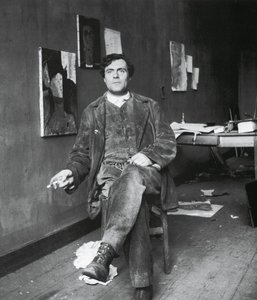
Modigliani
1884 - 1920 , Italia
Informații rapide
- Artistic Movement Or Style: Expresionism
- Artists Or Movements Influenced By This Artist: ['Modernism']
- Artists Who Influenced This Artist:
- Brâncuși
- Picasso
- Date Of Birth: 12 iulie 1884
- Date Of Death: 24 ianuarie 1920
- Full Name: Amedeo Clemente Modigliani
- Nationality: Italian
- Notable Artworks:
- Nud Bust
- Reclining Nude
- Seated Female Nude
- Place Of Birth: Livorno, Italia
Articole conexe

Capturing Elegance: The Soulful Essence and Timeless Grace of Modigliani-Style Artworks
Discover the profound beauty of Modigliani-style art. Explore the elegance of elongated forms and soulful portraits through our expert curation of hand-painted oil reproductions and museum-quality prints designed for the sophisticated collector.

Cubismul Expresionist: 10 Capodopere Esențiale pentru Decoruri de Artă Rafinate | AllPaintingsStore.ro
Descoperă cele mai importante 10 capodopere ale Cubismului Expresionist! Explorează poveștile lui Picasso, Braque și alți artiști revoluționari. Reproduceri de artă de calitate muzeală pentru un decor interior unic. AllPaintingsStore.ro

Modigliani: Cele Mai Iconice 25 De Opere – Artă, Frumusețe și Decorațiuni de Lux
Descoperă cele mai frumoase 25 de opere Modigliani! Explorează portrete expresive, sculpturi unice și nuduri iconice. Află povestea fiecărei picturi și adaugă eleganță locuinței tale cu replici de artă de lux pe AllPaintingsStore.com.
Egon Schiele: Cele Mai Remarcabile 25 De Opere – Artă, Decorațiuni și Inspirație
Descoperă cele mai importante 25 de opere ale lui Egon Schiele! Explorează expresionismul austriac, portretele intense și autoportretele emoționante. Reproduceri artă de calitate muzeală & inspirație decor pe AllPaintingsStore.com.

Eleganță eternă în artă: Top 10 opere care inspiră rafinament | AllPaintingsStore.ro
Descoperă top 10 opere de artă clasice ce emană eleganță și rafinament! Explorează poveștile din spatele picturilor celebre, artiști precum Monet și Renoir, și găsește inspirație pentru decorul interior. Reproduceri de calitate muzeală pe AllPaintingsStore.ro.


