Garanție de rambursare în 100 de zile Livrare gratuită în toată lumea
449.564opere de artă 30.613artişti 4.660muzee 32limbi
Intrare în catalog

Study for The Cellist

1909. Oil On Canvas.

Fig. 1. Modigliani, Study for The Cellist, 1909. Prezentat ca reproducerea specificată de dumneavoastră: , .

§ 1Date catalog

§ 2Abstract

Descriere obiect de colecție

Experience the melancholic beauty of Amedeo Modigliani's Study for The Cellist, a 1909 masterpiece blending African sculptural influences with early Modernism that invites you to explore his iconic expressive style.

Biografie artist

Descoperă arta fascinantă a lui Amedeo Modigliani (1884-1920): portrete iconice și sculpturi definite de forme încordate, ochii expresivi și o frumusețe tragică emoționantă. Explorează moștenirea acestui artist unic!

§ 3Comentariu

A Symphony of Form and Shadow

In the quiet, evocative realm of Amedeo Clemente Modigliani’s 1909 masterpiece, Study for The Cellist, we encounter more than a mere preparatory sketch; we enter a profound meditation on rhythm, shape, and the human spirit. This pivotal work serves as a cornerstone of early Modernism, capturing a moment where the artist began to strip away the superficial layers of reality to reveal a deeper, more structural truth. The composition centers on a seated musician, whose presence is defined not by intricate detail, but by a striking, almost architectural simplicity. As the eye wanders across the canvas, it is immediately drawn to the deliberate asymmetry of the figure, which sits slightly offset, creating a subtle visual tension that mirrors the soulful, introspective nature of the music being played.

The brilliance of this study lies in its masterful dialogue between organic curves and geometric precision. The cello itself dominates the lower register of the painting, its sweeping, rounded contours providing a soft, melodic counterpoint to the more rigid, angular lines found in the man’s clothing and facial structure. This interplay of shapes is heavily indebted to Modigliani’s fascination with African sculpture, where the essence of a form is captured through bold, simplified silhouettes rather than anatomical perfection. For the discerning collector or interior designer, this piece offers a sophisticated balance of movement and stillness, making it an ideal focal point for spaces that demand both intellectual depth and aesthetic grace.

The Palette of Melancholy and Light

Modigliani’s color language in Study for The Cellist is one of restrained elegance. He employs a muted, earthy palette—a harmonious blend of deep browns, warm ochre, charcoal blacks, and somber grays—to evoke an atmosphere of quiet contemplation. There is no clamor here, only the soft resonance of tone. Subtle highlights of cream and white emerge on the shirt collar and certain facial features, acting as delicate flickers of light within a sea of shadow. This monochromatic approach does not diminish the work; rather, it intensifies the emotional weight of the subject, suggesting a sense of timelessness and a gentle, lingering melancholy that is so characteristic of the artist’s oeuvre.

The technique employed is remarkably fluid, suggesting a rapid and intuitive execution. The texture appears smooth, with brushstrokes that are felt more than seen, contributing to the flattened perspective that defines the piece. By minimizing depth and treating the background as a flat, indistinct plane, Modigliani forces the viewer to confront the subject directly. This lack of environmental detail removes the cellist from a specific time or place, elevating the scene to a universal symbol of artistic devotion. To possess a reproduction of this work is to bring into one's home a fragment of the Bohemian spirit of Paris—a piece that speaks of the beauty found in simplicity and the profound resonance of a single, well-placed note.

Întrebări și răspunsuri

Cât de saturată este paleta culorilor din "Study for The Cellist"?

Culorile din "Study for The Cellist" de Modigliani au o saturație de Subtle Color. Saturația descrie cât de vii sau de tenue sunt culorile.

Cine a creat "Study for The Cellist" și în ce stil este realizată?

Modigliani a creat "Study for The Cellist", parte a mișcării Early Modernism.

Unde pot găsi opere de artă similare cu "Study for The Cellist" de Modigliani?

Pagina Lucrări similare pentru "Study for The Cellist" de Modigliani prezintă opere de artă similare.
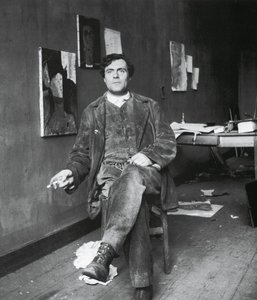
§ 4Artistul

Modigliani

Modigliani

1884 - 1920, Italia

Informații rapide despre Modigliani

  • Artistic Movement Or Style: Expresionism
  • Artists Or Movements Influenced By This Artist: ['Modernism']
  • Artists Who Influenced This Artist:
    • Brâncuși
    • Picasso
  • Date Of Birth: 12 iulie 1884
  • Date Of Death: 24 ianuarie 1920
  • Full Name: Amedeo Clemente Modigliani
  • Nationality: Italian
  • Notable Artworks:
    • Nud Bust
    • Reclining Nude
    • Seated Female Nude
  • Place Of Birth: Livorno, Italia

Biografie artist

A Life Etched in Longing: The World of Amedeo Modigliani

Amedeo Clemente Modigliani, a name synonymous with haunting beauty and melancholic grace, remains one of the most beloved and tragically romantic figures of early 20th-century art. Born in Livorno, Italy, in 1884 into a family steeped in Sephardic Jewish heritage, his life was marked by both profound artistic vision and persistent hardship. Frequent illness shadowed his youth – pleurisy and typhoid fever became unwelcome companions – perhaps instilling within him a sensitivity to fragility that would permeate his work.

Though born into relative comfort, the family’s financial fortunes waned, adding another layer of complexity to the young Modigliani's formative years. It was a childhood punctuated by intellectual stimulation, thanks to his mother and grandfather who introduced him to the works of Nietzsche, Baudelaire, and Lautréamont, laying the groundwork for an artistic sensibility that would reject conventional norms.

The pull of Paris proved irresistible, and in 1906, Modigliani embarked on a journey that would define his career. The city was then a crucible of artistic innovation, teeming with revolutionary ideas and challenging conventions. He immersed himself in the vibrant art scene, encountering giants like Pablo Picasso and Constantin Brâncuși, figures who profoundly shaped his aesthetic trajectory. Initially drawn to the burgeoning Cubist movement, Modigliani quickly found its rigid geometry too constricting for his expressive needs. His artistic spirit yearned for something more lyrical, more deeply rooted in human emotion.

He began a period of intense experimentation, absorbing influences from African sculpture – particularly its elongated forms and simplified features – and the archaic grace of Italian Renaissance art. This fascination with African art would become a cornerstone of his distinctive style, informing his sculptural endeavors and shaping his artistic vision.

The Sculpted Soul: Style and Innovation

Modigliani’s signature style emerged as a unique synthesis of these diverse inspirations. His portraits, arguably his most celebrated works, are instantly recognizable for their elongated faces and necks, almond-shaped eyes devoid of pupils, and an overall sense of serene melancholy. These were not merely likenesses; they were explorations of the inner life, capturing a profound psychological depth in each subject. He stripped away extraneous detail, focusing on essential forms to convey emotion with remarkable economy.

His nudes, often controversial during his lifetime, possess a similar quality – a quiet dignity and vulnerability that transcends mere physical representation. The figures are not overtly sensual but rather imbued with a sense of timeless beauty and existential longing. Modigliani’s masterful manipulation of line—a technique he honed through meticulous observation and relentless practice—became synonymous with his artistic idiom.

Notable Works

  • Nude Bust (35 x 26 cm): A quintessential example of Modigliani’s elongated forms and expressive style, showcasing his mastery of the human figure.
  • Reclining Nude with Loose Hair: Demonstrates his ability to capture the essence of femininity with a delicate balance of sensuality and vulnerability.
  • Seated Female Nude (92 x 60 cm): A powerful depiction of the female form, characterized by its simplified shapes and serene composure.
  • Portrait of Jeanne Hebuterne: Numerous portraits capturing his lover and muse, revealing a poignant emotional depth and intimate connection.

A Life Marked by Shadows

Modigliani’s personal life was as turbulent as his artistic journey. He struggled with poverty and addiction throughout much of his career, often relying on the generosity of friends and patrons. His relationship with Jeanne Hébuterne, a young artist herself, became the central emotional anchor in his life. They shared a deep love and mutual artistic understanding, but their happiness was tragically short-lived.

The pressures of poverty, Modigliani’s declining health, and Jeanne's pregnancy created an unbearable strain. In 1920, devastated by the birth of their daughter and overwhelmed by despair, Jeanne took her own life. Just days later, Modigliani succumbed to tubercular meningitis at the age of only 35.

Legacy of a Lost Generation

Despite facing little recognition during his lifetime, Amedeo Modigliani’s work experienced a dramatic surge in popularity after his death. His paintings and sculptures began to command increasingly high prices, and his distinctive style exerted a profound influence on subsequent generations of artists. He became an icon of the bohemian spirit, embodying the struggles and triumphs of a lost generation grappling with modernity and existential questions.

Today, Modigliani’s works are held in prestigious museums around the world, including the Osaka City Museum of Modern Art, the Musée d'Art Moderne de la Ville de Paris, and numerous private collections. His portraits continue to captivate viewers with their haunting beauty and emotional resonance, serving as a poignant reminder of a life lived on the edge – a life etched in longing, passion, and an unwavering commitment to artistic truth.

§ 5Lucrări similare

§ 6Întrebări

Informații rapide

  • Subject or theme: Musical Portraiture
  • Influences:
    • Nietzsche
    • Baudelaire
  • Artistic style: Stylized Expressionism
  • Movement: Early Modernism
  • Medium: Oil on Canvas

§ 7Citați această lucrare

AllPaintingsStore.com, “Modigliani, Study for The Cellist (1909)”, https://allpaintingsstore.com/ro/art/amedeo-clemente-modigliani-study-for-the-cellist-5ZKBK5-en/ (accesat la 9 Octombrie 2026).

§ 8Reproducția

Reproducere pictată manual în ulei

Pictură în ulei pe pânză, pictată manual de artiștii noștri la dimensiunea și ramele dorite de dumneavoastră, pe comandă. ( Comută pe versiunea Print Comută pe Imagine Digitală)

Este specificat în marginea foii de comandă; starea actuală a acelei foi este următoarea.

Study for The Cellist

Tehnică de reproducere

Dimensiune reproducere

-

Selecție de artiști de elită

Mai multe detalii, rafinament și timp suplimentar de execuție

-

Ramă pentru reproducere artistică

-

-

Pentru opere de artă sau reproduceri care depășesc 105 cm (aproximativ 41 de inch) pe oricare dintre laturi, cadrul va fi livrat demontat, sub formă de kit. Această metodă asigură o livrare sigură și previne deteriorarea în timpul transportului.

Este necesară asamblarea profesională – acest produs nu este de tip DIY (de făcut singur).
Kitul trebuie asamblat, iar pânza întinsă, de către un legător de cadre experimentat, utilizând adeziv pentru lemn (neinclus în colet), o cheie pentru întinderea pânzei și cleme pentru a menține barele la unghi drept în timp ce adezivul se usucă. Asamblarea incorectă sau tensiunea neuniformă a pânzei pot deteriora permanent opera de artă și nu sunt acoperite de garanția noastră.

  • Toate barele din lemn masiv sunt incluse, tăiate cu precizie la dimensiunea necesară.

  • Asamblat cu șuruburile incluse, plus adeziv pentru lemn pentru îmbinările de colț, care nu este furnizat și trebuie achiziționat de către tâmplarul dumneavoastră.

  • Sunt necesare unelte profesionale care nu sunt incluse: o șipte de întindere a pânzei (tensionator) și cleme pentru a menține barele la unghi drept în timp ce adezivul se usucă.

Important:
Îmbinările de colț necesită adeziv pentru lemn, barele trebuie fixate cu clești de strângere până când adezivul este complet uscat, iar întinderea pânzei pe cadrul asamblat necesită un clește pentru întins pânza. Niciunul dintre aceste elemente nu este inclus în kit. Vă rugăm să consultați un încadrator profesionist cu experiență înainte de a comanda această dimensiune.

Etichetă de prezentare

-

-

Lac de protecție

Lac lucios (intensifică nuanțele și oferă protecție împotriva luminii și a umidității)

-

Personalizează opera mea de artă

Exemple de elemente ce pot fi personalizate: Înlocuirea feței cu fotografia clientului; Adăugarea unui animal de companie (de exemplu, înlocuirea unei pisici cu un câine); Includerea unui mesaj ascuns în fundal; Modificarea peisajului sau a elementelor din fundal.

-

Livrare rapidă

Livrare la nivel mondial () în 3-4 săptămâni, în loc de cele 5 săptămâni standard. (6 Noiembrie). Fără compromisuri când vine vorba de calitate.

-

Livrare rapidă

Livrare la nivel mondial () în 5 săptămâni. (13 Noiembrie).

Inclus

Preț total calculat

lei 1233

Inclus în fiecare comandă

  • Livrare expres gratuită la nivel mondial
  • Pânză de in de înaltă calitate
  • Asigurare completă pentru transport
  • Garanție de rambursare a taxelor vamale
  • Garanția fidelității culorilor
  • Politica de retur în 100 de zile (doar pentru defecte de fabricație)
  • Garanție de rambursare 100%
  • Ofertă pentru comenzi multiple
Fișă de comandă