

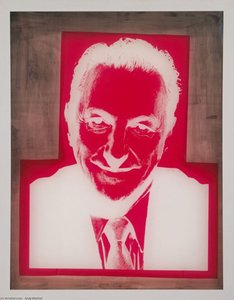
1976. Silkscreen.

§ 1Date catalog


Această lucrare este protejată de drepturile de autor
Lucrarea de artă afișată pe această pagină este protejată de legile privind drepturile de autor, ceea ce înseamnă că nu putem crea sau vinde în mod legal o reproducere identică. Această protecție este garantată prin acorduri internaționale, precum Convenția de la Berna și de legile naționale, inclusiv cele prevăzute de Legea dreptului de autor din S.U.A. – Titlul 17. Toate drepturile rezervate. Orice reproducere neautorizată este interzisă.
Ca alternativă respectuoasă și legală, oferim tablouri pictate manual, personalizate, inspirate de original. Artistii noștri experimentați și profesioniști studiază cu atenție stilul, starea de spirit și esența artistică a originalului pentru a crea o piesă nouă și unică, care evocă aceeași emoție – rămânând, în același timp, o creație originală în sine.
Această metodă respectă pe deplin reglementările privind drepturile de autor, deoarece nu implică copierea sau duplicarea operei protejate. În schimb, este o reinterpretare creativă – o pictură nouă, influențată de original, dar care nu este identică cu acesta.
 Citește mai mult
§ 2Abstract
Descriere obiect de colecție
A striking red hammer and sickle emblem sits atop a chair in this powerful 1976 Pop Art silkscreen by Andy Warhol that captures Cold War tensions and invites you to explore his iconic political imagery.
Biografie artist
Descoperă Andy Warhol (1928-1987), pionierul Pop Art și simbol al culturii americane! Silkescreen-uri iconice, filme provocatoare și obsesia pentru celebritate în operele sale emblematice.
§ 3Comentariu
The Resonance of Red: Encountering Warhol’s Political Still Life
In the vast landscape of Pop Art, few images command attention with such stark, unapologetic clarity as Andy Warhol’s 1976 masterpiece, Hammer and Sickle. At first glance, the viewer is met with a deceptively simple composition: a vibrant, blood-red emblem of the hammer and sickle superimposed upon the quiet, unassuming presence of a chair. Yet, beneath this surface-level simplicity lies a profound tension, a visual dialogue that captures the very essence of the Cold War era. Warhol, a master of transforming the mundane into the monumental, utilizes this piece to bridge the gap between political propaganda and fine art, inviting us to contemplate the intersection of ideology and everyday existence. The presence of other scattered objects—a pair of scissors, a knife, and a bottle—adds a layer of domesticity that contrasts sharply with the revolutionary weight of the central symbol, creating a sense of an interrupted moment in time, where the tools of industry and the artifacts of daily life collide.
Technique as Democracy: The Power of the Screen
To truly grasp the impact of this work, one must look toward Warhol’s revolutionary use of the silk screen printing process. This technique, which allowed for the production of multiple identical prints, was not merely a choice of convenience but a profound philosophical statement on the democratization of art. By utilizing screenprinting, Warhol stripped away the traditional aura of the "unique" masterpiece, instead embracing the rhythmic, mechanical nature of mass production. This method allowed for the achievement of incredibly vibrant colors and precise tonal gradations that make the red of the emblem pulse against its backdrop with an almost electric intensity. For the collector or interior designer, this technique offers a unique opportunity to possess a piece that embodies the industrial spirit of the 20th century. The repetition inherent in his process mirrors the very nature of the symbols he depicts—symbols designed for mass consumption and widespread recognition—thereby blurring the lines between high culture and the pervasive imagery of popular propaganda.
An Enduring Statement for Contemporary Interiors
For those seeking to infuse a modern space with intellectual depth and visual drama, Hammer and Sickle serves as an incomparable focal point. It is far more than mere decoration; it is a provocative conversation starter that challenges the viewer to look beyond the aesthetic and engage with the historical currents of the late 1970s. The bold, graphic nature of the work makes it particularly suited for contemporary settings where minimalism meets conceptual strength. Whether placed in a curated gallery or as a striking element in a sophisticated residential study, the piece brings an unmistakable energy—a blend of industrial grit and artistic refinement. Owning a high-quality reproduction of this work allows one to celebrate Warhol’s legacy of provocation, ensuring that the echoes of revolution and the beauty of Pop Art continue to resonate powerfully within the walls of the modern home.
Întrebări și răspunsuri
Cum este descrisă atmosfera din "Hammer and Sickle" de Andy Warhol?
Ambianta generală a operei "Hammer and Sickle" de Andy Warhol este Bold. Această stare descrie atmosfera generală a lucrării.
Ce dimensiune de print pentru "Hammer and Sickle" de Andy Warhol se potrivește cu camera recomandată?
Pentru o Living Room, recomandăm pentru "Hammer and Sickle" o dimensiune de tipar de Large.
Ce reprezintă "Hammer and Sickle" de Andy Warhol?
Temele prezente în "Hammer and Sickle" de Andy Warhol includ symbolism, communism, industrial, tool, iconography, reproduction, warholesque. Împreună, acestea definesc subiectul întregii opere de artă.





 Comută pe versiunea Print


 Pentru opere de artă sau reproduceri care depășesc 105 cm (aproximativ 41 de inch) pe oricare dintre laturi, cadrul va fi livrat demontat, sub formă de kit. Această metodă asigură o livrare sigură și previne deteriorarea în timpul transportului.


