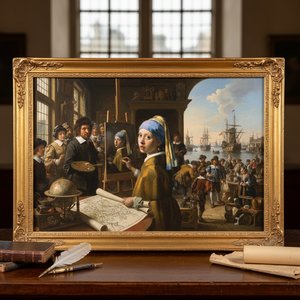
1531. Oil On Canvas, 66.0 x 54.0 cm. Rijksmuseum.

§ 1Date catalog

- 66.0 x 54.0 cm


§ 2Abstract
Descriere obiect de colecție
Dirck Jacobsz’s 'Pompeius Occo' (1531) is a stunning Renaissance portrait featuring wealth, mortality & symbolism. Explore this Dutch masterpiece’s rich details and historical context.
 Vezi mai mult
Biografie artist
Dirck Jacobsz (1497-1567) was a Dutch Renaissance painter influenced by Jan van Scorel. Known for early militia portraits like 'The Crossbowmen,' he captured civic life & family through Mannerist style paintings. Explore his legacy!
§ 3Comentariu
A Study in Contemplation: The Portrait of Pompeius Occo
To gaze upon this portrait of Pompeius Occo is to step directly into the richly textured atmosphere of early sixteenth-century Dutch society. It is more than a mere likeness; it is a carefully constructed meditation on status, transience, and the weight of human existence. The gentleman depicted exudes an air of considerable wealth, suggested by the luxurious fur trimming adorning his hat and the meticulous rendering of his garments. Yet, this portrait resists simple admiration of earthly splendor. Instead, it draws the viewer into a profound dialogue between life’s vibrant pleasures and its inevitable conclusion.
Mastery of Technique and Form
The technical brilliance evident in this piece speaks to the high standards of the period's masters. Executed with what appears to be oil paint on canvas, the artist achieved a remarkable verisimilitude that continues to captivate. Observe the handling of light; it is dramatic, almost theatrical, carving out the contours of the face and catching the sheen of the fabric folds through stark contrasts of shadow and illumination. The background itself is a complex tapestry—a detailed cityscape interwoven with natural elements like trees and anchored by a heraldic shield. This depth, achieved through sophisticated perspective, pulls the eye beyond the sitter, suggesting a world both grand and contained.
The Weight of Symbolism
What elevates this work from portraiture to allegory are its potent symbolic props. In his hand, he delicately holds a single rose, an enduring emblem of beauty, love, or perhaps fleeting perfection. Juxtaposed against this bloom is the stark reality of the skull—the ultimate memento mori. This pairing forces the viewer into contemplation: how does one reconcile the ephemeral blush of life’s beauty with the cold certainty of death? The inclusion of these symbols transforms the portrait from a simple record of identity into a philosophical statement on the human condition, suggesting that true wisdom lies in acknowledging both.
Historical Echoes and Artistic Context
Dating to 1531, this work emerges from a period of intense cultural flowering in the Netherlands. While the artist’s biography connects him to the burgeoning genre of militia portraits—a reflection of civic pride—this specific piece adopts a more intimate, contemplative register. It speaks to an era where portraiture was not just about documenting rank, but about projecting inner virtue and worldly standing simultaneously. The combination of realistic rendering with deep symbolic undertones makes it a quintessential artifact of early Northern Renaissance thought.
Bringing the Contemplation Home
For the discerning collector or designer, this reproduction offers an unparalleled opportunity to integrate high art into a modern space. It does not merely decorate; it engages. The rich textures—the softness of the fur against the hard geometry of the architecture, the delicate curve of the rose against the stark bone of the skull—create a visual narrative that encourages pause and thought. Owning this piece is acquiring a conversation starter, a tangible link to the profound artistic concerns of the sixteenth century.
Întrebări și răspunsuri
Când și din ce materiale a fost realizată „Pompeius Occo”?
„Pompeius Occo” a fost creat în 1531 folosind tehnica Oil On Canvas. Materialul și data descriu modul și momentul în care a fost realizat originalul.
Unde pot găsi un ghid pentru "Pompeius Occo"?
Ghidul pentru "Pompeius Occo" reprezintă pagina de Fișă informativă a operei de artă – o fișă informativă imprimabilă care prezintă lucrarea împreună cu legenda sa, mențiunea de credit și tabelul de identificare (artist, date, tehnică, dimensiunea originală, colecție).
Care este tehnica de execuție și dimensiunile pentru „Pompeius Occo”?
"Pompeius Occo" a fost realizat în Oil On Canvas și măsoară 66 x 54 cm în forma sa originală.


 Comută pe versiunea Print


 Pentru opere de artă sau reproduceri care depășesc 105 cm (aproximativ 41 de inch) pe oricare dintre laturi, cadrul va fi livrat demontat, sub formă de kit. Această metodă asigură o livrare sigură și previne deteriorarea în timpul transportului.