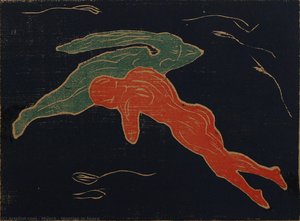
1903. Acrylic On Canvas.

§ 1Catalogue data


§ 2Abstract
 Vezi mai mult
Biografie artist
Descoperă universul sumbru și expresiv al lui Edvard Munch! Picturi emblematice precum "Țipătul" explorează anxietatea, moartea și emoțiile umane profunde. O forță a artei moderne!
§ 3Commentary
The Painting
Eken, a painting by Edvard Munch, is a striking representation of a tree with branches that extend outwards in various directions. The tree appears to be barren, with no leaves on its branches. The tree's trunk is large and prominent, taking up a significant portion of the image.Symbolism and Composition
In addition to the main tree, there are several smaller trees visible in the background, adding depth and dimension to the scene. A bird can also be seen perched atop one of the branches, further enhancing the natural atmosphere of the painting. The overall composition is striking and captivating, with a sense of tranquility and serenity emanating from the image.Artistic Style
The painting is classified under the Symbolism style, which was popular during the late 19th and early 20th centuries. Symbolist artists often used natural elements to convey deeper meanings and emotions. In this case, the barren tree may symbolize a sense of desolation or isolation.Artist's Background
Edvard Munch was a Norwegian artist known for his bold and expressive works. He is famous for his iconic painting The Scream, which is widely regarded as an icon of existential angst. Munch's work often explored themes of anxiety, death, and the human condition.Relevance to Art Movements
The Catholic Art Movement, also known as the Sacred Art Movement, was an art movement that emerged in the late 19th and early 20th centuries. It aimed to revive the tradition of religious art in the Catholic Church, which had been in decline since the Protestant Reformation. While Munch's work does not directly align with this movement, his use of symbolism reflects a broader interest in exploring deeper meanings through art.Conclusion
Eken by Edvard Munch is a powerful and thought-provoking painting that invites the viewer to contemplate the symbolism and emotions it evokes. For those interested in Symbolism and the works of Edvard Munch, this painting offers a unique insight into his artistic vision.Întrebări și răspunsuri
Cum se încadrează „Eken” în temele și stilul lui Edvard Munch?
În creația lui Edvard Munch, „Eken” se înscrie în stilul Symbolism, alături de temele expressionist roots, existential angst, mortality concerns, psychological depth, symbolic representation, iconic munch piece, exploring inner turmoil.
În ce perioadă și în ce stil a fost creat(ă) "Eken" de Edvard Munch?
„Eken” a fost creat în 1903, fiind o operă a mișcării Symbolism. Data și stilul ancorează lucrarea în istoria artei.
Există o fișă informativă despre "Eken" de Edvard Munch pentru studenți?
Pagina Fișă informativă pentru "Eken" de Edvard Munch oferă o fișă informativă imprimabilă în două pagini: opera de artă însoțită de tabelul său de identificare, o bandă decenală care o plasează în intervalul de viață al artistului, alte lucrări ale acestuia, paleta de culori extrasă din imagine și citări gata de copiat în patru stiluri diferite.


 Comută pe versiunea Print


 Pentru opere de artă sau reproduceri care depășesc 105 cm (aproximativ 41 de inch) pe oricare dintre laturi, cadrul va fi livrat demontat, sub formă de kit. Această metodă asigură o livrare sigură și previne deteriorarea în timpul transportului.