

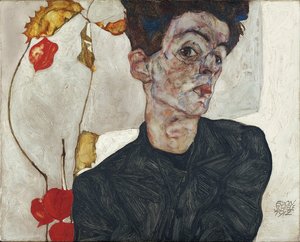
1913. Acrylic On Canvas, 89.0 x 90.0 cm.

§ 1Catalogue data

- 89.0 x 90.0 cm


§ 2Abstract
Descriere obiect de colecție
Experience the raw emotion of Egon Schiele’s ‘The Bridge,’ a pivotal Expressionist masterpiece exploring themes of transition and introspection. Explore stunning reproductions at WikiArt.
 Vezi mai mult
Biografie artist
Descoperă arta expresionistă intensă a lui Egon Schiele (1890-1918): portrete puternice, teme psihologice și linii unice. Descoperiți reproducerile acum!
§ 3Commentary
A Window Into Expressionism: Examining Egon Schiele’s “The Bridge”
Egon Schiele’s “The Bridge,” painted in 1913, stands as a cornerstone of early 20th-century Expressionist art—a movement that sought to convey raw emotion and psychological intensity rather than merely depicting the external world. More than just a landscape scene, it's a profound meditation on human experience, rendered with Schiele’s distinctive blend of bold lines and unsettling realism.
- Historical Context: The painting emerged during a period of seismic change in European art history. Artists like Schiele were reacting against the academic conventions of their time, rejecting idealized representations for unflinching portrayals of human vulnerability and anxiety. The influence of Cubism is palpable in the geometric structuring of the bridge itself, demonstrating Schiele’s willingness to experiment with innovative artistic approaches.
- Composition & Symbolism: Schiele meticulously crafted a scene dominated by two figures—one standing rigidly, one seated passively—positioned beneath a starkly rendered bridge. The bridge serves as a powerful symbol of transition and connection, representing the precarious balance between stability and upheaval. Its angular lines emphasize this duality, mirroring the internal struggles reflected in the postures of the subjects.
- Technique: Executed in oil on canvas, “The Bridge” showcases Schiele’s masterful control over texture and color. Thick impasto brushstrokes contribute to a palpable sense of physicality, conveying both vulnerability and resilience. The muted palette—primarily browns and reds—intensifies the emotional impact of the artwork, creating an atmosphere of quiet contemplation punctuated by moments of unsettling tension.
- The Figure’s Significance: Notably, the seated figure is often interpreted as Schiele's self-portrait, embodying introspection and confronting mortality. The posture conveys a sense of stillness amidst inner turmoil—a characteristic motif in Schiele’s oeuvre that speaks to his preoccupation with existential themes.
- Legacy & Influence: “The Bridge” cemented Schiele’s reputation as one of the most important artists of his generation and profoundly impacted subsequent artistic movements, including Surrealism and Absurdism. Its uncompromising honesty and psychological depth continue to resonate with viewers today, reminding us of art's capacity to explore the darkest recesses of human consciousness.
A reproduction of “The Bridge” offers an exceptional opportunity to bring Schiele’s visionary aesthetic into your home or workspace—capturing not only its striking visual qualities but also the enduring emotional power that defines this iconic masterpiece.
Întrebări și răspunsuri
Egon Schiele, creatorul operei „The Bridge”, este cunoscut și sub alte nume?
Alte nume înregistrate pentru Egon Schiele, creatorul operei „The Bridge”, includ Egon Leo Adolf Ludwig Schiele.
Cum este descrisă atmosfera din "The Bridge" de Egon Schiele?
"The Bridge" emană o atmosferă Dramatic.
Cât de saturată este paleta culorilor din "The Bridge"?
"The Bridge" de Egon Schiele prezintă o saturație de Balanced Soft.


 Comută pe versiunea Print


 Pentru opere de artă sau reproduceri care depășesc 105 cm (aproximativ 41 de inch) pe oricare dintre laturi, cadrul va fi livrat demontat, sub formă de kit. Această metodă asigură o livrare sigură și previne deteriorarea în timpul transportului.


