


 Previzualizare
 Trimite prin felicitare
 Distribuie
 Detalii despre lucrare
 Ghid
Ghid

 Descarcă imaginea
 Produse similare
 Radiografie
 Galerie foto
 Q&A
Q&A Statistici
untitled (7324)


 Vezi mai mult
Giclée / Imprimare artistică
Printuri giclée sau pe canvas de calitate muzeală, cu proces de producție rapid și opțiuni flexibile de finisare. ( Comandă pictură realizată manual Comută pe Imagine Digitală)




P118B lei10

P118H lei10

P118W lei10

P438Z lei10

P508JH lei12

P508YH lei12

P805H lei10

P805Z lei10

P919BZ lei10

P919G lei10

P919XJ lei10

P959ZH lei10

P968JZ lei12

W106C lei8

W218G lei10

W218JH lei8

W218Y lei10

W307PJ lei10

W316G lei10

W316PJ lei8

W316Y lei10

W398PJ lei8

W4111J lei10

W500HY lei15

W500JH lei15

W692G lei12

W849H lei8

W940BG lei15

W953PJ lei8




Alegeți dintre dimensiunile noastre prestabilite, care respectă proporțiile originale ale operei de artă.

Introduceți lățimea și înălțimea necesare pentru a se potrivi ramei sau peretelui dumneavoastră. O printare poate fi doar tăiată, niciodată extinsă dincolo de dimensiunea imaginii originale, astfel încât o dimensiune cu o formă diferită va pierde o parte din imagine. Vă trimitem o simulare digitală pentru aprobare înainte de a imprima orice. Imaginea afișată pe această pagină nu prezintă tăierea reală — doar simularea arată acest lucru.
Livrare în întreaga lume () în 2 săptămâni, în loc de cele 4/5 săptămâni standard. (29 Octombrie)

Livrare expres gratuită la nivel mondial

Pânză de in de înaltă calitate

Asigurare completă pentru transport

Garanție de rambursare a taxelor vamale

Garanția fidelității culorilor

Politica de retur în 100 de zile (doar pentru defecte de fabricație)

Garanție de rambursare 100%

Ofertă pentru comenzi multiple
 Opțiunea cu sticlă este disponibilă doar pentru dimensiuni de sub 110 cm

untitled (7324)
Giclée / Imprimare artistică
Dimensiune reproducere
-


Preț total calculat
lei 298
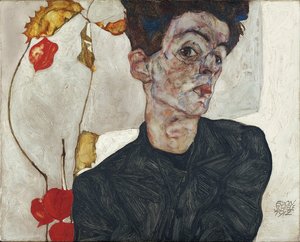
Exploring Human Vulnerability and Emotional Depth
This powerful artwork captures the raw intensity of human emotion through a layered and evocative composition. Central to the piece are intertwined figures, likely representing themes of vulnerability, inner conflict, and psychological tension. The figures’ contorted poses and expressive faces evoke a visceral sense of struggle, confronting viewers with the complexities of human relationships and internal turmoil. The scene’s charged atmosphere invites contemplation, making it a compelling focal point for any collection or interior space seeking depth and emotional resonance.Distinctive Style and Technique
Created with a masterful blend of expressionism and realism, this piece showcases Egon Schiele’s signature approach to capturing the human condition. The use of monochromatic tones emphasizes form, line, and texture over color, heightening the emotional impact. The artist’s confident, bold lines delineate the figures sharply, contrasting with softer shading that suggests volume and movement. The textured surface, achieved through dynamic strokes and shading, adds a tactile quality that enhances the raw, visceral feel of the artwork. This technique underscores Schiele’s ability to fuse technical precision with emotional intensity, making each detail resonate with authenticity.Historical Context and Artistic Significance
Produced during a period of profound artistic experimentation, this work reflects Egon Schiele’s exploration of human psychology and existential themes. Active in Vienna in the early 20th century, Schiele was known for pushing boundaries with his provocative imagery and intense personal style. His work often delved into themes of mortality, sexuality, and emotional vulnerability, challenging societal norms of his time. Although the exact date of this piece remains unknown, its stylistic elements align with Schiele’s mature period, characterized by a focus on raw human expression and innovative composition. As a testament to his influence, this artwork embodies the spirit of modernist exploration and psychological introspection.Symbolism and Emotional Impact
The intertwined figures and fragmented forms symbolize the complex layers of human identity and inner conflict. The intense gaze and contorted postures evoke feelings of confrontation, fear, and self-awareness, inviting viewers to reflect on their own emotional landscapes. The stark monochrome palette amplifies the sense of immediacy and intimacy, making the viewer feel as though they are witnessing a private moment of vulnerability. This artwork’s emotional depth makes it not just a visual experience but a profound meditation on the human condition, resonating deeply with those who seek art that challenges, comforts, and inspires.A Unique Addition for Collectors and Interior Design
Ideal for collectors and interior designers alike, this high-quality reproduction offers a rare opportunity to own a piece that combines artistic mastery with emotional authenticity. Its compelling subject matter and distinctive style make it a versatile centerpiece in modern, contemporary, or eclectic interiors. Whether displayed in a private collection, a gallery, or a sophisticated living space, this artwork promises to provoke thought and evoke emotion, transforming any environment into a sanctuary of artistic expression and introspection.Întrebări și răspunsuri
Ce dimensiune de print pentru "untitled (7324)" de Egon Schiele se potrivește cu camera recomandată?
Combinația recomandată pentru "untitled (7324)" de Egon Schiele: o printare de dimensiunea Large, ideală pentru o Living Room.
Cum este descrisă atmosfera din "untitled (7324)" de Egon Schiele?
"untitled (7324)" de Egon Schiele este descris prin atmosfera sa Dramatic. Această clasificare poate ajuta la integrarea lucrării într-un anumit decor.
Este "untitled (7324)" reprezentativ pentru temele abordate de obicei de Egon Schiele?
Temele recurente ale lui Egon Schiele includ expressionist influence, themes of inner conflict, focus on emotional depth, bold line work and raw emotion; „untitled (7324)” se concentrează pe human figures, emotional intensity, psychological conflict, figurative abstraction, inner turmoil, vulnerability, expressive line work, contemporary realism.
Opere similare


Biografie artist
A Life Forged in Expression
Egon Schiele’s life, a whirlwind of artistic passion and profound personal hardship, unfolded from his birth in Tulln an der Donau, Austria, in 1890. His early years were steeped in sorrow; the loss of his father, a railway station master, due to syphilis when Egon was just fourteen cast a long shadow, fueling within him a haunting preoccupation with mortality and the fragility of human existence. Raised initially by his mother and later under the watchful eye of his uncle Leopold Czihaczek, Schiele’s childhood lacked the stability common to many, yet it fostered an independent spirit—a crucial element in shaping his artistic vision. From a young age, he displayed an intense fascination with trains – a motif that would subtly reappear throughout his work – and a burgeoning talent for drawing, though this was often met with disapproval from his father who viewed it as a distraction from more practical pursuits. The untimely death of his sister Elvira further deepened the emotional landscape of his youth, imbuing his art with an undercurrent of melancholy and vulnerability. These formative experiences—loss, isolation, and a yearning for self-expression—became the bedrock upon which Schiele’s unique artistic voice was built, constantly grappling with themes of life, death, and the complexities of the human condition.The Crucible of Vienna: Artistic Development
Schiele's formal artistic training began at the Kunstgewerbeschule (School of Arts and Crafts) in Vienna, but he quickly found himself stifled by its conservative approach—a rigid adherence to tradition that clashed with his burgeoning creative spirit. Seeking a more stimulating environment, he transferred to the Akademie der bildenden Künste (Academy of Fine Arts), only to discover further disillusionment with its academic constraints. This dissatisfaction led him to abandon formal training altogether, choosing instead to forge his own path – a bold decision reflecting his unwavering artistic conviction and determination to express himself on his own terms. A pivotal influence during these early years was Gustav Klimt, the celebrated Secessionist painter. Schiele deeply admired Klimt’s decorative style and his exploration of symbolism, even receiving mentorship from the established artist. However, Schiele soon diverged significantly from Klimt's aesthetic, developing a distinctly individual voice characterized by its stark honesty, psychological intensity, and unflinching portrayal of human vulnerability. He became a founding member of the *Neues Wiener Kunstgruppe* (New Viennese Art Group) in 1909, alongside other progressive artists who challenged the prevailing artistic norms of the time. This group provided a space for experimentation and innovation, allowing Schiele to refine his style and explore new avenues of expression. His early works—often unsettling portraits and self-portraits—began to emerge as powerful statements of emotional turmoil, featuring distorted figures, elongated limbs, and a palpable sense of unease. These paintings were not merely representations of physical form but explorations of the inner landscape—the anxieties, desires, and fears that haunted the human psyche. He sought to depict not what he *saw*, but what he *felt*.Raw Emotion and Unflinching Truth
Egon Schiele’s art is immediately recognizable for its raw honesty and psychological depth. He fearlessly confronted themes often considered taboo – sexuality, death, anxiety, isolation – with an unflinching gaze. His distinctive style features elongated figures, contorted poses, and expressive lines that convey a sense of unease and emotional intensity. The human form, particularly the nude, became his primary subject, not as an object of idealized beauty but as a vessel for exploring the complexities of human experience. Self-portraits constitute a significant portion of his oeuvre, offering intimate glimpses into his inner world—a world often marked by loneliness and self-doubt. He didn’t shy away from depicting himself in unflattering or vulnerable poses, revealing a profound level of self-awareness and introspection. Beyond self-portraiture, Schiele created numerous portraits of others, capturing their likenesses with an unsettling realism that seemed to penetrate beneath the surface. His landscapes, while less central to his work than his figurative paintings, demonstrate his mastery of form and color, often reflecting the same emotional intensity as his portraits. The use of line is particularly striking in Schiele’s work; it's not merely a tool for defining shape but an expressive force that conveys emotion and psychological tension. Recurring motifs like the *Physalis* plant – symbolizing death and transience with its delicate, papery husk – further underscore this preoccupation with mortality. The influence of Symbolism is also evident in his use of color and symbolism, adding layers of meaning to his compositions.A Legacy Cut Short: Achievements & Significance
Despite facing censorship and legal challenges—including a brief imprisonment for allegedly corrupting minors with his art—Schiele gained recognition within Vienna’s avant-garde circles. His work challenged the conventions of the time, provoking both admiration and outrage. By the time of his untimely death during the Spanish flu pandemic in 1918 at the age of twenty-eight, he had established himself as a leading figure in Austrian Expressionism. Significant works such as *Self-Portrait with Physalis*, *Couple Embracing*, and *Field Landscape (Kreuzberg near Krumau)* stand as testaments to his artistic genius. His influence on subsequent generations of artists is undeniable, particularly those interested in exploring psychological themes and challenging conventional artistic norms. Schiele’s bold approach to form and subject matter continues to resonate with audiences today, making him one of the most important and influential figures in early 20th-century art. His paintings are now held in major museum collections worldwide, including the Leopold Museum in Vienna and the Egon Schiele Art Centrum in Český Krumlov, ensuring his artistic legacy endures. He left behind a body of work that is not merely aesthetically compelling but profoundly human—a testament to the power of art to confront the complexities of existence with honesty, courage, and unwavering vision.- Key Themes: Mortality, sexuality, isolation, psychological turmoil.
- Influences: Gustav Klimt, Viennese Secession, personal trauma.
- Style Characteristics: Elongated figures, contorted poses, expressive lines, raw emotion.
Egon Schiele
1890 - 1918 , Austria
Detalii rapide
- Artistic Movement Or Style: Expressionism
- Artists Or Movements Influenced By This Artist: ['Secession']
- Artists Who Influenced This Artist: ['Klimt']
- Date Of Birth: 1890
- Date Of Death: 1918
- Full Name: Egon Schiele
- Nationality: Austrian
- Notable Artworks:
- Self-Portrait
- Couple
- Peisaj
- Place Of Birth: Tulln, Austria
Articole similare

Neo-Abstract Art Trend Forecast: High-Impact Geometric Compositions for Contemporary Commercial Interiors
Elevate commercial interiors with Neo-Abstract art. Discover how high-impact geometric compositions and custom oil reproductions provide scalable, sophisticated design solutions for hotels, restaurants, and corporate spaces. Expert procurement for large-scale hospitality projects.

Contemporary Abstract Art: A Professional Buyer's Guide to Large-Scale Modern Decor for Hospitality and Corporate Interiors
A professional procurement guide for hotel designers and architects. Discover how to integrate large-scale contemporary abstract art into hospitality projects through high-volume, custom-sized oil reproductions, multi-panel layouts, and reliable global logistics.

Bold Distortion: A Trend Forecast for Impactful Abstract Art in Luxury Commercial and Hotel Interiors
Elevate hospitality design with the Bold Distortion trend. APS provides professional sourcing of large-scale abstract paintings for hotel interiors. Benefit from custom sizing, bulk-order efficiency, and reliable global shipping. High-impact art for high-volume procurement.

Expressionist Abstraction: A Procurement Guide to Bold Colors and Emotional Impact for Modern Hotel Interiors
Elevate hospitality spaces with Expressionist Abstraction. A professional procurement guide for hotel designers on sourcing bold, large-scale abstract oil paintings to create impactful, high-end modern interiors through reliable bulk-order art solutions.


