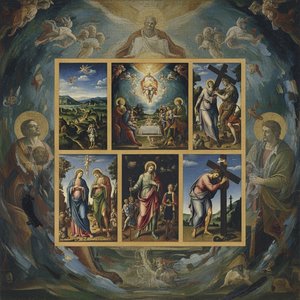
1614. Acrylic On Canvas, 174.0 x 210.0 cm.

§ 1Catalogue data
 Acrylic On Canvas
- WallArt
- mannerist painting
 1614
1614- Renaissance
 174.0 x 210.0 cm
§ 2Abstract
Descriere obiect de colecție
Experience El Greco's dramatic Laocoön! This Mannerist masterpiece depicts the tragic myth of Trojan priest Laocoön battling sea serpents, showcasing intense emotion & distorted forms. A powerful symbol of suffering and divine wrath.
 Vezi mai mult
Biografie artist
În ulei pe pânză, pictură impresionistă inspirată de sculptura greacă Laocoön și Fiilor săi. El Greco surprinde dramatismul sfârșitului său în Toledo.
§ 3Commentary
Laocoön: A Symphony of Suffering and Divine Fury
El Greco’s *Laocoön* transcends mere depiction; it embodies the very essence of Mannerist art—a deliberate rejection of Renaissance ideals in favor of heightened emotion, distorted perspective, and unsettling dynamism. Unearthed in Rome in 1506, this monumental sculpture commemorates the myth of Laocoön, a Trojan priest who dared to challenge Poseidon’s decree forbidding the Greeks from bringing the Trojan Horse into their city.
- Subject Matter: The sculpture portrays Laocoön and his sons battling colossal serpents dispatched by Zeus and Poseidon as punishment for Laocoön's blasphemy. This narrative draws upon Homeric epic poetry and Roman mythology, reflecting anxieties about divine retribution and the fragility of human existence.
- Style & Technique: El Greco’s masterful execution exemplifies Mannerism’s signature aesthetic. The figures are elongated, sinewy, and rendered with exaggerated musculature—a departure from idealized anatomical representations prevalent in earlier periods. The sculptor utilized marble dust to achieve a remarkable level of detail, capturing the palpable tension and agony of the scene.
- Historical Context: Created during the Renaissance’s waning years, *Laocoön* signaled a reaction against humanist optimism. It reflects the broader artistic preoccupation with psychological drama and spiritual torment—themes that would find resonance in subsequent movements like Baroque and Romanticism.
Compositional Drama & Emotional Intensity
The sculpture's arrangement is deliberately unsettling, prioritizing expressive gesture over anatomical accuracy. The central figure, Laocoön himself, dominates the composition, wrestling desperately with a serpent while his sons assist him in vain. Their bodies twist and contort in poses that defy gravity—a visual manifestation of their struggle against overwhelming force. The sculptor skillfully employs chiaroscuro – dramatic contrasts between light and shadow – to heighten the emotional impact, emphasizing the musculature of the figures and conveying a sense of impending doom.
- Dynamic Movement: The serpents coil around Laocoön’s body, creating a vortex of movement that underscores the sculpture's narrative urgency. Each figure is positioned in an acrobatic posture, reflecting the physical exertion involved in their desperate defense against divine wrath.
- Emotional Resonance: *Laocoön* powerfully communicates themes of suffering, defiance, and vulnerability. The sculptor’s meticulous attention to detail captures the agony etched on Laocoön's face—his eyes wide with terror as he confronts his inescapable fate.
Symbolism & Artistic Legacy
*Laocoön* is laden with symbolic significance. The serpents represent divine retribution and Poseidon’s wrath, embodying forces beyond human control. Simultaneously, the sculpture serves as a commentary on human hubris—the folly of challenging divine authority. El Greco's innovative approach to sculptural representation profoundly influenced subsequent artists, establishing Mannerism as a distinct artistic idiom.
- Marble Dust Technique: The sculptor’s use of marble dust – a technique perfected by Michelangelo – ensured an unparalleled level of textural detail and luminosity. This meticulous craftsmanship elevated *Laocoön* to the pinnacle of sculptural achievement.
- Influence on Later Artists: El Greco's stylistic boldness paved the way for Expressionism and Cubism, demonstrating the enduring power of artistic experimentation. His legacy continues to inspire artists today who strive to convey emotion and psychological complexity through innovative forms.
A Timeless Meditation on Fate
Ultimately, *Laocoön* remains a haunting reminder of humanity’s confrontation with mortality and divine judgment. Its dramatic composition, masterful technique, and profound symbolism solidify its place as one of the most iconic sculptures of the Renaissance—a testament to El Greco's artistic genius and his unwavering commitment to capturing the complexities of human experience.
Întrebări și răspunsuri
Ce reprezintă "Laocoön" de El Greco?
"Laocoön" de El Greco surprinde: mythology, snake, ancient_greek, religious_imagery, elongated_figures, dramatic_lighting, toledo_museum.
Există lucrări similare cu "Laocoön"?
Descoperă lucrări similare cu „Laocoön” în pagina Lucrări similare a operei de artă.
Ce dimensiuni are originalul "Laocoön"?
Lucrarea originală "Laocoön" de El Greco are dimensiunile de 174 x 210 cm.


 Comută pe versiunea Print


 Pentru opere de artă sau reproduceri care depășesc 105 cm (aproximativ 41 de inch) pe oricare dintre laturi, cadrul va fi livrat demontat, sub formă de kit. Această metodă asigură o livrare sigură și previne deteriorarea în timpul transportului.