

1926. Oil On Canvas.

§ 1Date catalog


§ 2Abstract
Descriere obiect de colecție
Fernand Léger’s vibrant accordion painting embodies modernist dynamism, blending bold geometric shapes and striking color palettes—primarily red and yellow—to capture the energy of industrial progress. Explore this iconic piece from 1926 and bring Léger's revolutionary vision home.
 Vezi mai mult
Biografie artist
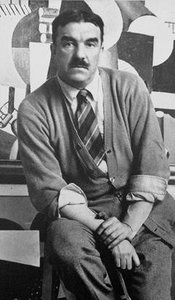
Descoperiți Fernan Léger (1881-1955): Pionier al Cubismului & "Tubism". Admirați picturi îndrăznețe despre viața modernă, mașinării și forma umană – un precursor cheie al Pop Art-ului!
§ 3Comentariu
A Symphony of Industrial Rhythm
In the vibrant landscape of early twentieth-century modernism, few works capture the pulse of the machine age as electrifyingly as Fernand Léger’s 1926 masterpiece, The Accordion. This is not merely a painting of a musical instrument; it is a bold, chromatic manifesto that translates the mechanical heartbeat of urban life onto a static canvas. Upon first encounter, the viewer is swept up in a sea of luminous reds and sun-drenched yellows, anchored by assertive black accents that slice through the composition with architectural precision. Léger rejects the hazy, ephemeral softness of Impressionism, opting instead for a visual language defined by structural integrity and a profound clarity that demands attention.
The centerpiece of this rhythmic dance is the accordion itself—a symbol that bridges the gap between soulful human expression and the burgeoning mechanical power of the era. Through his unique lens, Léger presents the instrument not as a static object of nostalgia, but as an active participant in a larger, geometric choreography. The composition is a masterful display of Constructivism, where the world is reimagined through simplified forms such as cylinders, cubes, and intersecting planes. As the eye wanders across the canvas, one discovers smaller, fragmented echoes of the accordion scattered throughout the periphery, creating a sense of infinite movement that mirrors the relentless energy of a modernizing Europe.
The Art of the Machine Age
To understand The Accordion is to understand the soul of the post-World War I era, a period defined by unprecedented urbanization and the rapid expansion of industrial technology. Léger, whose early life was rooted in the physical labor of rural Normandy, found a profound connection between the rhythmic movements of manual work and the precision of the machine. His technique utilizes tachisme—a method of applying paint with loose, gestural strokes—to infuse his rigid geometric shapes with a sense of organic vitality. This tension between the structured, mechanical forms and the energetic, painterly texture creates a captivating visual friction that keeps the viewer perpetually engaged.
For the discerning collector or interior designer, this artwork offers more than just aesthetic beauty; it provides a sophisticated focal point that embodies strength and dynamism. The painting’s ability to command a room lies in its balanced use of primary colors and bold outlines, making it an ideal centerpiece for contemporary spaces that celebrate modernism and structural elegance. Owning a high-quality reproduction of this work allows one to invite the spirit of the avant-garde into their home, serving as a constant reminder of a time when art dared to embrace the beautiful, clanging complexity of the modern world.
Întrebări și răspunsuri
Ce atmosferă transmite "The accordion"?
Ambianta generală a operei "The accordion" de Fernand Léger este Bold. Această stare descrie atmosfera generală a lucrării.
Care este motivul statutului drepturilor de autor pentru "The accordion"?
"The accordion" de Fernand Léger este în domeniul public – drepturile de autor au expirat. Durata protecției drepturilor de autor se calculează de la data decesului artistului, survenit în anul 1955.
Imaginea pentru "The accordion" de Fernand Léger poate fi reprodusă liber?
"The accordion" de Fernand Léger este în domeniul public (în domeniul public – drepturile de autor au expirat). Acest statut reglementează modul în care imaginea lucrării poate fi reprodusă.


 Comută pe versiunea Print


 Pentru opere de artă sau reproduceri care depășesc 105 cm (aproximativ 41 de inch) pe oricare dintre laturi, cadrul va fi livrat demontat, sub formă de kit. Această metodă asigură o livrare sigură și previne deteriorarea în timpul transportului.


