


 Vezi în context
 Trimite
 Distribuie
 Detalii
 Ghidul

 Descarcă
 Produse similare
 Radiografie
 Diaporama
 Statistici
The typographer
 Oil On Canvas
- WallArt
- Cubist Synthesis
 1919
1919- Modern
 130.0 x 97.0 cm
 Citește mai mult
Reproducere pictată manual în ulei
Pictură în ulei pe pânză, realizată manual de artiștii noștri la dimensiunea și ramele dorite de dumneavoastră, pe comandă. ( Comută pe versiunea Print Treci la imagine digitală)




P118B lei10

P118H lei10

P118W lei10

P438Z lei10

P508JH lei12

P508YH lei12

P805H lei10

P805Z lei10

P919BZ lei10

P919G lei10

P919XJ lei10

P959ZH lei10

P968JZ lei12

W106C lei8

W218G lei10

W218JH lei8

W218Y lei10

W307PJ lei10

W316G lei10

W316PJ lei8

W316Y lei10

W398PJ lei8

W4111J lei10

W500HY lei15

W500JH lei15

W692G lei12

W849H lei8

W940BG lei15

W953PJ lei8




Alegeți dintre dimensiunile noastre prestabilite, care respectă proporțiile originale ale operei de artă.

Introduceți lățimea și înălțimea de care aveți nevoie, pentru a se potrivi ramei sau peretelui dumneavoastră. Această lucrare este pictată manual, așa că pentru o dimensiune cu o formă diferită, artistul poate picta puțin mai mult în jurul imaginii sau poate tăia puțin din margini — dumneavoastră decideți. Vă vom trimite o simulare digitală pentru aprobare înainte de a începe pictarea. Imaginea afișată pe această pagină nu reprezintă rezultatul real — doar simularea este reprezentativă.
După plasarea comenzii, echipa AllPaintingsStore.com va contacta clientul prin e-mail pentru instrucțiuni și îi va furniza o previzualizare a machetei
Livrare în întreaga lume () în 3-4 săptămâni, în loc de cele 5 săptămâni standard. (23 Octombrie). Fără compromisuri în ceea ce privește calitatea.

Livrare expres gratuită la nivel mondial

Pânză de in premium

Asigurare completă pentru transport

Garanție de rambursare a taxelor vamale

Garanția fidelității culorilor

Politica de retur în 100 de zile (doar pentru defecte)

Garanție de rambursare 100%

Reducere pentru comenzi multiple
 Opțiunea cu sticlă este disponibilă doar pentru dimensiuni de sub 110 cm

The typographer
Tip de reproducere
Dimensiune reproducere
-


Preț total
lei 1194
A Pioneer of Geometric Abstraction: Exploring Fernand Léger’s “The Typographer”
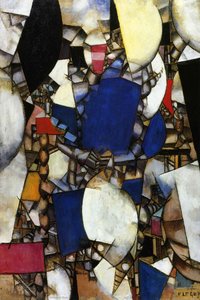
Fernand Léger's "The Typographer," painted in 1919, isn’t merely a depiction of an object; it’s a declaration of artistic intent—a bold assertion that abstraction could simultaneously honor the tangible realities of the burgeoning industrial era. This striking canvas captures a head rendered in fragmented geometric shapes – cubes, cylinders, and planes – overlaid with vibrant hues of red, yellow, and blue. The inclusion of recognizable elements like a car and a clock serves as an ingenious counterpoint to the dominant visual language, grounding the abstract forms within the familiar contours of everyday life.- Style: Léger’s work exemplifies Cubism, specifically Analytical Cubism, pioneered by Picasso and Braque. Unlike Impressionists who sought to capture fleeting moments of light and color, Cubists dissected objects into their constituent parts, presenting multiple perspectives simultaneously on a single canvas.
- Technique: Léger employed a meticulous layering technique, applying thin washes of pigment over a textured surface created with burlap or similar materials. This method ensured that the underlying structure remained visible, contributing to the painting’s sculptural quality and emphasizing its materiality.
Întrebări și răspunsuri
Cum se încadrează stilul operei „The typographer” în contextul epocii creatorului său?
În "The typographer" de Fernand Léger, mișcarea Cubist Synthesis întâlnește epoca Era modernă.
„The typographer” este mai degrabă o lucrare luminoasă sau întunecată în ansamblu?
Valorile înregistrate pentru "The typographer" de Fernand Léger sunt: luminozitate de balanced, luminanță de Gentle Luminance.
Cum pot descărca imaginea pentru "The typographer" de Fernand Léger?
Imaginea pentru "The typographer" de Fernand Léger poate fi descărcată de pe pagina dedicată lucrării, Descarcă: descărcare imagine digitală de înaltă rezoluție.
Opere similare




Biografie artist
A Life Forged in Form: The World of Fernand Léger
Fernand Léger, born Joseph Fernand Henri Léger in 1881 amidst the rural landscapes of Argentan, Normandy, stands as a pivotal figure in the evolution of modern art. His journey from the farmlands of his youth to the forefront of Parisian avant-garde circles is a testament to an unwavering artistic vision and a relentless pursuit of capturing the spirit of the machine age. Unlike many of his contemporaries who embraced abstraction as a retreat from representation, Léger sought to *integrate* modernity – its dynamism, its mechanical forms, its very essence – into a new visual language that was both powerfully abstract and deeply rooted in the observable world. His early life, steeped in the physicality of agricultural labor, provided a grounding contrast to the industrialized future he would so passionately depict. Initially destined for architecture, Léger’s path shifted towards painting after arriving in Paris around 1900, supporting himself through drafting work while honing his artistic skills. This period was marked by traditional academic training, but it wasn't until encountering the groundbreaking work of Paul Cézanne that a true transformation began to unfold.The Birth of ‘Tubism’ and the Section d’Or
Cézanne’s retrospective in 1907 acted as a catalyst, liberating Léger from conventional representation and propelling him towards a more geometric and structural approach. He began dismantling forms, analyzing their underlying structures, and rebuilding them on canvas with a newfound emphasis on solidity and volume. This exploration quickly led him into the orbit of Cubism, but Léger wasn’t content to simply replicate the styles of Picasso or Braque. Instead, he developed his own distinct idiom – a personal form of Cubism that critics playfully dubbed “Tubism.” Characterized by cylindrical forms, flattened planes, and bold color contrasts, Tubism celebrated the machine aesthetic long before it became a widespread artistic preoccupation. It was an art born from observing the burgeoning industrial world, recognizing beauty in its functional shapes and mechanical rhythms. Léger’s approach differed significantly; he retained a sense of volume and depth, unlike some Cubists who completely flattened their canvases. This allowed him to depict figures with a recognizable solidity, even as they were broken down into geometric components. The movement was closely associated with the *Section d’Or* (The Golden Section), a group of artists – including Metzinger, Le Fauconnier, and Duchamp – who explored mathematical principles of harmony and proportion in their work. They sought to infuse their art with a sense of order and rationality, believing that beauty could be found in the application of geometric ratios. Léger’s participation in the Section d’Or provided him with a theoretical framework for his artistic explorations and fostered a collaborative environment where new ideas were constantly exchanged.War, Mechanization, and a New Aesthetic
The outbreak of World War I profoundly impacted Léger’s life and work. Serving at the front from 1914 to 1916 exposed him to the brutal realities of modern warfare – artillery barrages, aerial combat, and the dehumanizing effects of mechanized conflict. This experience didn't lead to disillusionment or a rejection of modernity; rather, it solidified his fascination with machines and their power. Sketches made during his service documented the stark beauty of military technology, transforming instruments of destruction into subjects of artistic contemplation. The repetitive patterns of trenches, the gleaming metal of tanks and airplanes – all became sources of inspiration for Léger’s evolving aesthetic. Upon returning to civilian life, Léger’s paintings began to reflect a more streamlined, mechanistic sensibility, celebrating the dynamism and efficiency of the industrial world. *Soldier with a Pipe* (1916) exemplifies this shift, showcasing simplified forms and bold colors that evoke the feeling of mechanical precision. The figure is rendered in stark geometric shapes, almost resembling a machine itself, reflecting Léger’s fascination with the intersection of humanity and technology. This wasn't merely an aesthetic choice; it was a philosophical statement – an affirmation of modernity’s potential for progress and renewal, even in the face of devastating loss.The Development of Tubism and Beyond
Following the war, Léger continued to refine his distinctive style, solidifying what became known as “Tubism.” He moved away from the fragmented forms of early Cubism, developing a more unified visual language characterized by cylindrical shapes, bold colors, and simplified figures. His paintings often depicted industrial objects – cars, trains, factories – alongside human subjects, blurring the boundaries between the natural and the artificial. He experimented with techniques such as *peinture industrielle*, using industrial pigments and applying paint in layers to create a textured surface that resembled machine parts. This period saw the creation of iconic works like *Manufacturers* (1923), a vibrant depiction of a factory scene filled with geometric forms and bold colors, capturing the energy and rhythm of modern industry. However, Léger’s artistic vision wasn't static; he continued to evolve his style throughout his career, incorporating elements of Surrealism and exploring new mediums such as sculpture and film.Legacy and Lasting Influence
In his post-war years, Léger continued to explore the intersection of art and industry, creating works that celebrated modern life with a unique blend of abstraction and figuration. His *Paysages animés* (Animated Landscapes) series from 1921 showcased figures and animals seamlessly integrated into streamlined compositions, blurring the boundaries between organic and inorganic forms. He also experimented with sculpture and filmmaking, expanding his artistic practice beyond the confines of traditional painting. Léger’s influence on subsequent generations of artists is undeniable. His bold simplification of form, his embrace of industrial imagery, and his celebration of popular culture anticipated the emergence of Pop Art decades later. Artists like Roy Lichtenstein and Andy Warhol owe a clear debt to Léger's pioneering work. He bridged the gap between abstract art and figurative representation, demonstrating that it was possible to create works that were both intellectually rigorous and visually engaging. Today, Fernand Léger’s paintings are held in major museums worldwide, including the Musée d'Art et d'Histoire in France and the Musée National Fernand Léger, dedicated solely to his work. He remains a towering figure of 20th-century art – a visionary who dared to find beauty in the machine age and to translate its energy onto canvas with unparalleled boldness and originality. His legacy is not merely as a painter, but as a prophet of modernity. A true pioneer whose work continues to resonate with audiences today.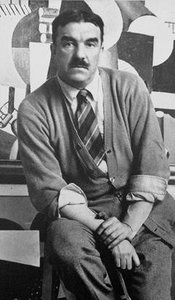
Fernand Léger
1881 - 1955 , Franța
Informații rapide
- Artistic Movement Or Style: Cubism, Tubism
- Artists Or Movements Influenced By This Artist: ['Pop Art']
- Artists Who Influenced This Artist: ['Paul Cézanne']
- Date Of Birth: 4 Feb 1881
- Date Of Death: 17 Aug 1955
- Full Name: Fernand Léger
- Nationality: Francez
- Notable Artworks:
- Les Nus dans la forêt
- Machine Element
- The Great Parade
- Place Of Birth: Argentan, Franța
Articole conexe

Cubist Expression: A Professional Guide to Integrating Geometric Abstraction into Modern Hospitality Design
Elevate hospitality interiors with Cubist art. Our expert guide explores integrating geometric abstraction into hotel design through high-quality, large-scale oil reproductions and custom multi-panel commissions tailored for professional designers and procurement managers.

Modern Geometry & Machine Age Beauty: A Collector's Guide to the Cubist Vision of Fernand Léger
Explore the profound geometric mastery of Fernand Léger. Discover how his 'Tubism' and Machine Age aesthetics redefined modern art, offering timeless inspiration for discerning collectors seeking to integrate Cubist dynamism into sophisticated contemporary interiors.


