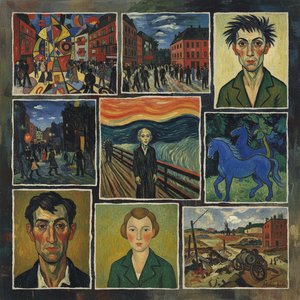
Oil On Canvas.

§ 1Catalogue data


Această lucrare este protejată de drepturile de autor
Lucrarea de artă afișată pe această pagină este protejată de legile privind drepturile de autor, ceea ce înseamnă că nu putem crea sau vinde în mod legal o reproducere identică. Această protecție este garantată prin acorduri internaționale, precum Convenția de la Berna și de legile naționale, inclusiv cele prevăzute de Legea dreptului de autor din S.U.A. – Titlul 17. Toate drepturile rezervate. Orice reproducere neautorizată este interzisă.
Ca alternativă respectuoasă și legală, oferim tablouri pictate manual, personalizate, inspirate de original. Artistii noștri experimentați și profesioniști studiază cu atenție stilul, starea de spirit și esența artistică a originalului pentru a crea o piesă nouă și unică, care evocă aceeași emoție – rămânând, în același timp, o creație originală în sine.
Această metodă respectă pe deplin reglementările privind drepturile de autor, deoarece nu implică copierea sau duplicarea operei protejate. În schimb, este o reinterpretare creativă – o pictură nouă, influențată de original, dar care nu este identică cu acesta.
 Citește mai mult
§ 2Abstract
Descriere obiect de colecție
Dive into the unsettling world of Francis Bacon's 'Study for Three Heads 2.' This expressionistic portrait captures raw emotion and psychological intensity through distorted forms, dark hues, and layered textures.
Biografie artist
Challenging Conventions</h2> Francis Bacon’s impact on 20th-century art is undeniable. He challenged traditional notions of representation
§ 3Commentary
Study for Three Heads 2: A Descent into Psychological Intensity
Francis Bacon’s “Study for Three Heads 2” is not merely a depiction of a man; it's an excavation of the human psyche, rendered with a brutal honesty and unsettling beauty. Painted in 1968, this work exemplifies Bacon’s signature style – a deliberate distortion of form, a claustrophobic compression of space, and a palette dominated by the muted tones of anxiety. The canvas immediately confronts the viewer with a face fractured and fragmented, a portrait less concerned with objective representation than with conveying an overwhelming sense of unease and psychological distress. It's a study in isolation, a visual echo of the anxieties that permeated much of Bacon’s oeuvre during this period.
The composition itself is deliberately destabilizing. The subject, positioned slightly off-center within the frame, creates a feeling of imbalance, mirroring the internal turmoil suggested by his expression. The blurred figures in the background – hints of other faces lost in a chaotic environment – reinforce this sense of alienation and suggest a world devoid of comfort or connection. Bacon’s masterful use of light further amplifies this effect; stark highlights carve into the face, emphasizing every wrinkle and imperfection while deep shadows engulf the surrounding areas, creating an atmosphere of profound darkness and uncertainty.
Technique and Materials: A Raw Expression
Bacon's technique in “Study for Three Heads 2” is characterized by a deliberate lack of polish. Loose, gestural brushstrokes dominate the surface, creating a texture that feels both rough and layered – as if the image has been violently scraped onto the canvas. This raw quality isn’t accidental; it’s central to Bacon's artistic intent. He sought to capture not just what he saw, but how he *felt* about what he saw. The fragmented shapes, particularly in the rendering of the face, contribute to this sense of disintegration, suggesting a mind unraveling under pressure.
The artist likely employed oil paints on a panel – a common medium for his work at the time – allowing him to build up layers of color and texture with remarkable speed and intensity. The limited palette – shades of gray, black, white, and subtle browns – intensifies the emotional impact, stripping away any superficial prettiness and focusing attention solely on the core anxieties represented within the image.
Symbolism and Context: Echoes of Existential Dread
"Study for Three Heads 2" is deeply rooted in Bacon’s exploration of existential themes. The distorted human face becomes a symbol of alienation, isolation, and the inherent absurdity of existence – concerns that were particularly prevalent in the post-war era. The work resonates with the broader context of Bacon's artistic output, which frequently grappled with mortality, suffering, and the darker aspects of the human condition. It’s a visual manifestation of the anxieties surrounding the loss of faith and meaning in a rapidly changing world.
Interestingly, this piece is considered a “study,” suggesting it was created as an initial exploration before the final, more polished version – "Three Heads 2" – was produced. This study offers a particularly intimate glimpse into Bacon’s creative process, revealing the painstaking effort he invested in capturing these profoundly unsettling images. The unfinished quality of this work only adds to its power and resonance, inviting viewers to contemplate the complexities of human emotion and the enduring struggle for meaning.
Întrebări și răspunsuri
Care este artistul și care este stilul din spatele operei "Study for Three Heads 2"?
"Study for Three Heads 2" a fost creat de Francis Bacon, în stilul Expressionist Distortion. Artistul și mișcarea definesc tradiția acestei opere.
Cum se îmbină contrastul și armonia în "Study for Three Heads 2"?
În "Study for Three Heads 2", un Statement contrast se împletește cu o Balanced Harmony armonie.
Cât de saturată este paleta culorilor din "Study for Three Heads 2"?
Paleta lucrării "Study for Three Heads 2" are o saturație de Muted.


 Comută pe versiunea Print


 Pentru opere de artă sau reproduceri care depășesc 105 cm (aproximativ 41 de inch) pe oricare dintre laturi, cadrul va fi livrat demontat, sub formă de kit. Această metodă asigură o livrare sigură și previne deteriorarea în timpul transportului.