1972. Acrylic On Canvas.

§ 1Catalogue data


Această lucrare este protejată de drepturile de autor
Lucrarea de artă afișată pe această pagină este protejată de legile privind drepturile de autor, ceea ce înseamnă că nu putem crea sau vinde în mod legal o reproducere identică. Această protecție este garantată prin acorduri internaționale, precum Convenția de la Berna și de legile naționale, inclusiv cele prevăzute de Legea dreptului de autor din S.U.A. – Titlul 17. Toate drepturile rezervate. Orice reproducere neautorizată este interzisă.
Ca alternativă respectuoasă și legală, oferim tablouri pictate manual, personalizate, inspirate de original. Artistii noștri experimentați și profesioniști studiază cu atenție stilul, starea de spirit și esența artistică a originalului pentru a crea o piesă nouă și unică, care evocă aceeași emoție – rămânând, în același timp, o creație originală în sine.
Această metodă respectă pe deplin reglementările privind drepturile de autor, deoarece nu implică copierea sau duplicarea operei protejate. În schimb, este o reinterpretare creativă – o pictură nouă, influențată de original, dar care nu este identică cu acesta.
 Citește mai mult
§ 2Abstract
Descriere obiect de colecție
Explore Francis Bacon's poignant 'Triptych August 1972,' commemorating Dyer’s suicide with unsettling depictions of vulnerability and existential despair—a masterpiece reflecting trauma and loss.
Biografie artist
Challenging Conventions</h2> Francis Bacon’s impact on 20th-century art is undeniable. He challenged traditional notions of representation
§ 3Commentary
A Descent Into Darkness: Exploring Francis Bacon’s ‘Triptych August 1972’
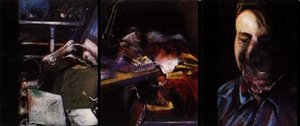
Francis Bacon's 'Triptych August 1972', painted in 1972, stands as a haunting testament to grief and existential despair—a visceral exploration of trauma rendered with unparalleled artistic mastery. More than just a depiction of George Dyer, Bacon’s lover who tragically succumbed to suicide on October 24th, 1971, the triptych embodies the artist's profound preoccupation with mortality and the inescapable burden of memory during a period marked by immense personal upheaval. It is a work that compels viewers to confront uncomfortable truths about human vulnerability and the relentless march of time.- Subject Matter: The central panel portrays Dyer in repose on a chair, his head bowed downwards—a posture conveying profound sorrow and defeat. Alongside him are two wing panels featuring photographs of Dyer taken by John Deakin, capturing him in similar poses, albeit imbued with an unsettling dynamism. These images serve as anchors to the emotional core of the piece.
- Style & Technique: Bacon’s signature style—characterized by distorted figures and grotesque forms—is powerfully evident here. Employing oil paint mixed with sand on three canvases, he achieves a textured surface that amplifies the painting's unsettling atmosphere. The monochromatic black background dominates each panel, intensifying the sense of isolation and amplifying the psychological impact of Dyer’s presence.
- Historical Context: Painted shortly after Dyer’s death, ‘Triptych August 1972’ reflects Bacon’s deeply personal response to loss—a reaction fueled by his own tumultuous life marked by failed relationships and recurring anxieties about death. It aligns with the broader artistic landscape of the postwar era, where artists wrestled with themes of trauma and disillusionment amidst the ruins of optimism.
- Symbolism: The black paint itself symbolizes darkness, grief, and oblivion—a deliberate choice mirroring Bacon’s internal state at the time of creation. Dyer's posture embodies vulnerability and surrender to fate, while the photographs serve as reminders of a vanished intimacy. The overall composition evokes a sense of inescapable confinement and underscores the futility of resisting mortality.
- Emotional Impact: Viewing ‘Triptych August 1972’ is an emotionally challenging experience. Bacon's masterful manipulation of form and color generates a palpable feeling of unease—a confrontation with the darkest recesses of human emotion. The painting lingers in the mind long after viewing, prompting contemplation on themes of loss, remembrance, and the inescapable realities of existence.
Further Exploration & Artistic Influence
As documented in Tate Britain’s exhibition catalogue, ‘Triptych August 1972’ exemplifies Bacon's commitment to confronting uncomfortable truths about human experience—a cornerstone of his artistic legacy. Influenced by Surrealism and Expressionism, Bacon pushed the boundaries of figurative painting, rejecting idealized representations in favor of visceral depictions that capture psychological torment with unflinching honesty. The triptych stands as a pivotal work within Bacon’s oeuvre, solidifying his reputation as one of the most significant artists of the 20th century. Its enduring power resides in its ability to provoke profound emotional responses and inspire ongoing dialogue about art's capacity to grapple with existential anxieties.Reproductions & Decorative Considerations
High-quality reproductions of ‘Triptych August 1972’ offer an opportunity to experience Bacon’s artistic vision within the context of contemporary interior design. Consider framing options that complement the painting's somber palette—matte black frames can enhance its dramatic effect, creating a sophisticated and contemplative space. When selecting a reproduction, prioritize archival quality prints using pigment inks to preserve color accuracy and ensure longevity. This artwork is best appreciated in environments where it can serve as a focal point for reflection and contemplation – spaces designed to foster introspection and evoke the profound emotional resonance of Bacon’s masterpiece.Întrebări și răspunsuri
„Triptych August 1972” prezintă contraste puternice între lumină și întuneric?
Contrastul lumină-umbră din "Triptych August 1972" este înregistrat ca Statement. Contrastul descrie cât de puternic diferă zonele luminoase de cele întunecate.
Ce subiecte sunt reprezentate în "Triptych August 1972" de Francis Bacon?
Temele prezente în "Triptych August 1972" de Francis Bacon includ memory, suicide, portraiture, existentialism, pain, isolation, black paint. Împreună, acestea definesc subiectul întregii opere de artă.
Cine a creat "Triptych August 1972"?
„Triptych August 1972” este atribuit lui Francis Bacon.



 Comută pe versiunea Print


 Pentru opere de artă sau reproduceri care depășesc 105 cm (aproximativ 41 de inch) pe oricare dintre laturi, cadrul va fi livrat demontat, sub formă de kit. Această metodă asigură o livrare sigură și previne deteriorarea în timpul transportului.