A Roman Beginning and Apprenticeship Under a Master
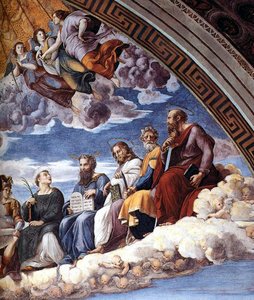
Giulio Romano, born Giulio Pippi around 1499 in Rome, emerged during a period of intense artistic transformation. Details surrounding his early life remain somewhat shrouded in mystery, yet it’s known he quickly entered the orbit of Raphael, arguably the most celebrated painter of the High Renaissance. This apprenticeship proved profoundly formative, not only shaping his technical skills but also laying the foundation for his future stylistic explorations. He wasn't merely a studio assistant; Giulio rapidly evolved into an indispensable collaborator, contributing significantly to projects of immense scale and importance, including the lavish decoration of the Vatican Stanze – those magnificent rooms commissioned by Popes Julius II and Leo X. His hand is readily identifiable in *The Fire in the Borgo*, where he assisted Raphael in depicting a dramatic scene of miraculous intervention—a testament to his burgeoning talent and understanding of narrative composition. This fresco, brimming with dynamic movement and intense emotion, showcases Giulio’s early ability to capture the spirit of a story through visual means. Following Raphael's untimely death in 1520, Giulio inherited responsibility for completing numerous unfinished commissions, including the ambitious decoration of Villa Madama for Cardinal Giuliano de’ Medici—a project that would define much of his career and showcase his evolving artistic vision. This early exposure to large-scale projects and the demands of aristocratic patronage instilled within him a remarkable confidence and ambition, qualities that would become hallmarks of his later work.
The Birth of Mannerism: A Departure from Classical Harmony
While firmly rooted in the Renaissance tradition, Giulio Romano’s artistic trajectory soon diverged significantly from the prevailing emphasis on classical balance and harmony—the hallmark of the High Renaissance. He became a pivotal figure in the development of Mannerism – a style characterized by its deliberate artificiality, heightened elegance, and often unsettling distortions of form. He was deeply influenced by Michelangelo's powerfully expressive figures and dynamic compositions, absorbing their sense of dramatic tension and emotional intensity. Furthermore, Giulio’s artistic journey was shaped by a broader climate of experimentation within the art world—a willingness to push boundaries and challenge established conventions. This wasn’t a rejection of Renaissance ideals so much as a deliberate exploration of their limits, an attempt to surpass the constraints of *natura* and create works that were more subjective, emotionally charged, and intellectually stimulating. Giulio began to embrace asymmetry, tension, and a heightened sense of drama in his paintings—elements that would become defining characteristics of Mannerist art. His drawings, particularly, reveal this shift, exhibiting a remarkable freedom of line, an unconventional use of perspective, and a fascination with elongated figures and complex spatial arrangements.
Mantua’s Master: Palazzo Te and Architectural Innovation
In 1524, Giulio Romano accepted the invitation of Federico Gonzaga, Duke of Mantua, to become court painter and architect—a move that fundamentally altered the course of his career. This relocation provided him with unprecedented creative freedom and access to considerable resources, effectively transforming him into the artistic director of the entire duchy. He undertook a vast array of projects, overseeing not only paintings and frescoes but also ambitious architectural designs, intricate garden layouts, and even theatrical productions—demonstrating a truly holistic approach to art and design. His most celebrated achievement during this period is undoubtedly Palazzo Te, an extraordinary suburban villa that stands as a testament to his innovative genius and mastery of illusionistic techniques. The palace’s interiors are adorned with breathtaking frescoes depicting mythological scenes, allegorical narratives, and fantastical creatures—a dazzling display of color, texture, and spatial complexity. *The Sala dei Giganti* (Hall of the Giants), for example, is a particularly striking example of Giulio's artistic prowess, depicting a chaotic battle between gods and giants within an architectural framework that seems to dissolve into a swirling vortex of figures and fragmented spaces. This masterful manipulation of perspective and illusion creates an immersive experience—a captivating blend of reality and fantasy. Beyond Palazzo Te, Giulio also undertook significant renovations to Mantua’s ducal palace and cathedral, leaving an enduring legacy on the city's urban landscape and solidifying his reputation as a visionary artist and architect.
Legacy and Lasting Influence
Giulio Romano died in Mantua in 1546, leaving behind a legacy that extended far beyond Italy’s borders. His drawings were highly prized by collectors throughout Europe, and engravings based on his work—particularly those created by Marcantonio Raimondi—played a crucial role in disseminating Italian artistic styles to a wider audience. He was so renowned after his death that he is the only “modern” artist mentioned by William Shakespeare in *Pericles*, a testament to his widespread fame and influence. Giulio’s impact can be seen in the works of numerous subsequent artists, who adopted his dynamic compositions, elongated figures, and expressive use of color—demonstrating the enduring power of his artistic innovations. While Mannerism eventually gave way to other stylistic movements, Giulio Romano's contributions remain essential to understanding the evolution of Western art. He represents a pivotal moment—a transition from the harmonious ideals of the High Renaissance to the more complex and emotionally charged aesthetic of the late 16th century. His work continues to captivate and challenge viewers today, reminding us of the profound ability of art to both reflect and shape our understanding of the world.
Key Influences
- Raphael: Giulio’s apprenticeship under Raphael provided him with a solid foundation in classical technique and composition, which he later transformed through his embrace of Mannerism.
- Michelangelo: The powerful figures and dynamic compositions of Michelangelo profoundly influenced Giulio's approach to depicting human form and creating dramatic scenes.
- The Renaissance Spirit of Experimentation: A broader climate of artistic innovation within the Renaissance fostered Giulio’s willingness to challenge conventions and explore new aesthetic possibilities.


 Vezi mai mult




 Comută pe versiunea Print


 Pentru opere de artă sau reproduceri care depășesc 105 cm (aproximativ 41 de inch) pe oricare dintre laturi, cadrul va fi livrat demontat, sub formă de kit. Această metodă asigură o livrare sigură și previne deteriorarea în timpul transportului.


