Garanție de rambursare în 100 de zile Livrare gratuită în toată lumea
449.587opere de artă 30.613artişti 4.660muzee 32limbi
Monedă
    Limba
      Atelier · Est. 2015 · Paris, Franța
      AllPaintingsStore
      allpaintingsstore.com
      Catalogue entry

      sorrow

      Acrylic On Canvas.

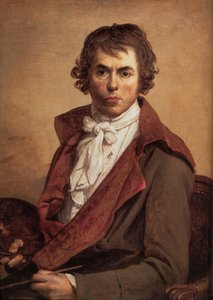
      Fig. 1. Jacques-Louis David, sorrow. Shown as the reproduction you are specifying: , .

      § 1Catalogue data

      § 2Abstract

      Descriere obiect de colecție

      Experience 'Sorrow,' a poignant black & white masterpiece by Jacques-Louis David. Explore this iconic Neoclassical painting's dramatic beauty & historical significance.

      Biografie artist

      Jacques-Louis David (1748-1825): Maestru al neoclasicismului francez revoluționar! Celebrează eroismul și idealurile epocii prin opere emblematice precum 'Jurământul lui Horațiu' și 'Moartea lui Marat'.

      § 3Commentary

      A Portrait of Inner Turmoil: Jacques-Louis David’s *Sorrow*

      Jacques-Louis David's Sorrow is a deeply affecting work that transcends simple portraiture, offering instead a poignant study of human emotion rendered with the meticulous precision characteristic of Neoclassical art. Created sometime during his prolific career (1748-1825), this black and white painting exemplifies David’s ability to distill complex psychological states into strikingly visual form.

      Subject & Composition

      The composition centers on a solitary female figure, her head adorned with a delicate wreath of leaves. Her long, flowing hair frames a face cast downward in what appears to be profound contemplation – or perhaps grief. David’s masterful use of chiaroscuro—the dramatic interplay of light and shadow—heightens the emotional intensity, drawing the viewer's eye to her expressive features. The figure occupies a significant portion of the canvas, creating an intimate connection with the observer. While the background is subtly rendered, it provides depth and context without distracting from the central subject.

      Style & Technique

      Sorrow embodies the hallmarks of Neoclassicism: a commitment to clarity, order, and idealized form. David’s technique is characterized by precise draftsmanship and meticulous attention to detail, reflecting his rigorous academic training. The stark contrast between light and shadow not only emphasizes the woman's emotional state but also showcases David’s technical prowess. The painting’s monochromatic palette further contributes to its somber mood and timeless quality.

      Historical Context & Artistic Influences

      David was a pivotal figure during a period of immense social and political upheaval in France, initially gaining prominence before the French Revolution and later becoming deeply involved with its ideals. While Sorrow doesn’t directly depict revolutionary events, it reflects the era's shift towards seriousness, moral virtue, and emotional intensity – qualities central to Neoclassical art. David drew inspiration from classical antiquity, believing it offered a model for artistic excellence and civic responsibility. However, this work subtly anticipates the emerging Romantic sensibilities of the following decades with its focus on subjective experience and intense feeling.

      Symbolism & Interpretation

      The symbolism within Sorrow is both subtle and evocative. The wreath of leaves suggests a connection to nature, perhaps representing fleeting beauty or the cyclical nature of life and death. It also alludes to classical iconography, linking the figure to ancient ideals of mourning and remembrance. Is this sorrow born of personal loss? Is it a broader reflection on the anxieties of the age? David intentionally leaves these questions open-ended, inviting viewers to project their own emotions onto the figure and contemplate the universal experience of sadness.

      Emotional Impact & Interior Design

      The painting’s power lies in its ambiguity and emotional resonance. It evokes a sense of quiet contemplation and invites empathy from the viewer. Its subdued palette and introspective mood make it a compelling addition to various interior settings:

      • Study or Library: Its contemplative nature complements spaces dedicated to thought and reflection.
      • Dining Room: The dramatic lighting and classical elements add sophistication and intrigue.
      • Hallway or Entryway: A striking focal point that invites conversation and contemplation.

      To best showcase Sorrow, consider a neutral wall color – soft greys, warm off-whites, or muted blues will allow the black and white composition to stand out. Subtle lighting focused on the artwork will enhance its dramatic effect. Framing in a simple, elegant style—perhaps matte black, aged gold, or natural wood—will complement the Neoclassical aesthetic without overwhelming the piece.

      Sorrow is more than just a painting; it’s a window into the human condition – a timeless exploration of grief, contemplation, and the enduring power of emotion.

      Întrebări și răspunsuri

      Ce culori domină în "sorrow" de Jacques-Louis David?

      "sorrow" de Jacques-Louis David utilizează o paletă de culori Earthy, având culoarea Gray (#856e5a) ca nuanță dominantă.

      În ce etapă a evoluției lui Jacques-Louis David se încadrează „sorrow”?

      În cariera lui Jacques-Louis David, „sorrow” aparține perioadei Late Medieval. Această etapă facilitează compararea sa cu celelalte opere ale artistului.

      Ce atmosferă conferă "sorrow" de Jacques-Louis David unui interior?

      Atmosfera Dramatic a operei "sorrow" de Jacques-Louis David se potrivește perfect spațiului recomandat: un Living Room.
      § 4The artist

      Jacques-Louis David

      Jacques-Louis David

      1748 - 1800, Franța

      Quick facts about Jacques-Louis David

      • Artistic Movement Or Style: Neoclasicism
      • Artists Or Movements Influenced By This Artist:
        • Ingres
        • Matisse
      • Artists Who Influenced This Artist:
        • Vien
        • Mengs
      • Date Of Birth: 30 august 1748
      • Date Of Death: 29 decembrie 1825
      • Full Name: Jacques-Louis David
      • Nationality: Francez
      • Notable Artworks:
        • Oath of the Horatii
        • Marat Mort
        • Napoleon pe Alpi
      • Place Of Birth: Paris, Franța

      Biografie artist

      A Brushstroke Across Revolution: The Life and Art of Jacques-Louis David

      Jacques-Louis David, born in Paris in 1748, was more than just a painter; he was a visual chronicler of an era defined by upheaval, idealism, and the relentless pursuit of new orders. His life mirrored the dramatic shifts unfolding across France – from the waning opulence of the Rococo to the austere clarity of Neoclassicism, and ultimately, through the tumultuous years of revolution and Napoleonic glory. A childhood marked by the early loss of his father and a facial impediment that initially hindered his speech seemed only to sharpen his observational skills and fuel an unwavering dedication to artistic mastery. Though initially apprenticed to François Boucher, David quickly found himself drawn to the more morally resonant work of Joseph-Marie Vien, whose emphasis on history painting and classical subjects resonated with a burgeoning sense of purpose within the young artist. His early attempts to win the prestigious Prix de Rome were fraught with frustration, yet these repeated setbacks only intensified his resolve, forging a relentless perfectionism that would characterize his entire career.

      The Birth of Neoclassical Drama

      David’s artistic evolution wasn't merely a stylistic shift; it was a philosophical statement. He rejected the frivolous ornamentation and playful themes of the Rococo, embracing instead the clarity, order, and moral seriousness inherent in classical antiquity. This commitment was profoundly influenced by archaeological discoveries at Pompeii and Herculaneum, which unveiled a world of Roman art and architecture previously lost to time. The images of these ancient ruins, with their monumental scale and rational design, captivated David’s imagination and provided the foundation for his new artistic vision. His breakthrough came with “Oath of the Horatii” (1784), a painting that transcended mere artistic skill to become an emblem of civic virtue and patriotic sacrifice. The stark composition, dramatic lighting – carefully orchestrated to emphasize the figures' musculature and emotional intensity – and precise draftsmanship were revolutionary, signaling a decisive break from the past. It wasn’t simply *what* he painted but *how* – a deliberate construction designed to evoke powerful emotional responses and inspire contemplation on themes of duty, honor, and self-sacrifice. The figures are rendered with an almost sculptural quality, their bodies idealized according to classical principles, while their expressions convey a profound sense of resolve and impending doom. This work didn't just announce a new style; it foreshadowed the ideological currents that would soon sweep across France.

      Revolution and Remembrance: Art as Political Weapon

      As the French Revolution erupted in 1789, David was not merely an observer but an active participant. A fervent supporter of the revolutionary cause and a close associate of Maximilien Robespierre, he saw art as a powerful tool for shaping public opinion and immortalizing the ideals of the new republic. His paintings during this period became potent symbols of revolutionary martyrdom and republican fervor. Perhaps his most iconic work from this era is “The Death of Marat” (1793), a hauntingly realistic depiction of the assassinated journalist, transformed into a secular saint. The painting’s stark simplicity – the pale body, the makeshift desk, the poignant letter clutched in Marat's hand – elevates the scene to a level of profound emotional resonance. David deliberately chose to depict Marat in his final moments, emphasizing his dedication to the revolution and presenting him as a victim of counter-revolutionary forces. The painting was intended to inspire loyalty and galvanize support for the new government. He also created numerous other works celebrating revolutionary heroes and events, solidifying his reputation as a key propagandist for the Revolution.

      From Revolution to Empire: Serving Napoleon

      The fall of Robespierre marked another turning point in David’s career. With remarkable adaptability, he navigated the shifting political landscape and aligned himself with Napoleon Bonaparte, becoming the First Consul’s official court painter. This new patronage ushered in a period of grand-scale commissions designed to glorify Napoleon’s victories and achievements. “Napoleon Crossing the Alps” (1801-1805) is perhaps the most famous example – a masterful piece of propaganda that presents Napoleon as a heroic, almost mythical figure conquering both nature and adversity. The painting depicts Napoleon leading his troops over the formidable Mont Blanc, bathed in dramatic light and rendered with an almost theatrical intensity. “The Coronation of Napoleon” (1807), an immense canvas capturing the opulence and grandeur of the imperial ceremony, further cemented David’s position as the preeminent artist of the Napoleonic era. During this time, his palette subtly shifted, incorporating warmer Venetian colors while maintaining the precision and clarity that defined his style. He continued to produce historical paintings celebrating Napoleon's military triumphs and consolidating his image as a powerful and divinely ordained ruler.

      Exile, Legacy, and Enduring Influence

      The Bourbon Restoration in 1814 brought renewed peril for David, whose association with the fallen Napoleon made him a target of persecution. He chose exile in Brussels in 1816, where he continued to paint and teach until his death on December 29, 1825. Even in exile, his influence remained profound. He trained numerous pupils, including Jean-Auguste-Dominique Ingres, who would become one of the most important neoclassical painters of the 19th century. David’s emphasis on draftsmanship, composition, and historical accuracy left an indelible mark on French art. *His legacy extends beyond mere imitation*; his expressive distortions of form and space even foreshadowed the innovations of later artists like Henri Matisse and Pablo Picasso. Jacques-Louis David was not simply a painter of his time; he *defined* it, capturing its spirit of revolution, ambition, and enduring ideals on canvas for generations to come.
      • Major Achievements: Established Neoclassicism as the dominant style in French painting.
      • Historical Significance: Created iconic images that captured the spirit of the French Revolution and the Napoleonic era.
      • Influence: Trained a generation of influential artists who carried on his legacy.

      § 5Comparanda

      § 6Questions

      Informații rapide

      • style: Neoclassical
      • notable elements: Chiaroscuro, wreath of leaves, downward gaze
      • subject: Woman in sorrow/contemplation
      • medium: Painting

      Test de cunoștințe despre artă

      Fiecare întrebare are un singur răspuns corect.

      Întrebare 1:
      Jacques-Louis David is most closely associated with which artistic movement?
      Întrebare 2:
      What technique does David employ to emphasize the emotional weight of the scene in 'Sorrow'?
      Întrebare 3:
      The wreath of leaves adorning the woman’s head is a subtle reference to what?
      Întrebare 4:
      How does 'Sorrow' differ from some of David's more famous works like 'The Oath of the Horatii'?
      Întrebare 5:
      What is suggested by the woman’s downward gaze in 'Sorrow'?

      § 7Cite this entry

      AllPaintingsStore.com, “Jacques-Louis David, sorrow”, https://allpaintingsstore.com/ro/art/jacques-louis-david-sorrow-9GG9NX-en/ArtistReproduction/ (accessed 2 Octombrie 2026).

      § 8The reproduction

      Reproducere pictată manual în ulei

      Pictură în ulei pe pânză, pictată manual de artiștii noștri la dimensiunea și ramele dorite de dumneavoastră, pe comandă. ( Comută pe versiunea Print Comută pe Imagine Digitală)

      It is specified on the order sheet in the margin; the present state of that sheet reads as follows.

      sorrow

      Tehnică de reproducere

      Dimensiune reproducere

      -

      Selecție de artiști de elită

      Mai multe detalii, rafinament și timp suplimentar de execuție

      -

      Ramă pentru reproducere artistică

      -

      -

      Pentru opere de artă sau reproduceri care depășesc 105 cm (aproximativ 41 de inch) pe oricare dintre laturi, cadrul va fi livrat demontat, sub formă de kit. Această metodă asigură o livrare sigură și previne deteriorarea în timpul transportului.

      Este necesară asamblarea profesională – acest produs nu este de tip DIY (de făcut singur).
      Kitul trebuie asamblat, iar pânza întinsă, de către un legător de cadre experimentat, utilizând adeziv pentru lemn (neinclus în colet), o cheie pentru întinderea pânzei și cleme pentru a menține barele la unghi drept în timp ce adezivul se usucă. Asamblarea incorectă sau tensiunea neuniformă a pânzei pot deteriora permanent opera de artă și nu sunt acoperite de garanția noastră.

      • Toate barele din lemn masiv sunt incluse, tăiate cu precizie la dimensiunea necesară.

      • Asamblat cu șuruburile incluse, plus adeziv pentru lemn pentru îmbinările de colț, care nu este furnizat și trebuie achiziționat de către tâmplarul dumneavoastră.

      • Sunt necesare unelte profesionale care nu sunt incluse: o șipte de întindere a pânzei (tensionator) și cleme pentru a menține barele la unghi drept în timp ce adezivul se usucă.

      Important:
      Îmbinările de colț necesită adeziv pentru lemn, barele trebuie fixate cu clești de strângere până când adezivul este complet uscat, iar întinderea pânzei pe cadrul asamblat necesită un clește pentru întins pânza. Niciunul dintre aceste elemente nu este inclus în kit. Vă rugăm să consultați un încadrator profesionist cu experiență înainte de a comanda această dimensiune.

      Etichetă de prezentare

      -

      -

      Lac de protecție

      Lac lucios (intensifică nuanțele și oferă protecție împotriva luminii și a umidității)

      -

      Personalizează opera mea de artă

      Exemple de elemente ce pot fi personalizate: Înlocuirea feței cu fotografia clientului; Adăugarea unui animal de companie (de exemplu, înlocuirea unei pisici cu un câine); Includerea unui mesaj ascuns în fundal; Modificarea peisajului sau a elementelor din fundal.

      -

      Livrare rapidă

      Livrare la nivel mondial () în 3-4 săptămâni, în loc de cele 5 săptămâni standard. (30 Octombrie). Fără compromisuri când vine vorba de calitate.

      -

      Livrare rapidă

      Livrare la nivel mondial () în 5 săptămâni. (6 Noiembrie).

      Inclus

      Preț total calculat

      lei 1211

      Included with every order

      • Livrare expres gratuită la nivel mondial
      • Pânză de in de înaltă calitate
      • Asigurare completă pentru transport
      • Garanție de rambursare a taxelor vamale
      • Garanția fidelității culorilor
      • Politica de retur în 100 de zile (doar pentru defecte de fabricație)
      • Garanție de rambursare 100%
      • Ofertă pentru comenzi multiple
      Order sheet