Garanție de rambursare în 100 de zile Livrare gratuită în toată lumea
449.587opere de artă 30.613artişti 4.660muzee 32limbi
Monedă
    Limba
      Atelier · Est. 2015 · Paris, Franța
      AllPaintingsStore
      allpaintingsstore.com
      Catalogue entry

      Boat Building

      1815. Acrylic, 51.0 x 62.0 cm.

      Fig. 1. John Constable, Boat Building, 1815. Shown as the reproduction you are specifying: , .

      § 1Catalogue data

      § 2Abstract

      Descriere obiect de colecție

      Constable’s evocative Boat Building captures the vibrant energy of rural England in 1815, portraying two men diligently constructing a boat amidst rolling hills and shimmering water—a testament to his Romantic style and masterful depiction of natural beauty. Explore this stunning reproduction and bring Constable's vision home.

      Biografie artist

      Descoperiți "Poarta Harnham, Salisbury", o capodopera impresionantă de John Constable! Admirați peisajul rural englezesc capturat cu emoție și lumină, un simbol al armoniei naturii și al vieții simple.

      § 3Commentary

      A Moment Frozen in Time: Exploring Constable’s “Boat Building”

      The painting "Boat Building," executed by John Constable in 1815, transcends mere depiction; it captures a quintessential slice of rural English life—a scene brimming with quiet industry and imbued with an undeniable sense of harmony. More than just observing the construction process, Constable skillfully conveys the emotional resonance of this everyday activity, transforming it into a profound meditation on labor, community, and the enduring beauty of the natural world.
      • Subject Matter: At its core, the artwork portrays two men diligently constructing a small boat amidst the verdant expanse of Dedham Vale. The inclusion of additional figures—likely onlookers or assistants—adds to the dynamism of the composition and underscores the importance of collaborative effort within rural society.
      • Style & Technique: Constable’s style is firmly rooted in Romanticism, prioritizing atmospheric perspective and tonal gradation to achieve an unparalleled realism. He meticulously captures the interplay of light and shadow on the boat builders' faces and tools, demonstrating a masterful command of brushwork—loose, expressive strokes that convey texture and movement without sacrificing accuracy.

      Historical Context: The Romantic Ideal

      Painted during the height of the Romantic era, “Boat Building” reflects the prevailing artistic sensibilities of its time. Artists like Constable sought to elevate landscape painting beyond mere topographical representation, aiming instead to evoke emotion and convey philosophical ideas. The Romantic movement championed individualism, imagination, and a reverence for nature—values powerfully expressed in Constable’s depiction of rural England as an antidote to the industrializing pressures of the burgeoning Victorian age.
      • Symbolism: Beyond its literal portrayal of labor, the boat itself carries symbolic significance. Traditionally associated with journeys and exploration, it represents aspiration and progress—themes central to Romantic thought. The collaborative effort depicted reinforces the importance of human connection and interdependence within the natural environment.
      • Emotional Impact: Constable’s masterful use of color and light creates an atmosphere of tranquility and optimism. Viewers are drawn into the scene, experiencing a palpable sense of warmth and camaraderie as they witness the dedication and skill of the boat builders. The painting's enduring appeal lies in its ability to transport us back to a simpler time—a moment captured with exquisite sensitivity and artistic brilliance.

      Constable’s Legacy: A Pioneer of Atmospheric Impressionism

      John Constable stands as a pivotal figure in the development of landscape painting, particularly his contribution to what would later become known as Atmospheric Impressionism. His pioneering techniques—particularly his deliberate blurring of boundaries between color and tone—anticipate the innovations of artists like Monet and Turner, establishing him as one of the foremost interpreters of light and atmosphere in British art history. “Boat Building” serves not only as a stunning visual record but also as a testament to Constable’s unwavering commitment to capturing the essence of his beloved Dedham Vale—a legacy that continues to inspire admiration and appreciation today.

      Întrebări și răspunsuri

      Ce paletă și ce emoție transmite "Boat Building"?

      Paleta Neutrals a operei "Boat Building" de John Constable se armonizează cu tonul său Reflective. Culoarea este una dintre modalitățile prin care o lucrare transmite emoție.

      Cât de cunoscută este opera „Boat Building” în cadrul mișcării Romantic Landscape Painting?

      „Boat Building” este înregistrat ca fiind Recognized printre lucrările de tip Romantic Landscape Painting din catalog.

      Pot comanda o reproducere în ulei a operei "Boat Building"?

      Puteți comanda o reproducere pictată manual a operei "Boat Building" de John Constable direct pe pagina sa de Reproducere pictată în ulei: o reproducere pictată manual în ulei pe pânză de in, realizată la comandă.
      § 4The artist

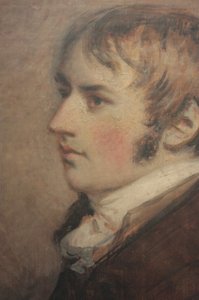
      John Constable

      John Constable

      1776 - 1837, Regatul Unit al Marii Britanii și Irlandei

      Quick facts about John Constable

      • Artistic Movement Or Style: Romanticism
      • Artists Or Movements Influenced By This Artist: ['Barbizon School']
      • Artists Who Influenced This Artist:
        • Claude Lorrain
        • Ruisdael
      • Date Of Birth: 11 iunie 1776
      • Date Of Death: 31 martie 1837
      • Full Name: John Constable
      • Nationality: Britanic
      • Notable Artworks:
        • The Hay Wain
        • Hadleigh
        • Salisbury
      • Place Of Birth: East Bergholt, UK

      Biografie artist

      A Life Rooted in the English Landscape

      John Constable, born in 1776 in the idyllic Suffolk village of East Bergholt, wasn’t merely a painter of landscapes; he was a poet of the land, translating its subtle moods and enduring beauty onto canvas with an unprecedented emotional depth. His father, a prosperous corn merchant who owned both Dedham Vale and mills along the River Stour, provided not only financial security but also the very subject matter that would define Constable’s artistic life. This early immersion in the rural world – the slow rhythm of agricultural life, the ever-changing light on fields and water, the intimate details of nature – became indelibly etched into his sensibility. While initially destined to follow his father into business, a burgeoning passion for art, nurtured by local patrons like George Beaumont who introduced him to the works of Claude Lorrain, ultimately steered him toward a different path. Constable’s artistic journey wasn't immediate; it was a gradual unfolding, shaped by careful observation and a persistent desire to capture not just *what* he saw, but *how* it felt to be present within the landscape.

      Breaking with Convention: A New Vision of Nature

      Constable’s artistic development was marked by a deliberate rejection of prevailing academic conventions. Dissatisfied with the idealized and often theatrical landscapes favored by the Royal Academy, he sought instead a truthful representation of nature, imbued with personal feeling. He wasn't interested in grand historical narratives or mythological scenes; his focus remained steadfastly on the familiar countryside surrounding him. This commitment to depicting ordinary subjects – hay wains, farm buildings, village life – was initially met with resistance from critics who deemed his work too commonplace and lacking in ambition. However, Constable persevered, driven by a conviction that beauty resided in the everyday. He pioneered a technique of *plein air* painting, venturing outdoors to directly observe and capture the fleeting effects of light and weather. This direct engagement with nature allowed him to infuse his canvases with an immediacy and vitality previously unseen in British landscape art. His brushwork became increasingly loose and expressive, employing impasto – thick layers of paint – to create texture and convey a sense of movement and atmosphere. He wasn’t simply recording what he saw; he was translating his emotional response to the land into visual form.

      Iconic Works and Lasting Influence

      Constable's most celebrated works stand as testaments to his unique vision. The Hay Wain (1821), perhaps his most recognizable painting, depicts a quintessential rural scene on the River Stour, capturing the tranquility and harmony of agricultural life. Hadleigh Castle (1829) showcases his dramatic use of light and atmospheric effects, transforming a crumbling ruin into a powerful symbol of time’s passage. The series of paintings depicting Salisbury Cathedral from the Meadows (1831) demonstrates his ability to evoke different moods and times of day, revealing the cathedral as an integral part of the natural landscape. Netley Abbey (1824), with its evocative depiction of architectural grandeur amidst encroaching nature, exemplifies his skill in blending human creation with the wild beauty of the countryside. Despite facing initial struggles for recognition in England, Constable achieved considerable acclaim in France, where his innovative techniques and emotional depth resonated deeply with artists seeking a more naturalistic approach to landscape painting. He profoundly influenced the Barbizon School, a group of French painters who shared his commitment to *plein air* painting and direct observation of nature.

      Personal Life & Final Years

      Constable’s personal life was marked by both joy and sorrow. He married Maria Bicknell in 1816, and they had seven children, though sadly several did not survive infancy. His marriage provided him with emotional support but also financial strain. Elected a Royal Academician in 1829, he continued to face criticism from some quarters, particularly regarding his unconventional techniques. His later years were shadowed by Maria’s declining health and eventual death in 1828, an event that deeply affected him. Despite these hardships, Constable remained dedicated to his art, continuing to paint until his own passing on March 31, 1837. He left behind a rich artistic legacy—a testament to his unwavering commitment to capturing the beauty and emotional resonance of the English countryside. His paintings remain powerful evocations of a bygone era, inviting viewers to experience the landscape through his uniquely sensitive eyes.

      Influences & Artistic Development

      Constable’s artistic journey was shaped by several key influences. Initially, he admired the works of Claude Lorrain, whose idealized landscapes provided him with a foundation in composition and color theory. However, he quickly moved beyond Lorrain's formal approach, seeking to capture the more dynamic and unpredictable qualities of nature. The work of Jacob Ruysdael, a Dutch master known for his atmospheric landscapes, also had a significant impact on Constable’s style. He was particularly drawn to Ruysdael’s ability to convey a sense of depth and distance through subtle variations in tone and color. Furthermore, Constable's exposure to the works of John Thomas Smith, a contemporary engraver who specialized in reproducing landscape paintings, helped him develop his observational skills and understanding of tonal values. His early training at the Royal Academy provided him with a basic knowledge of drawing and painting techniques, but it was through independent study and direct experience that Constable truly honed his artistic vision.

      A Legacy of Emotional Resonance

      John Constable’s historical significance lies not only in his artistic innovations but also in his profound impact on the development of landscape painting. He challenged academic conventions, elevated the status of ordinary subjects, and paved the way for a more personal and emotionally expressive approach to art. His emphasis on direct observation, atmospheric effects, and truthful representation of nature anticipated many of the concerns of later Impressionist painters. He demonstrated that landscape could be a vehicle for profound emotional expression, capable of evoking feelings of nostalgia, tranquility, and awe. Though he faced financial hardship throughout much of his career, and died relatively young in 1837, his legacy endures. Today, Constable is celebrated as one of Britain’s greatest artists, whose paintings continue to captivate audiences with their beauty, sincerity, and enduring power. His work serves as a poignant reminder of the profound connection between humanity and the natural world, and the transformative potential of art to capture its essence.

      § 5Comparanda

      § 6Questions

      Informații rapide

      • Subject or theme: Landscape painting
      • Notable elements or techniques: Detailed depiction of rural craftmanship
      • Location: Private Collection
      • Movement: Romanticism
      • Title: Boat Building
      • Influences: Claude Lorrain

      § 7Cite this entry

      AllPaintingsStore.com, “John Constable, Boat Building (1815)”, https://allpaintingsstore.com/ro/art/john-constable-boat-building-8XYC5P-en/ (accessed 1 Octombrie 2026).

      § 8The reproduction

      Reproducere pictată manual în ulei

      Pictură în ulei pe pânză, pictată manual de artiștii noștri la dimensiunea și ramele dorite de dumneavoastră, pe comandă. ( Comută pe versiunea Print Comută pe Imagine Digitală)

      It is specified on the order sheet in the margin; the present state of that sheet reads as follows.

      Boat Building

      Tehnică de reproducere

      Dimensiune reproducere

      -

      Selecție de artiști de elită

      Mai multe detalii, rafinament și timp suplimentar de execuție

      -

      Ramă pentru reproducere artistică

      -

      -

      Pentru opere de artă sau reproduceri care depășesc 105 cm (aproximativ 41 de inch) pe oricare dintre laturi, cadrul va fi livrat demontat, sub formă de kit. Această metodă asigură o livrare sigură și previne deteriorarea în timpul transportului.

      Este necesară asamblarea profesională – acest produs nu este de tip DIY (de făcut singur).
      Kitul trebuie asamblat, iar pânza întinsă, de către un legător de cadre experimentat, utilizând adeziv pentru lemn (neinclus în colet), o cheie pentru întinderea pânzei și cleme pentru a menține barele la unghi drept în timp ce adezivul se usucă. Asamblarea incorectă sau tensiunea neuniformă a pânzei pot deteriora permanent opera de artă și nu sunt acoperite de garanția noastră.

      • Toate barele din lemn masiv sunt incluse, tăiate cu precizie la dimensiunea necesară.

      • Asamblat cu șuruburile incluse, plus adeziv pentru lemn pentru îmbinările de colț, care nu este furnizat și trebuie achiziționat de către tâmplarul dumneavoastră.

      • Sunt necesare unelte profesionale care nu sunt incluse: o șipte de întindere a pânzei (tensionator) și cleme pentru a menține barele la unghi drept în timp ce adezivul se usucă.

      Important:
      Îmbinările de colț necesită adeziv pentru lemn, barele trebuie fixate cu clești de strângere până când adezivul este complet uscat, iar întinderea pânzei pe cadrul asamblat necesită un clește pentru întins pânza. Niciunul dintre aceste elemente nu este inclus în kit. Vă rugăm să consultați un încadrator profesionist cu experiență înainte de a comanda această dimensiune.

      Etichetă de prezentare

      -

      -

      Lac de protecție

      Lac lucios (intensifică nuanțele și oferă protecție împotriva luminii și a umidității)

      -

      Personalizează opera mea de artă

      Exemple de elemente ce pot fi personalizate: Înlocuirea feței cu fotografia clientului; Adăugarea unui animal de companie (de exemplu, înlocuirea unei pisici cu un câine); Includerea unui mesaj ascuns în fundal; Modificarea peisajului sau a elementelor din fundal.

      -

      Livrare rapidă

      Livrare la nivel mondial () în 3-4 săptămâni, în loc de cele 5 săptămâni standard. (29 Octombrie). Fără compromisuri când vine vorba de calitate.

      -

      Livrare rapidă

      Livrare la nivel mondial () în 5 săptămâni. (5 Noiembrie).

      Inclus

      Preț total calculat

      lei 1200

      Included with every order

      • Livrare expres gratuită la nivel mondial
      • Pânză de in de înaltă calitate
      • Asigurare completă pentru transport
      • Garanție de rambursare a taxelor vamale
      • Garanția fidelității culorilor
      • Politica de retur în 100 de zile (doar pentru defecte de fabricație)
      • Garanție de rambursare 100%
      • Ofertă pentru comenzi multiple
      Order sheet