


 Previzualizare
 Trimite prin felicitare
 Distribuie
 Detalii despre lucrare
 Ghid
Ghid

 Descarcă imaginea
 Produse similare
 Radiografie
 Galerie foto
 Statistici
A Mountain Scene


 Vezi mai mult
Giclée / Imprimare artistică
Printuri giclée sau pe canvas de calitate muzeală, cu proces de producție rapid și opțiuni flexibile de finisare. ( Comandă pictură realizată manual Comută pe Imagine Digitală)




P118B lei10

P118H lei10

P118W lei10

P438Z lei10

P508JH lei12

P508YH lei12

P805H lei10

P805Z lei10

P919BZ lei10

P919G lei10

P919XJ lei10

P959ZH lei10

P968JZ lei12

W106C lei8

W218G lei10

W218JH lei8

W218Y lei10

W307PJ lei10

W316G lei10

W316PJ lei8

W316Y lei10

W398PJ lei8

W4111J lei10

W500HY lei15

W500JH lei15

W692G lei12

W849H lei8

W940BG lei15

W953PJ lei8




Alegeți dintre dimensiunile noastre prestabilite, care respectă proporțiile originale ale operei de artă.

Introduceți lățimea și înălțimea necesare pentru a se potrivi ramei sau peretelui dumneavoastră. O printare poate fi doar tăiată, niciodată extinsă dincolo de dimensiunea imaginii originale, astfel încât o dimensiune cu o formă diferită va pierde o parte din imagine. Vă trimitem o simulare digitală pentru aprobare înainte de a imprima orice. Imaginea afișată pe această pagină nu prezintă tăierea reală — doar simularea arată acest lucru.
Livrare în întreaga lume () în 2 săptămâni, în loc de cele 4/5 săptămâni standard. (27 Octombrie)

Livrare expres gratuită la nivel mondial

Pânză de in de înaltă calitate

Asigurare completă pentru transport

Garanție de rambursare a taxelor vamale

Garanția fidelității culorilor

Politica de retur în 100 de zile (doar pentru defecte de fabricație)

Garanție de rambursare 100%

Ofertă pentru comenzi multiple
 Opțiunea cu sticlă este disponibilă doar pentru dimensiuni de sub 110 cm

A Mountain Scene
Giclée / Imprimare artistică
Dimensiune reproducere
-


Preț total calculat
lei 296
A Mountain Scene by John Crome
The Norfolk landscape holds a special place in British artistic memory, largely thanks to the unwavering dedication of artists like John Crome who tirelessly sought to capture its sublime beauty. Painted in 1806, “A Mountain Scene” exemplifies the Norwich School’s distinctive approach to landscape painting—a style characterized by understated tonal harmonies and an acute sensitivity to atmospheric conditions. This piece isn't merely a depiction of mountains; it’s an embodiment of Romantic ideals, reflecting a profound connection between humanity and the natural world.Subject Matter & Composition
The artwork presents a panoramic vista of East Anglian hills dominated by a substantial rock outcrop. The artist skillfully employs perspective to convey depth, drawing the viewer's eye upwards towards the cloudy sky—a crucial element in establishing mood and conveying the grandeur of the landscape. Two figures stand prominently positioned near the left side of the canvas, gazing out upon this breathtaking panorama. Their presence serves not only as compositional anchor but also subtly suggests contemplation and admiration for the majesty of nature.Style & Technique: Norwich School Characteristics
Crome’s technique is rooted in the Norwich School's core principles—a deliberate rejection of flamboyant brushwork favored by earlier Romantic painters. Instead, he achieves remarkable tonal gradation through meticulous layering of thin washes of oil paint, creating a velvety surface that captures the subtle nuances of light and shadow. This understated approach prioritizes observation and accuracy, mirroring the Norfolk landscape’s muted palette. The artist's masterful use of color—primarily browns, greys, and blues—creates an atmosphere of quiet contemplation and reinforces the painting’s emotional resonance.Historical Context & Romantic Ideals
“A Mountain Scene” emerged during a period marked by significant intellectual ferment – the burgeoning Romantic movement. Artists like Crome were deeply influenced by thinkers such as Edmund Burke and William Wordsworth, who championed emotion and imagination as pathways to understanding the sublime—that feeling of awe and wonder experienced when confronted with overwhelming natural beauty. The painting reflects this philosophical preoccupation, conveying not just visual information but also a spiritual appreciation for the power and majesty of the mountains.Symbolism & Emotional Impact
The rock formation itself symbolizes resilience and permanence against the forces of time and weather—a recurring motif in Romantic art reflecting anxieties about mortality alongside an affirmation of enduring natural order. The figures observing the landscape represent humanity's yearning for connection with something larger than oneself, inviting viewers to contemplate their place within the vastness of creation. Ultimately, “A Mountain Scene” succeeds in evoking a feeling of tranquility and reverence—a testament to Crome’s ability to translate visual observation into profound emotional experience. It remains an enduring symbol of Norfolk's artistic heritage and a captivating example of Romantic landscape painting at its finest.Întrebări și răspunsuri
Care este culoarea dominantă în "A Mountain Scene" de John Crome?
Culoarea care iese cel mai mult în evidență în "A Mountain Scene" este Driftwood (#85734f). Culoarea dominantă este utilă atunci când asortați o operă de artă cu un interior.
Ce format și orientare de imprimare se recomandă pentru "A Mountain Scene" de John Crome?
Pentru o printare a lucrării "A Mountain Scene" de John Crome, recomandăm dimensiunea de Large în orientare Portrait.
"A Mountain Scene" de John Crome este o compoziție de tip portret, peisaj sau pătrată?
Formatul pentru "A Mountain Scene" este Portrait. Acest lucru este util atunci când planificați unde va fi amplificată o reproducere.
Opere similare


Biografie artist
John Crome (1768–1821) - Norfolk Museums Collections
John Crome, affectionately known as “Old Crome” to distinguish him from his artist son, stands as a pivotal figure in British art history—a founder and leading light of the celebrated Norwich School. Born in 1768 in the bustling market town of Norwich, Norfolk, Crome’s journey was one of remarkable self-education and dedication, rising from humble beginnings to become a respected landscape painter who captured the very essence of his beloved East Anglian countryside. His father, a weaver, instilled a strong work ethic, but it was an apprenticeship with house, coach, and sign painter Francis Whisler that first nurtured Crome’s artistic inclinations, providing him with foundational skills in design and color. This practical training proved invaluable as he began to explore his passion for depicting the natural world around him. A formative friendship with Robert Ladbrooke, a fellow aspiring artist, further fueled his development; together they sketched en plein air, honing their observational abilities and sharing a burgeoning enthusiasm for art.Early Life and Artistic Training
John Crome was born on December 22, 1768, in Norwich, Norfolk, the son of John Crome, a publican and journeyman weaver, and Elizabeth. He was baptized on Christmas Day at St George’s Church, Tombland. The history of Crome's early years has often been embellished with anecdote, but a few facts do emerge. In 1783 Crome was apprenticed to Francis Whisler, a house, coach, and sign painter, his indentures taking effect from August 1st (though dated October 15th). As well as being among the first Norwich contemporaries to pursue artistic training, Crome’s early artistic inclinations were nurtured by exposure to the art collections of Thomas Harvey, a wealthy Norfolk collector who championed the burgeoning Norwich School movement. Harvey's patronage provided Crome with invaluable access to masterpieces by artists like Gainsborough and Hobbema—works that profoundly shaped his aesthetic sensibilities and compositional techniques. This formative influence cemented Crome’s connection to the wider artistic community and instilled in him a lifelong appreciation for observing nature as a source of inspiration.The Norwich School: Founding Principles
Crome's artistic trajectory was decisively influenced by the establishment of the Norwich Society of Artists in 1803, alongside Robert Ladbrooke. This bold initiative represented a radical departure from prevailing artistic conventions—a conscious rejection of academic formalism and an embrace of direct observation as paramount to capturing the spirit of Norfolk’s landscape. The Society's members shared a commitment to portraying their region with honesty and accuracy, prioritizing atmospheric effects and tonal subtleties over idealized representations. Crome served as its president for many years, fostering a vibrant artistic environment and nurturing the talents of younger painters who would become prominent figures in the Norwich School movement. He championed the principles of *plein air* painting—working outdoors directly from nature—a technique that allowed artists to capture fleeting moments of light and color with unparalleled immediacy.Style and Technique: Embracing Dutch Masters
Crome’s artistic style is characterized by a distinctive blend of Romantic idealism and meticulous realism. He drew heavily upon the techniques pioneered by Dutch painters of the seventeenth century, particularly Jacob van Ruisdael and Meindert Hobbema—artists who had established a tradition of depicting landscapes with subdued palettes and atmospheric perspective. Crome’s compositions are often simple yet powerfully evocative, focusing on carefully chosen viewpoints that emphasize the grandeur of Norfolk’s scenery. He employed a technique known as *sfumato*, blurring edges and softening contours to create an illusion of depth and luminosity—a stylistic hallmark of Venetian painters like Titian and Tintoretto. Crome's meticulous attention to detail—evident in his depictions of trees, rocks, and water—underscored his unwavering dedication to capturing the essence of Norfolk’s natural world with remarkable precision.Legacy and Recognition
John Crome’s contribution extended far beyond his artistic output. The Norwich School he helped establish fostered a distinct regional artistic identity, nurturing generations of painters who followed in his footsteps. Though initially facing skepticism from London’s art establishment—a bastion of neoclassical ideals—Crome gained national recognition through thirteen exhibitions at the Royal Academy between 1806 and 1818. His paintings resonated with audiences across Britain, securing his place as one of England’s most important landscape painters. Furthermore, Crome's legacy endured beyond his lifetime, thanks to the enduring fascination with Norfolk’s landscapes—a fascination that continues to inspire artists today. As Charles Collins Baker eloquently remarked in 1923, “Our three greatest masters - Crome, Constable and Turner - demonstrate that landscape painting ... is peculiarly the business of the English genius.” His life serves as an inspiring testament to how artistic vision, coupled with a deep connection to one’s surroundings, can produce a body of work that transcends time. His paintings continue to captivate viewers with their quiet beauty, evocative atmosphere, and enduring connection to the heart of Norfolk.
John Crome
1768 - 1821 , Regatul Unit
Detalii rapide
- Artistic Movement Or Style: Norwich School
- Artists Or Movements Influenced By This Artist: ['Dutch Masters']
- Artists Who Influenced This Artist:
- Hobbema
- Wilson
- Date Of Birth: 1768
- Full Name: John Crome
- Nationality: English
- Notable Artworks:
- The Lime Kiln
- Grove Scene
- Mousehold Heath
- Place Of Birth: Norwich, UK
Articole similare
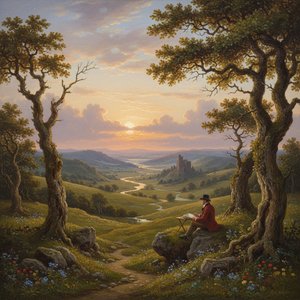
John Varley I: Intimate Observation & the British Romantic Landscape
Explore the serene landscapes of John Varley I, a key figure in British Romanticism. Discover his unique watercolour style, collaboration with William Blake & lasting artistic legacy. Learn about collecting Varley's work.

Peisaje Romantice Iconice: 10 Capodopere Artistice pentru Decorul de Lux
Descoperă 10 capodopere romantice iconice de Caspar David Friedrich, Turner și alți maeștri. Explorează istoria artei, emoțiile din peisaje și găsește tablouri canvas perfecte pentru decorul tău pe AllPaintingsStore.com!

The Sublime and the Picturesque: Exploring Emotion & Nature in Romantic Landscape Painting
Explore the emotional power of Romantic landscape painting! Discover the sublime & picturesque traditions, key artists like Friedrich & Cole, and find your perfect artwork at AllPaintingsStore.
John Constable: Cele Mai Frumoase 25 de Capodopere – Artă Clasică pentru Decorul Casei Tale
Descoperă cele mai frumoase 25 de picturi ale lui John Constable, maestru al peisajului englezesc! Explorează stilul romantic, Dedham Vale și capodopere precum The Hay Wain. Reproduceri artă clasică pentru decorul casei tale – AllPaintingsStore.com.
John Singer Sargent: Cele Mai Iconice Capodopere – Artă, Portrete și Decorațiuni de Lux
Descoperă cele mai frumoase 25 de picturi ale lui John Singer Sargent! Portrete elegante, acuarele rafinate și capodopere impresioniste. Află povestea fiecărei opere și găsește inspirație pentru decorul casei tale pe AllPaintingsStore.com.


