


 Previzualizare
 Trimite
 Distribuie
 Detalii despre lucrare

 Descarcă
 Produse similare
 Radiografie
 Diapozitive automate
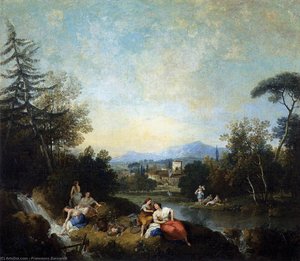
River Landscape

 Vezi mai mult
Reproducere pictată manual în ulei
Pictură în ulei pe pânză, realizată manual de artiștii noștri la dimensiunea și ramele dorite de dumneavoastră, pe comandă. ( Comandă printul Cumpără imaginea)




































Alegeți dintre dimensiunile noastre prestabilite, care respectă proporțiile originale ale operei de artă.

Puteți introduce propriile dimensiuni pentru a se potrivi unui anumit cadru sau spațiu. Dacă dimensiunea selectată nu corespunde proporțiilor imaginii originale, vom decupa opera de artă sau vom extinde pictura cu elemente suplimentare pictate manual. O simulare digitală vă va fi trimisă pentru aprobare înainte de începerea producției.
Vă rugăm să rețineți că previzualizarea de pe ecran nu reflectă decuparea sau extinderea reală. Doar macheta va arăta cu exactitate compoziția finală.
Deși sunt disponibile dimensiuni personalizate, vă recomandăm să selectați o dimensiune din lista predefinită pentru a păstra proporțiile originale.
După plasarea comenzii, echipa AllPaintingsStore.com va contacta clientul prin e-mail pentru instrucțiuni și îi va furniza o previzualizare a machetei
Livrare în întreaga lume () în 3-4 săptămâni, în loc de cele 5 săptămâni standard. (20 August). Fără compromisuri în ceea ce privește calitatea.

Livrare expres gratuită la nivel mondial

Pânză de in de înaltă calitate

Asigurare completă pentru transport

Garanție de rambursare a taxelor vamale

Garanția fidelității culorilor

Politica de retur în 60 de zile (doar pentru defecte)

Garanție de rambursare 100%

Ofertă pentru comenzi multiple
 Opțiunea cu sticlă este disponibilă doar pentru dimensiuni de sub 110 cm

River Landscape
Tehnică de reproducere
Dimensiune reproducere
-


Preț total calculat
$ 258
Opere similare




Biografie artist
A Singular Vision: John Williamson and the Pursuit of Botanical Philosophy
The life and work of John Williamson represent a fascinating intersection between scientific observation and philosophical contemplation. Born in 1826 near Glasgow, Scotland, his journey was one of profound movement—not only across the Atlantic as he emigrated to the United States as a child in 1831 but also through the evolving landscapes of nineteenth-century American art. While some may view his work through the lens of mere botanical illustration, to do so would be to overlook the deep intellectual inquiry that defined his practice. Emerging from a background of rigorous academic influence, Williamson possessed an extraordinary ability to capture the subtle nuances of the natural world, transforming scientific subjects into meditations on form, texture, and the very interconnectedness of life itself.
His artistic development was deeply rooted in the traditions of the Hudson River School, yet he infused these landscapes with a unique atmospheric sensitivity. Having settled in Brooklyn, New York, Williamson studied at the Graham Art School and the National Academy of Design, where his technical precision began to flourish. His early training provided him with a meticulous framework that allowed him to approach his subjects—whether they were expansive vistas or intimate fungal specimens—with unparalleled realism. He did not merely seek to catalogue the world; he sought to convey a sense of wonder and reverence for the intricate workings of nature, particularly within the often-overlooked realms of the fungal kingdom.
Mastery of Form and the Botanical Lens
Williamson’s technical prowess is most strikingly evident in his ability to render the delicate complexities of organic life. His watercolors are celebrated for their luminous color palettes and a dedication to achieving a level of detail that borders on the hyper-realistic. In his explorations of species such as Boletus edulis, Chanterelles, and Puff Balls, he utilized light and shadow to breathe life into the stationary subjects of his canvas. These works were far more than botanical sketches; they were profound studies in texture and biological architecture.
As his career progressed, Williamson’s focus expanded from the sweeping landscapes of the Hudson Valley, Connecticut, and New Hampshire to a more intimate exploration of still life. This transition allowed him to explore different facets of the natural world through:
- The vibrant, ephemeral beauty of flowers such as lilacs and morning glories.
- The tactile richness of seasonal fruits, including cherries and raspberries.
- The atmospheric moods of New England landscapes, where he emphasized light to articulate the scenery's temperament.
Legacy and Historical Significance
The historical significance of John Williamson lies in his ability to bridge the gap between the scientific and the aesthetic. As a founding member of the Brooklyn Art Association and a long-standing contributor to the National Academy of Design, he played a vital role in the development of the American art scene during the mid-to-late nineteenth century. His work reflects the influence of masters like Thomas Cole and Sanford Robinson Gifford, yet it retains a distinctively personal voice characterized by an astute attention to mood and atmosphere.
Today, Williamson’s legacy is preserved in prestigious institutions such as the Brooklyn Museum and the Hudson River Museum. His paintings serve as enduring windows into a period when art was a primary vehicle for understanding the natural sciences. By blending the precision of a naturalist with the soul of a philosopher, Williamson created a body of work that continues to resonate with anyone who finds beauty in the intricate, often hidden, details of the living world.

john williamson
1945 - 1885 , United States of America
Detalii rapide
- Artistic Movement Or Style: Botanical Illustration
- Date Of Birth: 1955
- Full Name: Timothy John Williamson
- Nationality: British
- Notable Artworks:
- Boletus edulis
- Chanterelle
- Puff Balls
- Place Of Birth: British


