

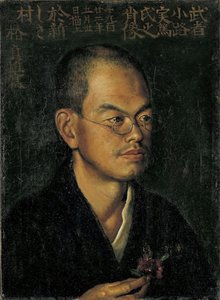
1917. Acrilic pe pânză întinsă, 51.0 x 73.0 cm. Aichi Prefectural Museum of Art.

§ 1Date catalog

- 51.0 x 73.0 cm


§ 2Abstract
Descriere obiect de colecție
Autoportret de Kohno Michisei (1895-1950): O capodopera impresionistă japoneză ce îmbină tehnici occidentale cu tradiția yōga și influențele japonismului, reprezentând un simbol al artei individuale în perioada Taisho.
 Vezi mai mult
Biografie artist
Kohno Michisei (1895-1950) was a pivotal Japanese painter of the Yōga movement, blending Western techniques with traditional styles like Ukiyo-e & Japonism. Known for landscapes, portraits, and woodblock prints reflecting the Taishō period.
§ 3Comentariu
Kohno Michisei’s Self-Portrait: A Window Into Taishō Japonism
The painting “Self-Portrait” by Kohno Michisei (1895–1950) stands as a remarkable testament to the confluence of Western artistic influences and deeply rooted Japanese traditions during the Taishō period (1912–1926). More than just a depiction of an individual, it’s a carefully constructed visual statement reflecting the artist's intellectual engagement with European art history—specifically Albrecht Dürer’s iconic self-portrait—and his profound connection to the spiritual landscape of Nagano Prefecture, where he spent formative years. This essay delves into the intricacies of Michisei’s artistic vision and explores its enduring relevance for contemporary audiences.- Subject Matter & Composition: Michisei presents himself with deliberate composure against a backdrop dominated by monumental oak leaves—a motif borrowed directly from Dürer's celebrated masterpiece. The artist’s gaze is direct, unwavering, conveying both intellectual curiosity and a quiet introspection. Surrounding him are symbolic objects – notably two clocks – which subtly underscore themes of time and mortality, common preoccupations within Western Renaissance art but also resonating with Buddhist concepts prevalent in Japanese culture.
- Stylistic Influences: Michisei’s technique exemplifies the hallmark of Yōga (Western-style painting), achieved through meticulous observation and painstaking rendering. However, he skillfully incorporates elements characteristic of Japonism—the fascination for Japanese aesthetics that gripped European artists during the Belle Époque—resulting in a harmonious blend of styles. The artist's masterful use of chiaroscuro creates depth and drama, mirroring the dramatic lighting employed by Rembrandt and other Baroque masters.
- Historical Context: Created in 1917, “Self-Portrait” emerged from a period marked by significant artistic experimentation and intellectual ferment within Japan. Artists like Michisei sought to transcend the academic formalism of the Meiji era (1868–1912) and forge new paths toward expressive art—a reaction against the prevailing naturalism championed by the Imperial Academy. The painting’s exhibition at the Bunten, Tokyo’s prestigious annual salon, solidified Michisei's position as a leading figure in this vanguard movement.
- Symbolism & Emotional Resonance: Beyond its technical prowess, “Self-Portrait” communicates profound psychological insight. The artist’s gaze invites contemplation on themes of identity and self-awareness—a preoccupation central to Renaissance humanist thought. Furthermore, the inclusion of oak leaves symbolizes resilience and longevity, mirroring the enduring spirit of Nagano Prefecture and reflecting Michisei's own philosophical outlook.
- Contemporary Relevance: Today, “Self-Portrait” continues to captivate viewers with its masterful execution and evocative imagery. Its exploration of selfhood—a timeless concern—remains powerfully relevant in an era increasingly focused on introspection and personal narrative. Reproductions of this artwork offer a unique opportunity to engage with the artistic legacy of the Taishō period and appreciate Michisei’s contribution to the broader canon of Japanese art history.
Întrebări și răspunsuri
Ce reprezintă "Autoportret" de Kohno Michisei?
Subiectele din "Autoportret" sunt japanese painting, self-portraiture, renaissance influence, orientalism, taisho period art, western techniques, symbolic imagery.
Unde pot descărca imaginea pentru "Autoportret" de Kohno Michisei?
"Autoportret" de Kohno Michisei poate fi descărcat de pe pagina dedicată lucrării, Descărcare, sub formă de descărcare imagine digitală de înaltă rezoluție.
Ce tehnică și stil caracterizează "Autoportret" de Kohno Michisei?
În "Autoportret", tehnica Acrilic pe pânză întinsă întâlnește mișcarea Yōga Movement.




 Comută pe versiunea Print


 Pentru opere de artă sau reproduceri care depășesc 105 cm (aproximativ 41 de inch) pe oricare dintre laturi, cadrul va fi livrat demontat, sub formă de kit. Această metodă asigură o livrare sigură și previne deteriorarea în timpul transportului.


