


 Previzualizare
 Trimite
 Distribuie
 Detalii despre lucrare

 Descarcă
 Produse similare
 Radiografie
 Diapozitive automate
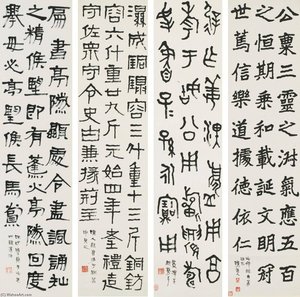
CALLIGRAPHY IN SEAL SCRIPT
 31.0 x 91.0 cm
 Vezi mai mult
Giclée / Imprimare artistică
Printuri giclée sau pe canvas de calitate muzeală, cu proces de producție rapid și opțiuni flexibile de finisare. ( Comandă pictură lucrată manual Cumpără imaginea)




































Alegeți dintre dimensiunile noastre prestabilite, care respectă proporțiile originale ale operei de artă.

Puteți introduce propriile dimensiuni pentru a se potrivi unui anumit cadru sau spațiu. Dacă dimensiunea selectată nu corespunde proporțiilor imaginii originale, vom decupa lucrarea de artă sau vom extinde imaginea cu margini oglindite sau cu o culoare uniformă. Un mockup digital va fi trimis pentru aprobarea dumneavoastră înainte de începerea producției.
Vă rugăm să rețineți că previzualizarea de pe ecran nu reflectă decuparea sau extinderea reală. Doar mockup-ul va arăta cu exactitate compoziția finală.
Deși dimensiunile personalizate sunt disponibile, vă recomandăm să selectați o dimensiune din lista predefinită pentru a păstra proporțiile originale.
Livrare în întreaga lume () în 2 săptămâni, în loc de cele 4/5 săptămâni standard. (23 August)

Livrare expres gratuită la nivel mondial

Pânză de in de înaltă calitate

Asigurare completă pentru transport

Garanție de rambursare a taxelor vamale

Garanția fidelității culorilor

Politica de retur în 60 de zile (doar pentru defecte)

Garanție de rambursare 100%

Ofertă pentru comenzi multiple
 Opțiunea cu sticlă este disponibilă doar pentru dimensiuni de sub 110 cm

CALLIGRAPHY IN SEAL SCRIPT
Giclée / Imprimare artistică
Dimensiune reproducere
-


Preț total calculat
$ 64
Opere similare


Biografie artist
Li Ruiqing: The Silent Master of Song Dynasty Calligraphy
Li Ruiqing (1867-1920) wasn’t a name that echoed through the halls of imperial courts or dominated the public imagination. Yet, within the intricate world of Chinese calligraphy, he stands as a profoundly influential figure, a master whose quiet dedication and profound understanding of tradition shaped the course of Kaishu (regular script), Lishu (semi-cursive), and Seal Script for generations to come. His legacy isn’t one of flamboyant displays or revolutionary pronouncements, but rather a subtle yet powerful refinement – a meticulous cultivation of technique and an unwavering commitment to the spirit of Song Dynasty art.
Born in Shandong province during a period of immense social upheaval, Li's early life was marked by hardship. His family, impoverished farmers, instilled in him a deep respect for labor and a keen awareness of the value of honest work. This grounding would profoundly influence his artistic approach – eschewing ostentation in favor of disciplined execution and an appreciation for the inherent beauty of materials. He began his formal training at a young age, initially studying epigraphy—the art of inscription—from ancient Han and Wei dynasty examples, absorbing not just the visual forms but also the philosophical underpinnings of calligraphy as a form of meditation and spiritual practice. This early exposure to monumental script laid the foundation for his later mastery of more fluid styles.
The Echoes of Song: Style and Technique
Li Ruiqing’s work is inextricably linked to the artistic ideals of the Northern Song Dynasty (960-1279). This era, considered a golden age for Chinese art, witnessed an unprecedented flourishing of calligraphy, painting, and ceramics. The emphasis on naturalism, simplicity, and refined elegance deeply resonated with Li, shaping his stylistic choices and technical approach. He particularly admired the works of Ouyang Xun (c. 873-950) and Yan Zhenqing (981-1056), two giants of Song calligraphy, whose monumental Kaishu scripts he meticulously studied.
Li’s Kaishu script is characterized by its remarkable balance and control. He avoided the overly dramatic strokes favored by some contemporaries, instead opting for a more restrained and measured approach. His lines are clean and precise, with a subtle sense of rhythm and flow. He paid meticulous attention to the proportions of each character, striving for harmony and visual equilibrium. His Lishu script, while retaining elements of Kaishu’s structure, exhibits a greater degree of fluidity and expressiveness – a testament to his understanding of how to imbue form with emotion. Crucially, Li's Seal Script (Wen Shu) was considered by many to be the pinnacle of his work; it possessed an almost meditative quality, reflecting his deep connection to Daoist philosophy.
A Legacy Forged in Quiet Devotion
Despite his considerable talent and influence, Li Ruiqing remained largely unknown during his lifetime. He worked primarily as a calligrapher for private commissions and educational institutions, eschewing the pursuit of fame or fortune. He held positions at Liang Jiang Higher Normal School (later Nanjing University), where he played a pivotal role in establishing art education programs – a pioneering effort that helped to revitalize traditional Chinese arts during a period of rapid modernization. His dedication to preserving and transmitting the techniques of classical calligraphy was, arguably, his most significant contribution.
Li’s influence extended far beyond his own lifetime. His meticulous approach to technique and his unwavering commitment to Song Dynasty ideals profoundly shaped the work of subsequent generations of calligraphers. He is considered a key figure in the Jinshi Calligraphy School (金石書派), an influential movement that sought to revive the spirit of ancient calligraphy by studying and emulating the works of masters from earlier dynasties. Today, his works are highly prized by collectors and scholars alike, offering a rare glimpse into the mind of a master who quietly shaped the landscape of Chinese art.
Rediscovering Li Ruiqing: Recent Scholarship
In recent years, there has been renewed interest in Li Ruiqing’s work thanks to increased access to digitized collections and scholarly research. Online resources like Wikipedia and Google Arts & Culture provide valuable insights into his life and career, while museums such as the Metropolitan Museum of Art have featured his calligraphy in exhibitions. Research continues to uncover new details about his artistic practice and his role in shaping the development of Chinese art education. The askART database provides a comprehensive overview of his auction records and artist biography.
Further research into Li Ruiqing’s life reveals that he was also deeply involved in promoting Daoist philosophy, adopting the sobriquet Qing Daoren (清道人), meaning “Daoist from the Qing Dynasty.” This reflected his commitment to spiritual practice and his desire to live a simple, virtuous life. His calligraphy, imbued with this philosophical sensibility, offers a profound meditation on themes of harmony, balance, and the pursuit of enlightenment.
li ruiqing
1867 - 1920
Detalii rapide
- Artistic Movement Or Style: Kaishu, Lishu & Seal Script
- Artists Or Movements Influenced By This Artist: ['Traditional Chinese art']
- Artists Who Influenced This Artist: ['Song Dynasty artists']
- Date Of Birth: 1867
- Date Of Death: 1920
- Full Name: Li Ruiqing
- Nationality: Chinese
- Notable Artworks: ['Calligraphy in archaic scripts']
- Place Of Birth: WahooArt, China


