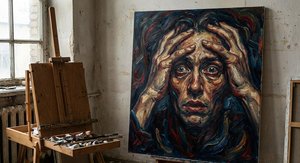
The Old Actress
Oil On Canvas
WallArt
German Expressionism
1926
Modern
101.0 x 71.0 cm
Muzeul Metropolitan de Artă
Reproducere pictată manual în ulei
Pictură în ulei pe pânză, realizată manual de artiștii noștri la dimensiunea și ramele dorite de dumneavoastră, pe comandă. ( Comandă printul
Cumpără imaginea)
P118B $10
P118H $10
P118W $10
P438Z $10
P508JH $12
P508YH $12
P805H $10
P805Z $10
P919BZ $10
P919G $10
P919XJ $10
P959ZH $10
P968JZ $12
W106C $8
W218G $10
W218JH $8
W218Y $10
W307PJ $10
W316G $10
W316PJ $8
W316Y $10
W398PJ $8
W4111J $10
W500HY $15
W500JH $15
W692G $12
W849H $8
W940BG $15
W953PJ $8
Alegeți dintre dimensiunile noastre prestabilite, care respectă proporțiile originale ale operei de artă.
Puteți introduce propriile dimensiuni pentru a se potrivi unui anumit cadru sau spațiu. Dacă dimensiunea selectată nu corespunde proporțiilor imaginii originale, vom decupa opera de artă sau vom extinde pictura cu elemente suplimentare pictate manual. O simulare digitală vă va fi trimisă pentru aprobare înainte de începerea producției.
Vă rugăm să rețineți că previzualizarea de pe ecran nu reflectă decuparea sau extinderea reală. Doar macheta va arăta cu exactitate compoziția finală.
Deși sunt disponibile dimensiuni personalizate, vă recomandăm să selectați o dimensiune din lista predefinită pentru a păstra proporțiile originale.
După plasarea comenzii, echipa AllPaintingsStore.com va contacta clientul prin e-mail pentru instrucțiuni și îi va furniza o previzualizare a machetei
Livrare în întreaga lume () în 3-4 săptămâni, în loc de cele 5 săptămâni standard. (20 August). Fără compromisuri în ceea ce privește calitatea.
Livrare expres gratuită la nivel mondial
Pânză de in de înaltă calitate
Asigurare completă pentru transport
Garanție de rambursare a taxelor vamale
Garanția fidelității culorilor
Politica de retur în 60 de zile (doar pentru defecte)
Garanție de rambursare 100%
Ofertă pentru comenzi multiple
The Old Actress
Tehnică de reproducere
Dimensiune reproducere
-
Preț total calculat
$ 258
Descriere operă de artă
A Gaze Through Time: The Soul of Max Beckmann’s The Old Actress
In the quiet, heavy atmosphere of 1926, Max Beckmann captured a moment that transcends mere portraiture to become a profound meditation on the human condition. The Old Actress is not simply a depiction of a woman in repose; it is a hauntingly beautiful window into the psyche of an era caught between the trauma of the past and the uncertainty of the future. As the viewer approaches this masterpiece, they are immediately met by the piercing, yet distant gaze of the subject, whose eyes seem to wander far beyond the confines of the canvas, searching for memories or perhaps contemplating the inevitable passage of time. This sense of introspection is palpable, inviting anyone who hangs a reproduction of this work in their home to participate in a silent dialogue with history.
The composition is anchored by the striking presence of the woman, seated with a dignified yet weary posture. Her attire—a severe black dress accented with delicate white lace—carries a weight of solemnity, subtly evoking the austerity of clerical garments and hinting at a life lived with deep moral or spiritual consideration. Nestled in her lap, a ginger cat provides the only warmth in an otherwise somber palette, acting as a tender symbol of companionship that simultaneously highlights the profound solitude of the sitter. Beckmann’s mastery of New Objectivity is on full display here; through his use of distorted spatial perspectives and thick, textured brushstrokes, he creates an environment that feels both physically present and psychologically unsettling.
The Texture of Melancholy and Modernity
Technically, the painting is a triumph of expressionistic depth. Beckmann utilizes oil on canvas to build a surface that is as much about tactile emotion as it is about visual representation. The heavy application of paint creates a palpable atmosphere of melancholy, where every stroke contributes to the sense of unease and gravity. This technique serves to ground the subject in a reality that feels weighted by experience. For the discerning collector or interior designer, this piece offers a sophisticated focal point that brings a layer of intellectual and emotional complexity to any space, whether it be a curated gallery wall or a contemplative study.
To understand The Old Actress is to understand the spirit of post-World War I Europe. The painting breathes the disillusionment of a generation that had witnessed the collapse of old certainties. Beckmann, having served as a medical orderly during the Great War, infused his work with an altered vision of humanity—one where figures are often compressed or slightly skewed to reflect internal tension. In this portrait, the stillness is deceptive; beneath the surface lies the restless energy of a world in transition. It is this duality—the outward calm of the actress and the inward turbulence of her era—that makes this work an enduring icon of modern art, offering timeless inspiration for those who appreciate art that speaks to the resilience of the human spirit.
Opere similare
Biografie artist
early life and artistic development
Max Beckmann, a renowned german painter, draftsman, printmaker, sculptor, and writer, was born on february 12, 1884, in leipzig, saxony. his artistic journey began with academically correct depictions, which later transformed into distorted figures and spaces, reflecting his altered vision of humanity after serving as a medical orderly in world war i. Beckmann's style, rooted in the imagery of medieval stained glass, was influenced by various artists, including cézanne, van gogh, blake, rembrandt, and rubens. he also drew inspiration from northern european artists of the late middle ages and early renaissance, such as bosch, bruegel, and matthias grünewald. Beckmann's formative years were marked by a dedication to mastering traditional techniques and absorbing the stylistic precepts of established masters—a pursuit that would ultimately propel him toward a radically innovative artistic path. His initial works showcased meticulous attention to detail and adherence to classical conventions, mirroring the prevailing aesthetic sensibilities of his time. However, this careful craftsmanship soon yielded to a profound shift in perspective as he confronted the horrors of trench warfare, an experience that irrevocably altered his worldview and fueled his desire to express the psychological complexities inherent in human existence.artistic style and influences
Beckmann's distinctive artistic style emerged from a confluence of diverse inspirations—primarily stemming from the expressive fervor of Expressionism but also incorporating elements of Surrealism and Byzantine iconography. He meticulously studied the works of artists such as cézanne, van gogh, blake, rembrandt, and rubens—artists who championed emotional intensity and subjective experience as paramount to artistic endeavor. Furthermore, Beckmann's gaze turned toward the unsettling visions of northern european artists of the late middle ages and early renaissance, notably bosch, bruegel, and matthias grünewald—artists whose art explored themes of morality, death, and the grotesque with unflinching honesty. These influences coalesced into a singular artistic idiom characterized by angular figures, flattened perspectives, and jarring color palettes—a stylistic hallmark that would define Beckmann's oeuvre for decades to come.notable works and exhibitions
Beckmann’s artistic legacy rests upon a monumental body of work encompassing paintings, prints, sculptures, and literary endeavors. Among his most celebrated creations are *The Bark*, acquired by the national gallery in berlin—a haunting depiction of human vulnerability against the backdrop of an indifferent cosmos—and *Self-Portrait in Tuxedo*, purchased in 1928—a psychologically astute portrayal of introspection and artistic ambition. Beckmann’s retrospective exhibitions at the städtische kunsthalle mannheim (1928) and in basle and zurich (1930) solidified his position as a pivotal figure within the Expressionist movement, garnering critical acclaim and establishing him as one of the foremost artists of his generation. These exhibitions showcased the breadth and depth of Beckmann’s artistic vision—spanning from monumental canvases imbued with symbolic resonance to intimate portraits reflecting profound psychological insight.later life and exile
Beckmann's personal trajectory mirrored the turbulent political landscape of germany during the interwar period, culminating in a dramatic episode marked by persecution and displacement. Following the ascension of adolf hitler to power, Beckmann experienced firsthand the chilling consequences of artistic intolerance—his dismissal from the art school in frankfurt and the confiscation of over 500 of his artworks representing an irreparable loss for him and for german culture. Forced into exile in amsterdam for ten years, Beckmann endured considerable hardship while grappling with the existential anxieties engendered by the looming shadow of nazism. Despite facing insurmountable obstacles—including visa denials and governmental restrictions—Beckmann persevered in his artistic pursuits, producing a prolific output during his time abroad, notably including the monumental triptychs *Acrobats*, *Christ and the Woman Taken in Adultery*, and *New Objectivity*.legacy
Beckmann’s enduring influence extends beyond the realm of visual art—he served as an inspiring mentor to numerous aspiring artists, fostering a generation of creatives committed to confronting social injustices and exploring the complexities of human consciousness. His retrospective at the city art museum, saint louis (1948)—the first major exhibition of his work in the united states—marked a watershed moment in american art history, introducing Beckmann’s groundbreaking aesthetic principles to a wider audience. Max Beckmann's unwavering dedication to artistic integrity and his unflinching engagement with profound philosophical questions cemented his place as one of germany’s most significant artists—a figure whose oeuvre continues to resonate with audiences worldwide.Max Beckmann
1884 - 1950 , Germania
Detalii rapide
- Artistic Movement Or Style: Expressionism
- Artists Or Movements Influenced By This Artist: ['Rembrandt']
- Artists Who Influenced This Artist:
- Georges Seurat
- Vincent van Gogh
- Date Of Birth: Feb 12, 1884
- Date Of Death: Dec 27, 1950
- Full Name: Max Carl Friedrich Beckmann
- Nationality: German
- Notable Artworks:
- The Bark
- Self-Portrait in Tuxedo
- Place Of Birth: Leipzig, Germany

Opțiunea cu sticlă este disponibilă doar pentru dimensiuni de sub 110 cm