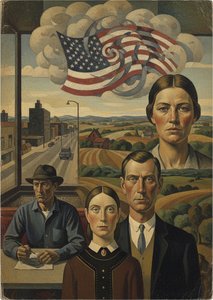
1978. Acrylic On Canvas. Japanese American National Museum.
![[Untitled] by Miné Okubo, hand-painted oil painting on linen](/media/artworks/images-full/30/dc/30dc3237ae833bb1edee8fdb34914e73.jpg)
§ 1Catalogue data


Această lucrare este protejată de drepturile de autor
Lucrarea de artă afișată pe această pagină este protejată de legile privind drepturile de autor, ceea ce înseamnă că nu putem crea sau vinde în mod legal o reproducere identică. Această protecție este garantată prin acorduri internaționale, precum Convenția de la Berna și de legile naționale, inclusiv cele prevăzute de Legea dreptului de autor din S.U.A. – Titlul 17. Toate drepturile rezervate. Orice reproducere neautorizată este interzisă.
Ca alternativă respectuoasă și legală, oferim tablouri pictate manual, personalizate, inspirate de original. Artistii noștri experimentați și profesioniști studiază cu atenție stilul, starea de spirit și esența artistică a originalului pentru a crea o piesă nouă și unică, care evocă aceeași emoție – rămânând, în același timp, o creație originală în sine.
Această metodă respectă pe deplin reglementările privind drepturile de autor, deoarece nu implică copierea sau duplicarea operei protejate. În schimb, este o reinterpretare creativă – o pictură nouă, influențată de original, dar care nu este identică cu acesta.
 Citește mai mult
§ 2Abstract
Descriere obiect de colecție
Explore Miné Okubo's poignant 'Untitled' painting from 1974, reflecting resilience during WWII internment through vibrant colors and symbolic floral forms. A powerful testament to artistic expression.
Biografie artist
Miné Okubo a fost o artistă americană renumită pentru schițele sale puternice care documentează viața în taberele de interținere japono-americane din timpul celui de-al Doilea Război Mondial. Graficul său roman, *Cetățeanul 13660*, oferă un martori vital despre reziliență și nedreptate.
§ 3Commentary
A Silent Testimony: Miné Okubo’s “Untitled” (1974)
Within the vibrant tapestry of Miné Okubo's oeuvre lies "Untitled," a 1974 painting that transcends mere representation, becoming instead a potent distillation of trauma and resilience. More than just an image, it is a carefully constructed visual narrative born from the crucible of World War II internment, offering a rare glimpse into the lived experience of Japanese Americans unjustly confined during a dark chapter in American history. The piece’s immediate impact lies in its bold color palette – a dynamic interplay of fiery reds and yellows dominating the central figure, contrasted against the calming blues of her bed and the distant expanse of the sky. This deliberate use of color isn't merely decorative; it speaks to both the intensity of emotion experienced within the camps and the yearning for freedom and tranquility.
- Style & Technique: Okubo’s style leans heavily into abstraction, a conscious choice reflecting the disorientation and emotional upheaval she endured. The figure is rendered with simplified forms, almost schematic in its execution, yet imbued with an undeniable sense of presence. Thick brushstrokes and layered paint create texture and depth, mirroring the complexities of her memories.
- Composition: The composition itself is carefully considered. The seated woman occupies a central position, drawing the viewer’s eye immediately. The sailboats in the background – a recurring motif in Okubo's work – symbolize both escape and the enduring connection to nature, hinting at a longing for a life beyond confinement.
Echoes of Internment: Historical Context
To fully appreciate “Untitled,” one must understand its genesis within the context of Japanese American internment. Following Executive Order 9066 in 1942, over 120,000 people of Japanese descent – including citizens and legal residents – were forcibly removed from their homes along the West Coast and incarcerated in camps like Tanforan and Topaz. Okubo’s experience within these camps is meticulously documented in her seminal graphic novel, *Citizen 13660*, a work that serves as both personal memoir and powerful indictment of government injustice. “Untitled” can be seen as an excerpt from this larger narrative, capturing a fleeting moment of quiet contemplation amidst the chaos and uncertainty of wartime.
The painting’s creation occurred in 1974, decades after her release from the camps. This considerable distance allows Okubo to revisit her memories with a degree of emotional detachment, yet the underlying trauma remains palpable. The work isn't about depicting the horrors of internment directly; instead, it focuses on conveying the internal landscape – the feelings of isolation, longing, and ultimately, resilience – that shaped her experience.
Symbolism & Inner Landscape
Beyond its immediate visual impact, “Untitled” is rich in symbolic meaning. The woman’s posture—seated, relaxed yet alert—suggests a quiet strength and an ability to find moments of peace within a profoundly unsettling environment. Her gaze, though not explicitly rendered, feels directed outward, perhaps towards the distant horizon or simply inward, reflecting on her past. The use of red and yellow – colors often associated with warmth, energy, and passion – could represent both the intensity of her emotions and the enduring spirit of hope.
The inclusion of the sailboats is particularly significant. They are not merely decorative elements; they symbolize a yearning for freedom, travel, and connection to the wider world. For those who experienced internment, the sea represented an escape route, a promise of a life beyond the confines of the camps. It’s a poignant reminder of what was lost and a testament to the enduring human desire for liberation.
A Legacy of Witness: Emotional Resonance
"Untitled" is more than just a painting; it's a powerful act of remembrance. Miné Okubo’s decision to transform her traumatic experiences into art serves as an extraordinary example of resilience and artistic courage. The work invites viewers to contemplate the complexities of identity, justice, and the enduring power of the human spirit. Its quiet intensity and evocative symbolism resonate deeply, prompting reflection on themes of displacement, loss, and ultimately, hope. Reproductions of this piece offer a tangible connection to Okubo’s story—a chance to honor her legacy as a vital chronicler of American history and a testament to the transformative power of art.
Întrebări și răspunsuri
Cât de cunoscută este opera „[Untitled]” în cadrul mișcării Abstract Expressionism?
În cadrul mișcării Abstract Expressionism, „[Untitled]” are un nivel de popularitate Recognized.
Din ce curent artistic face parte "[Untitled]" de Miné Okubo?
"[Untitled]" de Miné Okubo face parte din mișcarea Abstract Expressionism. Acest curent oferă contextul stilistic al operei.
Din ce țară provine lucrarea de Abstract Expressionism „[Untitled]”?
Lucrarea de Abstract Expressionism „[Untitled]” a fost creată de un artist născut în Statele Unite ale Americii.


![[untitled] — Miné Okubo, Abstract Expressionism](/media/artworks/images-thumb/89/26/89261e2fd69db06389a5f7945b0df282.jpg)


 Comută pe versiunea Print


 Pentru opere de artă sau reproduceri care depășesc 105 cm (aproximativ 41 de inch) pe oricare dintre laturi, cadrul va fi livrat demontat, sub formă de kit. Această metodă asigură o livrare sigură și previne deteriorarea în timpul transportului.