


 Vezi în context
 Trimite
 Distribuie
 Detalii
 Ghidul

 Descarcă
 Produse similare
 Radiografie
 Diaporama
 Statistici
Rinaldo and Armida
 Ulei pe pânză
- Artă de perete
- Baroque
 1625
1625- Epoca modernă timpurie
 80.0 x 107.0 cm
 Dulwich Picture Gallery
 Citește mai mult
Giclée / Imprimare artistică
Printuri giclée sau pe canvas de calitate muzeală, cu proces de producție rapid și opțiuni flexibile de finisare. ( Comandă pictură realizată manual Treci la imagine digitală)




P118B lei10

P118H lei10

P118W lei10

P438Z lei10

P508JH lei12

P508YH lei12

P805H lei10

P805Z lei10

P919BZ lei10

P919G lei10

P919XJ lei10

P959ZH lei10

P968JZ lei12

W106C lei8

W218G lei10

W218JH lei8

W218Y lei10

W307PJ lei10

W316G lei10

W316PJ lei8

W316Y lei10

W398PJ lei8

W4111J lei10

W500HY lei15

W500JH lei15

W692G lei12

W849H lei8

W940BG lei15

W953PJ lei8




Alegeți dintre dimensiunile noastre prestabilite, care respectă proporțiile originale ale operei de artă.

Introduceți lățimea și înălțimea de care aveți nevoie, pentru a se potrivi ramei sau peretelui dumneavoastră. O printare poate fi doar tăiată, niciodată extinsă dincolo de dimensiunea imaginii originale, astfel încât o dimensiune cu o formă diferită va pierde o parte din imagine. Vă trimitem o simulare digitală pentru aprobare înainte de a imprima orice. Imaginea afișată pe această pagină nu prezintă tăierea reală — doar simularea arată acest lucru.
Livrare în întreaga lume () în 2 săptămâni, în loc de cele 4/5 săptămâni standard. (24 Octombrie)

Livrare expres gratuită la nivel mondial

Pânză de in premium

Asigurare completă pentru transport

Garanție de rambursare a taxelor vamale

Garanția fidelității culorilor

Politica de retur în 100 de zile (doar pentru defecte)

Garanție de rambursare 100%

Reducere pentru comenzi multiple
 Opțiunea cu sticlă este disponibilă doar pentru dimensiuni de sub 110 cm

Rinaldo and Armida
Giclée / Imprimare artistică
Dimensiune reproducere
-


Preț total
lei 297
A Moment Suspended in Enchantment
In the grand tapestry of the Baroque era, few works capture the delicate tension between duty and desire as poignantly as Nicolas Poussin’s Rinaldo and Armida. Painted around 1625, this monumental oil on canvas is far more than a mere historical depiction; it is a window into a world where the boundaries between heroism and magic blur. The scene draws its profound narrative power from Torquato Tasso's epic poem, Jerusalem Delivered, presenting us with a pivotal encounter during the First Crusade. Here, we find the valiant knight Rinaldo, a figure of martial prowess, caught in the magnetic, almost perilous pull of the enchantress Armida. As he lies in a state of vulnerable repose, Armida stands over him, her presence both imposing and captivating, embodying the very essence of the struggle between the soul's noble obligations and the intoxicating allure of earthly passion.The Mastery of Light and Symbolism
Poussin’s technical brilliance is on full display through his masterful use of chiaroscuro, a technique that breathes life into the dramatic atmosphere of the piece. Light does not merely illuminate the scene; it acts as a storyteller, dramatically highlighting Rinaldo’s figure to emphasize his physical vulnerability against the darker, more mysterious elements of the composition. This interplay of light and shadow creates a palpable sense of depth, guiding the viewer's eye through the meticulously rendered landscape. Every element within the frame is imbued with symbolic weight: the sword resting near the center serves as a stark reminder of Rinaldo’s knightly identity and the potential for conflict, while the presence of a child held by Armida introduces a poignant note of innocence and divine grace into an otherwise turbulent emotional landscape. Even the stylized garden, with its serene expanses contrasting against the simmering tensions of the characters, serves as a metaphor for the internal psychological battle being waged.A Timeless Legacy for the Discerning Collector
For the art lover or interior designer, Rinaldo and Armida offers an unparalleled sense of drama and classical elegance. Poussin’s ability to blend painstaking realism with idealized forms creates a composition that is both intellectually stimulating and aesthetically breathtaking. The meticulous rendering of textures—from the heavy drapery to the soft skin of the figures—provides a tactile quality that makes the scene feel remarkably present. This painting does not merely decorate a space; it commands it, offering a profound meditation on the human condition that remains as relevant today as it was in the 17 and century. Owning a high-quality reproduction of this masterpiece allows one to invite this sense of historical grandeur and narrative depth into a modern setting, serving as a sophisticated focal point that inspires conversation and reflection.Întrebări și răspunsuri
Care este tonul emoțional al operei "Rinaldo and Armida" de Nicolas Poussin?
"Rinaldo and Armida" este asociată cu un sentiment Misterios. Tonul emoțional descrie impresia pe care o transmite lucrarea.
Nicolas Poussin, creatorul operei „Rinaldo and Armida”, este cunoscut și sub alte nume?
Nicolas Poussin apare sub numele alternative Le Havre, Andelys.
Cum echilibrează "Rinaldo and Armida" lumina și întunericul?
"Rinaldo and Armida" are umbră adâncă în întregime, iar luminozitatea sa este Întunecată.
Opere similare


Biografie artist
Nicolas Poussin
Nicolas Poussin, a name synonymous with the grandeur of French Baroque painting, was nonetheless a soul deeply rooted in Italian soil for much of his artistic life. Born in Les Andelys, Normandy, in June 1594, his early years remain somewhat veiled in mystery, yet they undoubtedly laid the foundation for a career that would become pivotal in shaping the classical tradition within French art. Though he briefly studied in Paris during the early 1610s, absorbing influences from lesser-known artists of the time—primarily those experimenting with Venetian Mannerism—it was his journey to Rome in 1624 that truly ignited his artistic destiny. This wasn’t merely a geographical relocation; it was an immersion into the heart of antiquity, a pilgrimage to the very source of inspiration that would define his aesthetic vision. Poussin's initial explorations of painting were marked by a sensuous quality reminiscent of Titian and Giorgione—a characteristic of Venetian art at the time—yet even in these early works, a nascent sense of order and intellectual rigor began to emerge—a foreshadowing of the style he would so masterfully refine. He demonstrated considerable talent from a young age, capturing landscapes with remarkable accuracy and conveying emotion through subtle tonal variations.The Roman Years: Forging a Classical Ideal
Rome proved to be more than just a studio for Poussin; it became his intellectual crucible. He found himself amidst a vibrant circle of scholars, archaeologists, and fellow artists—including Cassiano dal Pozzo, whose profound understanding of classical antiquity profoundly influenced the artist’s approach. Dal Pozzo's unwavering dedication to meticulously documenting ancient remains instilled in Poussin a deep respect for historical accuracy and a fervent desire to imbue his paintings with a sense of timelessness. This period witnessed a decisive shift away from the flamboyant excesses prevalent amongst some of his contemporaries—a conscious rejection of theatricality in favor of clarity, balance, and a deliberate emphasis on linear composition. He devoted himself tirelessly to studying Raphael’s monumental frescoes in Stanza della Segnatura at Vatican City, absorbing their harmonious arrangements and graceful forms with meticulous attention. Simultaneously, he drew inspiration from sculptures unearthed during excavations—particularly those embodying the ideals of beauty and virtue—further cementing his commitment to classical principles. The influence of Michelangelo's sculptural achievements was palpable, shaping Poussin’s understanding of human anatomy and expressive gesture.Influences and Artistic Style
Poussin’s artistic style developed organically from these formative experiences. Initially experimenting with Venetian techniques—characterized by rich color palettes and luminous effects—he swiftly transitioned to a more restrained aesthetic informed by the precepts of Renaissance Humanism. He embraced a compositional strategy rooted in disegno—the Italian concept of drawing—prioritizing careful planning and precise execution. Linear perspective was employed rigorously, creating illusionistic depth that conveyed both spatial realism and intellectual contemplation. Unlike many Baroque painters who sought to overwhelm the viewer with dramatic emotion, Poussin cultivated a serene and dignified visual language—one designed to elevate the spirit rather than incite immediate sensation. Raphael’s influence was particularly profound, shaping his mastery of harmonious proportions and graceful drapery—elements that would become hallmarks of his oeuvre. Furthermore, he absorbed lessons from humanist writers like Petrarch and Erasmus, whose philosophical meditations on beauty and virtue resonated deeply within him.Major Achievements: Mythological Narratives and Religious Visions
Poussin’s artistic output spanned a remarkable range of subjects—ranging from biblical narratives to mythological tales and expansive landscapes—yet consistently united by his unwavering devotion to classical ideals. He achieved international renown for his monumental paintings depicting scenes from Greek mythology, notably *Et in Arcadia ego*, which captured the melancholic beauty of pastoral life while simultaneously meditating on mortality and the elusive nature of divine presence. This masterpiece exemplifies Poussin’s ability to synthesize observation with imagination—to transform historical references into evocative visual metaphors. He produced a prolific series of canvases illustrating biblical stories—including *The Seven Sacraments*—demonstrating his profound theological understanding alongside his unparalleled artistic skill. These works are distinguished by their meticulous detail and symbolic richness, conveying moral truths through carefully crafted compositions and luminous color palettes. His landscapes—particularly those depicting idealized vistas bathed in golden light—became celebrated for their tranquility and sublimity—reflecting a humanist vision of the natural world as harmonious and ordered.Legacy: Shaping French Classicism
Nicolas Poussin’s impact on French art extended far beyond his own lifetime. He served as First Painter to the King under Cardinal Richelieu from 1640, establishing himself as a leading figure in the Académie Royale de Peinture et de Sculpture—a pivotal institution that championed classical principles and fostered artistic excellence. Artists like Jacques-Louis David and Paul Cézanne openly acknowledged their debt to Poussin’s rigorous approach and intellectual depth—recognizing him as a cornerstone of French Classicism. His legacy resides not merely in stylistic imitation but in the enduring conviction that art should aspire to moral elevation—a testament to an artist who sought not simply to depict the world but to illuminate its deepest truths through the transformative power of beauty. He remains revered as one of France’s greatest painters, a figure whose work continues to inspire admiration and contemplation centuries after his death in 1665.- Notable Works: *The Death of Germanicus*, *The Seven Sacraments Series*, *A Roman Road*, *Orion Blinded Searching for the Sun*, *The Seasons*.
- Key Characteristics: Classical Composition, Linearity, Historical and Mythological Themes, Serene Landscapes.
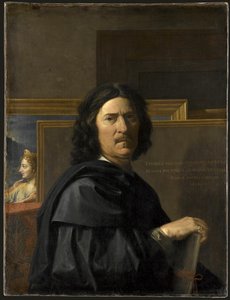
Nicolas Poussin
1594 - 1665 , Franța
Informații rapide
- Artistic Movement Or Style: Baroc, Clasicism
- Artists Who Influenced This Artist:
- Rafael
- Titian
- Date Of Birth: 1594
- Full Name: Nicolas Poussin
- Nationality: Franțuzesc
- Notable Artworks:
- Moartea lui Germanicus
- Șapte Sacrament
- Drum roman
- Orion căutând Soarele
- Sezoanele
- Place Of Birth: Le Havre, Franța
Articole conexe

Drama Barocă: Cum să Aduceți Splendoare și Emoție în Interioarele Contemporane
Descoperiți cum să integrați splendoarea stilului baroc în locuința dumneavoastră! Ghid complet cu elemente de design, culori și inspirație pentru interioare luxoase și pline de emoție.

The Enduring Power of Painting: A Historical & Contemporary Exploration of Form and Emotion
Explore the rich history & enduring techniques of oil painting with AllPaintingsStore. Discover masterpieces, learn about art collecting, and find authentic handmade reproductions crafted by skilled artists.

The Dramatic Flourish: Exploring the Baroque Movement's Enduring Legacy in Art History
Explore the dramatic world of Baroque art! Discover iconic artists like Caravaggio & Rubens, defining techniques, and its lasting impact on art history. Expert insights for collectors & enthusiasts at AllPaintingsStore.

Oil on Canvas: A Historical & Technical Exploration of a Timeless Artistic Medium
Explore the rich history & enduring techniques of oil painting on canvas. Discover the science behind its longevity, conservation practices, and contemporary relevance. Expert insights for art enthusiasts.

Nicolas Poussin: Classicism, Allegory & Order in 17th-Century French Painting
Explore the life & work of Nicolas Poussin, a master of French Classicism. Discover his allegorical paintings, Roman influences, and enduring impact on art history. Expert analysis & insights.


