Garanție de rambursare în 100 de zile Livrare gratuită în toată lumea
449.564opere de artă 30.613artişti 4.660muzee 32limbi
Intrare în catalog

The Last Supper

1649. Oil On Canvas.

Fig. 1. Nicolas Poussin, The Last Supper, 1649. Prezentat ca reproducerea specificată de dumneavoastră: , .

§ 1Date catalog

§ 2Abstract

Descriere obiect de colecție

Experience Nicolas Poussin's 'The Last Supper,' a masterpiece of classical art showcasing the intimate final meal of Jesus and his apostles. Explore its balanced composition & profound religious significance.

Biografie artist

Descoperă operele impresionante ale lui Nicolas Poussin – pictor francez celebru pentru armonie și solemnitate în scene istorice și mitologice inspirate din antichitate! Vizualizare acum!

§ 3Comentariu

The Last Supper: A Masterpiece of Classical Composition by Nicolas Poussin

Nicolas Poussin's "The Last Supper," painted in 1649, stands as a testament to the artist’s profound understanding of classical principles and his ability to imbue religious narratives with intellectual depth. This oil on canvas painting depicts the pivotal moment when Jesus shared his final meal with his twelve apostles, an event laden with foreshadowing and spiritual significance. The work is not merely a depiction of a historical scene; it's a carefully constructed visual argument about faith, sacrifice, and divine order.

Artistic Style and Technique

Poussin’s style firmly aligns with the Classical tradition, characterized by its emphasis on clarity, balance, and rational composition. Unlike the more exuberant Baroque styles of his contemporaries, Poussin favored a restrained palette and precise draftsmanship. In "The Last Supper," this manifests in the meticulously rendered figures, the harmonious color scheme dominated by earthy tones, and the carefully calibrated spatial relationships. The use of light is particularly noteworthy; it's not dramatic or theatrical but rather serves to illuminate the scene with a steady, almost intellectual glow. Poussin’s technique involved layering thin glazes of oil paint, creating subtle gradations of tone and a sense of depth without relying on harsh contrasts. The lines are clean and precise, contributing to the overall feeling of order and control.

Historical Context and Symbolism

Created during a period of religious and political upheaval in Europe, "The Last Supper" reflects Poussin’s deep engagement with classical antiquity and his commitment to portraying biblical narratives with intellectual rigor. The setting itself—a simple, Roman-style room—grounds the scene in a sense of timelessness and universality. Symbolism is woven throughout the composition. Jesus' central position and calm demeanor emphasize his role as the divine figure. The receding lines of the architecture draw the viewer’s eye towards him, reinforcing his importance. The presence of Judas, subtly distinguished from the other apostles, hints at the impending betrayal. The bowls and cups on the table are not merely decorative elements; they represent the Eucharist, a central sacrament in Christian faith.

Emotional Impact and Legacy

While Poussin’s work is often admired for its intellectual rigor, "The Last Supper" also possesses a profound emotional resonance. The somber atmosphere, created by the subdued lighting and restrained color palette, evokes a sense of solemnity and contemplation. The expressions on the faces of the apostles—ranging from attentive listening to quiet introspection—reveal a range of human emotions in response to Jesus’ words. Poussin's "The Last Supper" has had a lasting impact on Western art, influencing generations of artists with its masterful composition and profound exploration of religious themes. It exemplifies Poussin’s dedication to classical ideals and his ability to create works that are both intellectually stimulating and emotionally moving.

Acquire Your Own Reproduction

The Last Supper is available as a handmade oil painting reproduction on canvas at AllPaintingsStore.com. Bring the timeless beauty and spiritual depth of this masterpiece into your home or office.

Întrebări și răspunsuri

Ce subiect și ce atmosferă surprinde "The Last Supper" de Nicolas Poussin?

„The Last Supper” surprinde religious, last supper, jesus, disciples, biblical, composition, light, shadow, având o atmosferă Classic.

Câți oameni vizualizează "The Last Supper"?

Există o pagină de Statistici pentru "The Last Supper". Aceasta prezintă graficul vizitelor lunare pentru această operă și pentru celelalte lucrări ale artistului, cu detalii pe țări și limbi vorbite.

Ce dimensiune de imprimare este recomandată pentru "The Last Supper"?

Dimensiunea de imprimare recomandată pentru "The Last Supper" de Nicolas Poussin este Medium.
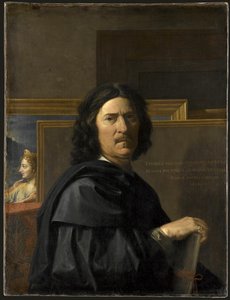
§ 4Artistul

Nicolas Poussin

Nicolas Poussin

1594 - 1665, Franța

Informații rapide despre Nicolas Poussin

  • Artistic Movement Or Style: Baroc, Clasicism
  • Artists Who Influenced This Artist:
    • Rafael
    • Titian
  • Date Of Birth: 1594
  • Full Name: Nicolas Poussin
  • Nationality: Franțuzesc
  • Notable Artworks:
    • Moartea lui Germanicus
    • Șapte Sacrament
    • Drum roman
    • Orion căutând Soarele
    • Sezoanele
  • Place Of Birth: Le Havre, Franța

Biografie artist

Nicolas Poussin

Nicolas Poussin, a name synonymous with the grandeur of French Baroque painting, was nonetheless a soul deeply rooted in Italian soil for much of his artistic life. Born in Les Andelys, Normandy, in June 1594, his early years remain somewhat veiled in mystery, yet they undoubtedly laid the foundation for a career that would become pivotal in shaping the classical tradition within French art. Though he briefly studied in Paris during the early 1610s, absorbing influences from lesser-known artists of the time—primarily those experimenting with Venetian Mannerism—it was his journey to Rome in 1624 that truly ignited his artistic destiny. This wasn’t merely a geographical relocation; it was an immersion into the heart of antiquity, a pilgrimage to the very source of inspiration that would define his aesthetic vision. Poussin's initial explorations of painting were marked by a sensuous quality reminiscent of Titian and Giorgione—a characteristic of Venetian art at the time—yet even in these early works, a nascent sense of order and intellectual rigor began to emerge—a foreshadowing of the style he would so masterfully refine. He demonstrated considerable talent from a young age, capturing landscapes with remarkable accuracy and conveying emotion through subtle tonal variations.

The Roman Years: Forging a Classical Ideal

Rome proved to be more than just a studio for Poussin; it became his intellectual crucible. He found himself amidst a vibrant circle of scholars, archaeologists, and fellow artists—including Cassiano dal Pozzo, whose profound understanding of classical antiquity profoundly influenced the artist’s approach. Dal Pozzo's unwavering dedication to meticulously documenting ancient remains instilled in Poussin a deep respect for historical accuracy and a fervent desire to imbue his paintings with a sense of timelessness. This period witnessed a decisive shift away from the flamboyant excesses prevalent amongst some of his contemporaries—a conscious rejection of theatricality in favor of clarity, balance, and a deliberate emphasis on linear composition. He devoted himself tirelessly to studying Raphael’s monumental frescoes in Stanza della Segnatura at Vatican City, absorbing their harmonious arrangements and graceful forms with meticulous attention. Simultaneously, he drew inspiration from sculptures unearthed during excavations—particularly those embodying the ideals of beauty and virtue—further cementing his commitment to classical principles. The influence of Michelangelo's sculptural achievements was palpable, shaping Poussin’s understanding of human anatomy and expressive gesture.

Influences and Artistic Style

Poussin’s artistic style developed organically from these formative experiences. Initially experimenting with Venetian techniques—characterized by rich color palettes and luminous effects—he swiftly transitioned to a more restrained aesthetic informed by the precepts of Renaissance Humanism. He embraced a compositional strategy rooted in disegno—the Italian concept of drawing—prioritizing careful planning and precise execution. Linear perspective was employed rigorously, creating illusionistic depth that conveyed both spatial realism and intellectual contemplation. Unlike many Baroque painters who sought to overwhelm the viewer with dramatic emotion, Poussin cultivated a serene and dignified visual language—one designed to elevate the spirit rather than incite immediate sensation. Raphael’s influence was particularly profound, shaping his mastery of harmonious proportions and graceful drapery—elements that would become hallmarks of his oeuvre. Furthermore, he absorbed lessons from humanist writers like Petrarch and Erasmus, whose philosophical meditations on beauty and virtue resonated deeply within him.

Major Achievements: Mythological Narratives and Religious Visions

Poussin’s artistic output spanned a remarkable range of subjects—ranging from biblical narratives to mythological tales and expansive landscapes—yet consistently united by his unwavering devotion to classical ideals. He achieved international renown for his monumental paintings depicting scenes from Greek mythology, notably *Et in Arcadia ego*, which captured the melancholic beauty of pastoral life while simultaneously meditating on mortality and the elusive nature of divine presence. This masterpiece exemplifies Poussin’s ability to synthesize observation with imagination—to transform historical references into evocative visual metaphors. He produced a prolific series of canvases illustrating biblical stories—including *The Seven Sacraments*—demonstrating his profound theological understanding alongside his unparalleled artistic skill. These works are distinguished by their meticulous detail and symbolic richness, conveying moral truths through carefully crafted compositions and luminous color palettes. His landscapes—particularly those depicting idealized vistas bathed in golden light—became celebrated for their tranquility and sublimity—reflecting a humanist vision of the natural world as harmonious and ordered.

Legacy: Shaping French Classicism

Nicolas Poussin’s impact on French art extended far beyond his own lifetime. He served as First Painter to the King under Cardinal Richelieu from 1640, establishing himself as a leading figure in the Académie Royale de Peinture et de Sculpture—a pivotal institution that championed classical principles and fostered artistic excellence. Artists like Jacques-Louis David and Paul Cézanne openly acknowledged their debt to Poussin’s rigorous approach and intellectual depth—recognizing him as a cornerstone of French Classicism. His legacy resides not merely in stylistic imitation but in the enduring conviction that art should aspire to moral elevation—a testament to an artist who sought not simply to depict the world but to illuminate its deepest truths through the transformative power of beauty. He remains revered as one of France’s greatest painters, a figure whose work continues to inspire admiration and contemplation centuries after his death in 1665.
  • Notable Works: *The Death of Germanicus*, *The Seven Sacraments Series*, *A Roman Road*, *Orion Blinded Searching for the Sun*, *The Seasons*.
  • Key Characteristics: Classical Composition, Linearity, Historical and Mythological Themes, Serene Landscapes.

§ 5Lucrări similare

§ 6Întrebări

Informații rapide

  • Notable elements or techniques:
    • Dramatic light and shadow
    • Balanced composition
  • Subject or theme: Religious event (Last Supper)
  • Medium: Oil on canvas
  • Artistic style: Classical
  • Artist: Nicolas Poussin

Test de cunoștințe despre artă

Fiecare întrebare are un singur răspuns corect.

Întrebare 1:
Who is the artist of 'The Last Supper'?
Întrebare 2:
In what year was 'The Last Supper' created?
Întrebare 3:
What artistic style is prominently featured in Poussin’s ‘The Last Supper’?
Întrebare 4:
According to the image description, what is a dominant characteristic of the color palette in 'The Last Supper'?
Întrebare 5:
What is a key element that adds depth and emotion to the scene in 'The Last Supper'?

§ 7Citați această lucrare

AllPaintingsStore.com, “Nicolas Poussin, The Last Supper (1649)”, https://allpaintingsstore.com/ro/art/nicolas-poussin-the-last-supper-8EWMGD-en/ArtistReproduction/ (accesat la 7 Octombrie 2026).

§ 8Reproducția

Reproducere pictată manual în ulei

Pictură în ulei pe pânză, pictată manual de artiștii noștri la dimensiunea și ramele dorite de dumneavoastră, pe comandă. ( Comută pe versiunea Print Comută pe Imagine Digitală)

Este specificat în marginea foii de comandă; starea actuală a acelei foi este următoarea.

The Last Supper

Tehnică de reproducere

Dimensiune reproducere

-

Selecție de artiști de elită

Mai multe detalii, rafinament și timp suplimentar de execuție

-

Ramă pentru reproducere artistică

-

-

Pentru opere de artă sau reproduceri care depășesc 105 cm (aproximativ 41 de inch) pe oricare dintre laturi, cadrul va fi livrat demontat, sub formă de kit. Această metodă asigură o livrare sigură și previne deteriorarea în timpul transportului.

Este necesară asamblarea profesională – acest produs nu este de tip DIY (de făcut singur).
Kitul trebuie asamblat, iar pânza întinsă, de către un legător de cadre experimentat, utilizând adeziv pentru lemn (neinclus în colet), o cheie pentru întinderea pânzei și cleme pentru a menține barele la unghi drept în timp ce adezivul se usucă. Asamblarea incorectă sau tensiunea neuniformă a pânzei pot deteriora permanent opera de artă și nu sunt acoperite de garanția noastră.

  • Toate barele din lemn masiv sunt incluse, tăiate cu precizie la dimensiunea necesară.

  • Asamblat cu șuruburile incluse, plus adeziv pentru lemn pentru îmbinările de colț, care nu este furnizat și trebuie achiziționat de către tâmplarul dumneavoastră.

  • Sunt necesare unelte profesionale care nu sunt incluse: o șipte de întindere a pânzei (tensionator) și cleme pentru a menține barele la unghi drept în timp ce adezivul se usucă.

Important:
Îmbinările de colț necesită adeziv pentru lemn, barele trebuie fixate cu clești de strângere până când adezivul este complet uscat, iar întinderea pânzei pe cadrul asamblat necesită un clește pentru întins pânza. Niciunul dintre aceste elemente nu este inclus în kit. Vă rugăm să consultați un încadrator profesionist cu experiență înainte de a comanda această dimensiune.

Etichetă de prezentare

-

-

Lac de protecție

Lac lucios (intensifică nuanțele și oferă protecție împotriva luminii și a umidității)

-

Personalizează opera mea de artă

Exemple de elemente ce pot fi personalizate: Înlocuirea feței cu fotografia clientului; Adăugarea unui animal de companie (de exemplu, înlocuirea unei pisici cu un câine); Includerea unui mesaj ascuns în fundal; Modificarea peisajului sau a elementelor din fundal.

-

Livrare rapidă

Livrare la nivel mondial () în 3-4 săptămâni, în loc de cele 5 săptămâni standard. (4 Noiembrie). Fără compromisuri când vine vorba de calitate.

-

Livrare rapidă

Livrare la nivel mondial () în 5 săptămâni. (11 Noiembrie).

Inclus

Preț total calculat

lei 3126

Inclus în fiecare comandă

  • Livrare expres gratuită la nivel mondial
  • Pânză de in de înaltă calitate
  • Asigurare completă pentru transport
  • Garanție de rambursare a taxelor vamale
  • Garanția fidelității culorilor
  • Politica de retur în 100 de zile (doar pentru defecte de fabricație)
  • Garanție de rambursare 100%
  • Ofertă pentru comenzi multiple
Fișă de comandă