


 Vezi în context
 Trimite
 Distribuie
 Detalii
 Ghidul

 Descarcă
 Produse similare
 Radiografie
 Diaporama
 Statistici
Venus and Adonis
 Oil On Canvas
- WallArt
- Classical Baroque
 1624
1624- Early Modern
 99.0 x 134.0 cm
 Citește mai mult
Giclée / Imprimare artistică
Printuri giclée sau pe canvas de calitate muzeală, cu proces de producție rapid și opțiuni flexibile de finisare. ( Comandă pictură realizată manual Treci la imagine digitală)




P118B lei10

P118H lei10

P118W lei10

P438Z lei10

P508JH lei12

P508YH lei12

P805H lei10

P805Z lei10

P919BZ lei10

P919G lei10

P919XJ lei10

P959ZH lei10

P968JZ lei12

W106C lei8

W218G lei10

W218JH lei8

W218Y lei10

W307PJ lei10

W316G lei10

W316PJ lei8

W316Y lei10

W398PJ lei8

W4111J lei10

W500HY lei15

W500JH lei15

W692G lei12

W849H lei8

W940BG lei15

W953PJ lei8




Alegeți dintre dimensiunile noastre prestabilite, care respectă proporțiile originale ale operei de artă.

Introduceți lățimea și înălțimea de care aveți nevoie, pentru a se potrivi ramei sau peretelui dumneavoastră. O printare poate fi doar tăiată, niciodată extinsă dincolo de dimensiunea imaginii originale, astfel încât o dimensiune cu o formă diferită va pierde o parte din imagine. Vă trimitem o simulare digitală pentru aprobare înainte de a imprima orice. Imaginea afișată pe această pagină nu prezintă tăierea reală — doar simularea arată acest lucru.
Livrare în întreaga lume () în 2 săptămâni, în loc de cele 4/5 săptămâni standard. (24 Octombrie)

Livrare expres gratuită la nivel mondial

Pânză de in premium

Asigurare completă pentru transport

Garanție de rambursare a taxelor vamale

Garanția fidelității culorilor

Politica de retur în 100 de zile (doar pentru defecte)

Garanție de rambursare 100%

Reducere pentru comenzi multiple
 Opțiunea cu sticlă este disponibilă doar pentru dimensiuni de sub 110 cm

Venus and Adonis
Giclée / Imprimare artistică
Dimensiune reproducere
-


Preț total
lei 297
A Symphony of Classical Idealism
In the grand tapestry of the French Baroque, few works capture the delicate tension between eternal beauty and the fleeting nature of life as poignantly as Nicolas Poussin’s Venus and Adonis. Completed in 1624, this monumental canvas serves as a profound meditation on desire and mortality, bridging the gap between the humanist ideals of the Italian Renaissance and the burgeoning grandeur of the French classical tradition. As one gazes upon the expansive composition, measuring an impressive 99 x 134 cm, the viewer is immediately transported to a mythological realm where every brushstroke serves a narrative purpose. The painting does not merely depict a scene; it orchestrates a drama of the soul, inviting collectors and art enthusiasts alike to contemplate the heavy weight of destiny that hangs over its central figures.
At the heart of this luminous tableau lies the tender, almost desperate embrace between Venus, the goddess of love, and her mortal lover, Adonis. Bathed in a soft, celestial light reminiscent of Raphael’s most idealized works, the pair rests upon a verdant landscape that feels both intimate and infinite. Yet, beneath this surface of romantic tranquility, a subtle sense of foreboding permeates the air. Poussin masterfully weaves a web of symbolism throughout the scene: while the gods Zephyr, Boreas, and Chloris attempt to pull Adonis back toward the joys of springtime and the hunt, a serpent coils menacingly near his feet. This small but potent detail serves as a chilling memento mori, representing the inevitable intrusion of death into the sanctuary of passion. The presence of dogs, horses, and birds further ennobles the landscape, grounding the divine drama in the primal rhythms of the natural world.
Mastery of Light and Illusion
Technically, Venus and Adonis is a triumph of atmospheric perspective and illusionistic painting. Poussin moves beyond the rigid linear boundaries of his predecessors, instead employing subtle gradations of color and tonal shifts to create an ethereal sense of depth. This technique allows the distant horizons to recede into a soft, hazy blue, giving the landscape a vast, breathing quality that enhances the emotional scale of the narrative. For the interior designer or connoisseur, this mastery of light offers a unique opportunity; the painting possesses a luminous palette that can breathe life and sophisticated energy into a room, acting as a focal point that commands attention through its quiet intensity rather than mere spectacle.
The emotional impact of the work lies in its ability to balance the sensuous with the intellectual. While the initial impression is one of lush, painterly beauty—a legacy of Poussin's early encounters with Venetian masters like Titian—the underlying structure is one of rigorous order and classical poise. It is a piece that rewards prolonged study, revealing new layers of meaning in the interplay between the figures and their environment. Whether displayed as a centerpiece in a formal gallery or as a sophisticated accent in a curated living space, this reproduction of Poussin’s masterpiece offers a timeless connection to the heights of human creativity, making it an incomparable acquisition for those who seek art that speaks to both the eye and the intellect.
Întrebări și răspunsuri
Din ce țară provine lucrarea de Classical Baroque „Venus and Adonis”?
"Venus and Adonis" a fost creat de Nicolas Poussin, născut în Franța, în cadrul mișcării Classical Baroque. Originea artistului leagă opera de Classical Baroque, așa cum este practicat de artiștii din Franța.
Cum se situează "Venus and Adonis" din punct de vedere istoric?
Clasificarea istorică a operei "Venus and Adonis" de Nicolas Poussin este Classical Baroque, din perioada Early Modern.
Pentru ce ocazie este recomandată "Venus and Adonis" de Nicolas Poussin ca cadou?
„Venus and Adonis” este recomandată ca cadou pentru Valentine's Day.
Opere similare


Biografie artist
Nicolas Poussin
Nicolas Poussin, a name synonymous with the grandeur of French Baroque painting, was nonetheless a soul deeply rooted in Italian soil for much of his artistic life. Born in Les Andelys, Normandy, in June 1594, his early years remain somewhat veiled in mystery, yet they undoubtedly laid the foundation for a career that would become pivotal in shaping the classical tradition within French art. Though he briefly studied in Paris during the early 1610s, absorbing influences from lesser-known artists of the time—primarily those experimenting with Venetian Mannerism—it was his journey to Rome in 1624 that truly ignited his artistic destiny. This wasn’t merely a geographical relocation; it was an immersion into the heart of antiquity, a pilgrimage to the very source of inspiration that would define his aesthetic vision. Poussin's initial explorations of painting were marked by a sensuous quality reminiscent of Titian and Giorgione—a characteristic of Venetian art at the time—yet even in these early works, a nascent sense of order and intellectual rigor began to emerge—a foreshadowing of the style he would so masterfully refine. He demonstrated considerable talent from a young age, capturing landscapes with remarkable accuracy and conveying emotion through subtle tonal variations.The Roman Years: Forging a Classical Ideal
Rome proved to be more than just a studio for Poussin; it became his intellectual crucible. He found himself amidst a vibrant circle of scholars, archaeologists, and fellow artists—including Cassiano dal Pozzo, whose profound understanding of classical antiquity profoundly influenced the artist’s approach. Dal Pozzo's unwavering dedication to meticulously documenting ancient remains instilled in Poussin a deep respect for historical accuracy and a fervent desire to imbue his paintings with a sense of timelessness. This period witnessed a decisive shift away from the flamboyant excesses prevalent amongst some of his contemporaries—a conscious rejection of theatricality in favor of clarity, balance, and a deliberate emphasis on linear composition. He devoted himself tirelessly to studying Raphael’s monumental frescoes in Stanza della Segnatura at Vatican City, absorbing their harmonious arrangements and graceful forms with meticulous attention. Simultaneously, he drew inspiration from sculptures unearthed during excavations—particularly those embodying the ideals of beauty and virtue—further cementing his commitment to classical principles. The influence of Michelangelo's sculptural achievements was palpable, shaping Poussin’s understanding of human anatomy and expressive gesture.Influences and Artistic Style
Poussin’s artistic style developed organically from these formative experiences. Initially experimenting with Venetian techniques—characterized by rich color palettes and luminous effects—he swiftly transitioned to a more restrained aesthetic informed by the precepts of Renaissance Humanism. He embraced a compositional strategy rooted in disegno—the Italian concept of drawing—prioritizing careful planning and precise execution. Linear perspective was employed rigorously, creating illusionistic depth that conveyed both spatial realism and intellectual contemplation. Unlike many Baroque painters who sought to overwhelm the viewer with dramatic emotion, Poussin cultivated a serene and dignified visual language—one designed to elevate the spirit rather than incite immediate sensation. Raphael’s influence was particularly profound, shaping his mastery of harmonious proportions and graceful drapery—elements that would become hallmarks of his oeuvre. Furthermore, he absorbed lessons from humanist writers like Petrarch and Erasmus, whose philosophical meditations on beauty and virtue resonated deeply within him.Major Achievements: Mythological Narratives and Religious Visions
Poussin’s artistic output spanned a remarkable range of subjects—ranging from biblical narratives to mythological tales and expansive landscapes—yet consistently united by his unwavering devotion to classical ideals. He achieved international renown for his monumental paintings depicting scenes from Greek mythology, notably *Et in Arcadia ego*, which captured the melancholic beauty of pastoral life while simultaneously meditating on mortality and the elusive nature of divine presence. This masterpiece exemplifies Poussin’s ability to synthesize observation with imagination—to transform historical references into evocative visual metaphors. He produced a prolific series of canvases illustrating biblical stories—including *The Seven Sacraments*—demonstrating his profound theological understanding alongside his unparalleled artistic skill. These works are distinguished by their meticulous detail and symbolic richness, conveying moral truths through carefully crafted compositions and luminous color palettes. His landscapes—particularly those depicting idealized vistas bathed in golden light—became celebrated for their tranquility and sublimity—reflecting a humanist vision of the natural world as harmonious and ordered.Legacy: Shaping French Classicism
Nicolas Poussin’s impact on French art extended far beyond his own lifetime. He served as First Painter to the King under Cardinal Richelieu from 1640, establishing himself as a leading figure in the Académie Royale de Peinture et de Sculpture—a pivotal institution that championed classical principles and fostered artistic excellence. Artists like Jacques-Louis David and Paul Cézanne openly acknowledged their debt to Poussin’s rigorous approach and intellectual depth—recognizing him as a cornerstone of French Classicism. His legacy resides not merely in stylistic imitation but in the enduring conviction that art should aspire to moral elevation—a testament to an artist who sought not simply to depict the world but to illuminate its deepest truths through the transformative power of beauty. He remains revered as one of France’s greatest painters, a figure whose work continues to inspire admiration and contemplation centuries after his death in 1665.- Notable Works: *The Death of Germanicus*, *The Seven Sacraments Series*, *A Roman Road*, *Orion Blinded Searching for the Sun*, *The Seasons*.
- Key Characteristics: Classical Composition, Linearity, Historical and Mythological Themes, Serene Landscapes.
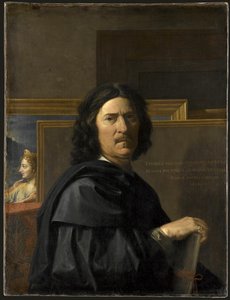
Nicolas Poussin
1594 - 1665 , Franța
Informații rapide
- Artistic Movement Or Style: Baroc, Clasicism
- Artists Who Influenced This Artist:
- Rafael
- Titian
- Date Of Birth: 1594
- Full Name: Nicolas Poussin
- Nationality: Franțuzesc
- Notable Artworks:
- Moartea lui Germanicus
- Șapte Sacrament
- Drum roman
- Orion căutând Soarele
- Sezoanele
- Place Of Birth: Le Havre, Franța
Articole conexe

Baroque Classicism: The Grandeur of Order and Drama in 17th-Century Art History
Explore the profound elegance of Baroque Classicism. Discover how 17th-century masters synthesized dramatic emotion with classical order through the lens of the Counter-Reformation and the works of legends like Carlo Maratta and Andrea Sacchi.

Baroque Classicism: Reconciling Drama & Order in 17th-Century Art
Explore the captivating world of Baroque Classicism! Discover its history, key artists like Caravaggio & Rubens, and defining characteristics. Expert insights & high-quality reproductions at AllPaintingsStore.

The Enduring Legacy of Classicism: Principles, Evolution & Influence in Western Art
Explore the enduring legacy of Classicism in Western art! Discover its historical context, key principles, iconic masterpieces & lasting influence. Learn about Renaissance and Neoclassical movements with AllPaintingsStore.

Nicolas Poussin: Classicism, Allegory & Order in 17th-Century French Painting
Explore the life & work of Nicolas Poussin, a master of French Classicism. Discover his allegorical paintings, Roman influences, and enduring impact on art history. Expert analysis & insights.

Barocul în Artă: Cele Mai Importante 10 Capodopere și Inspirație pentru Decor
Descoperă cele mai importante 10 capodopere ale picturii baroce! Caravaggio, Rembrandt, Rubens și alți maeștri. Află poveștile din spatele tehnicilor și culorilor vibrante. Reproduceri de artă de calitate muzeală pe AllPaintingsStore.com.


