

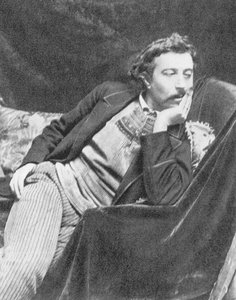
1876. Ulei pe pânză. Fogg Art Museum.

§ 1Date catalog


§ 2Abstract
Descriere obiect de colecție
Descoperă pictura impresionistă "Om cu toc" de Paul Gauguin, realizată în 1876 și prezentă la Fogg Art Museum! O analiză profundă a stilului său artistic și influenței sale asupra artei moderne.
 Vezi mai mult
Biografie artist
Paul Gauguin: Un pictor revoluționar post-impresionist, renumit pentru culori vibrante, subiecte exotice și simbolism profund. Descoperă călătoria sa de la finanțe la legenda artistică!
§ 3Comentariu
Man with a Toque: An Impressionistic Portrait of Quiet Dignity
Paul Gauguin’s “Man with a Toque” stands as an early testament to the artist's burgeoning fascination with Impressionism, marking a pivotal moment in his artistic evolution. Created in 1876 and currently residing at the Fogg Art Museum (Harvard Art Museums) in Cambridge, Massachusetts, this painting transcends mere representation; it embodies a subtle exploration of mood and psychological depth within a deceptively simple composition.- Subject Matter: The portrait depicts a man wearing a toque—a prevalent hat style during the Victorian era—emphasizing social status and formality. Gauguin’s careful observation captures not just physical appearance but also an unspoken gaze directed towards the viewer, fostering a connection that invites contemplation.
- Style & Technique: Gauguin's approach aligns closely with Impressionistic principles, prioritizing capturing fleeting moments of light and atmosphere over precise detail. The loose brushstrokes—characteristic of the movement—create a textured surface that conveys an impression rather than photographic accuracy. Color is used sparingly but purposefully, establishing a subdued palette dominated by muted browns and grays which subtly illuminate the man’s face.
Echoes of Impressionism & The Seeds of Post-Impressionism
While “Man with a Toque” firmly establishes Gauguin's initial engagement with Impressionistic aesthetics—particularly evident in his masterful rendering of light and color—it simultaneously foreshadows his subsequent embrace of Post-Impressionist ideals. Unlike the Impressionists’ focus on capturing objective reality, Gauguin sought to express inner emotion and psychological states through artistic symbolism. This duality reflects a broader shift within the art world, moving away from purely observational representation towards subjective interpretation. The influence of artists like Monet and Renoir is palpable in Gauguin's technique, yet his distinctive vision distinguishes him as a trailblazer for future generations of painters.Historical Context & Societal Significance
Painted during a period of significant social change—the Victorian era— “Man with a Toque” reflects the values and sensibilities of its time. The toque itself symbolizes respectability and professionalism, highlighting the importance of social conventions in shaping individual identity. Gauguin’s depiction speaks to the complexities of human experience within a structured societal framework, prompting viewers to consider themes of dignity, introspection, and unspoken communication. Furthermore, this artwork contributes to the broader narrative of artistic innovation—demonstrating how artists can adapt established styles while simultaneously forging new paths toward expressive truth.Symbolism & Emotional Resonance
Beyond its formal stylistic elements, “Man with a Toque” possesses subtle symbolic significance. The man’s gaze—direct and unwavering—suggests confidence and self-assuredness, conveying an inner strength that transcends outward appearances. The muted color palette contributes to the painting's melancholic atmosphere, inviting viewers to contemplate themes of solitude and contemplation. Gauguin skillfully utilizes visual cues to evoke emotion, prompting reflection on human psychology and the elusive nature of perception. It’s a portrait not merely of a man but of an inner world—a testament to Gauguin’s ability to transform observation into profound artistic expression.Further Exploration
For those wishing to delve deeper into Gauguin's oeuvre, consider examining “In the Vanilla Grove, Man and Horse (The Rendezvous)” (1891; French Polynesia) – a vibrant depiction of Polynesian life showcasing Gauguin’s bold use of color—and “Tahitian idyll” (1901; French Polynesia), which continues to captivate audiences with its serene beauty. Also noteworthy are "Street in Osny" (1883; France) and “Yellow Haystacks” (Golden Harvest) (1889; France), showcasing Gauguin’s experimentation with form and texture, cementing his legacy as one of the most influential artists of the late 19th century.Întrebări și răspunsuri
„Om cu toc” este mai degrabă o lucrare luminoasă sau întunecată în ansamblu?
"Om cu toc" are umbre adânci în întregime, iar luminozitatea sa este Întunecată.
Cine este artistul din spatele "Om cu toc"?
„Om cu toc” a fost creat de Paul Gauguin. Informațiile de pe această pagină descriu opera originală a lui Paul Gauguin.
Cât de cunoscută este opera „Om cu toc” de Paul Gauguin?
"Om cu toc" este clasificată ca Recunoscut.


 Comută pe versiunea Print


 Pentru opere de artă sau reproduceri care depășesc 105 cm (aproximativ 41 de inch) pe oricare dintre laturi, cadrul va fi livrat demontat, sub formă de kit. Această metodă asigură o livrare sigură și previne deteriorarea în timpul transportului.


