Garanție de rambursare în 100 de zile Livrare gratuită în toată lumea
449.587opere de artă 30.613artişti 4.660muzee 32limbi
Monedă
    Limba
      Atelier · Est. 2015 · Paris, Franța
      AllPaintingsStore
      allpaintingsstore.com
      Catalogue entry

      Number 1

      1948. Acrylic On Canvas. Muzeul de Artă Modernă.

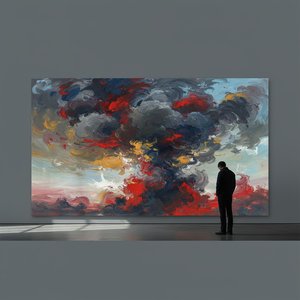
      Fig. 1. Paul Jackson Pollock, Number 1, 1948. Shown as the reproduction you are specifying: , .

      § 1Catalogue data

      § 2Abstract

      Descriere obiect de colecție

      Experience Jackson Pollock's iconic "Number 1", 1948! A vibrant drip painting embodying Abstract Expressionism’s raw energy & dynamic composition. A must-see masterpiece!

      Biografie artist

      Paul Jackson Pollock (1912-1956) a fost un pictor american revoluționar, creatorul tehnicilor de "drip painting" și al mișcării Abstract Expressionism. Celebrează-i operele dinamice, expresive și influente, care au transformat arta modernă.

      § 3Commentary

      A Universe in Chaos and Control: Deconstructing Jackson Pollock’s “Number 1”

      Jackson Pollock's "Number 1, 1948," housed within the hallowed halls of the Museum of Modern Art in New York, isn’t merely a painting; it’s an immersion. It’s a visceral experience that pulls you into the heart of Abstract Expressionism, demanding not just observation but engagement – a willingness to surrender to its dynamic energy and embrace the inherent ambiguity at its core. Created during a pivotal moment in Pollock's career, this monumental canvas represents a radical departure from traditional artistic conventions, embodying a new language of gesture, color, and emotion.

      The painting’s genesis lies within Pollock’s revolutionary “drip” technique – a method he meticulously developed over years. Forget brushes and palettes; here, the artist became a conduit, channeling paint directly from cans onto an unstretched canvas laid flat on the floor of his studio. This unorthodox approach liberated him from the constraints of conventional composition, allowing for a breathtaking freedom of movement and a profound connection between the artist’s body and the artwork. The result is a surface teeming with layered pigments – yellows, blues, blacks, reds, and whites – all suspended in a chaotic yet strangely balanced arrangement. It's as if Pollock has captured a fleeting moment of pure, unadulterated energy, frozen in time.

      Decoding the Composition: Order Within the Storm

      At first glance, “Number 1” appears to be an explosion of color and form – a swirling vortex of seemingly random marks. However, beneath this surface chaos lies a carefully constructed composition. The painting is anchored by four distinct black masses that frame the central field, creating a sense of contained dynamism. These dark shapes act as boundaries, defining the space within which the vibrant colors dance and collide. A vertical element, resembling a column of black paint and canvas, powerfully directs the viewer’s eye across the expanse of the painting, mimicking the movement of a flowing river or a towering structure.

      Furthermore, a diagonal line slicing through the composition from lower left to upper right generates a subtle tension, adding a layer of complexity to the overall visual experience. Scattered throughout the canvas are tiny, intensely colored drips – reds, yellows, oranges, and blues – that function as miniature focal points, each carrying its own symbolic weight. The prominent red dot near the center is often interpreted as a representation of individuality within the vastness of existence, a small beacon of self-awareness amidst an overwhelming universe.

      The Soul of Abstraction: Pollock’s Legacy

      “Number 1” isn't simply about color and form; it’s deeply rooted in the context of Abstract Expressionism, a movement that emerged in mid-20th century America as a reaction against European artistic traditions. Artists like Pollock sought to express raw emotion and subjective experience through non-representational imagery. Pollock himself struggled with personal demons – alcoholism and emotional instability – and many believe these internal conflicts found expression within his art. The frenetic energy of “Number 1” can be seen as a reflection of this turbulent inner world.

      Jackson Pollock’s legacy extends far beyond the canvas. He fundamentally altered our understanding of what painting could be, paving the way for future generations of artists to explore new forms of expression. “Number 1, 1948” stands as a testament to his innovative spirit and his profound impact on the art world – a captivating masterpiece that continues to challenge and inspire viewers today.

      Întrebări și răspunsuri

      Ce nivel de contrast prezintă "Number 1" de Paul Jackson Pollock?

      "Number 1" de Paul Jackson Pollock prezintă un contrast Balanced între zonele luminoase și cele întunecate.

      Cât de intense sunt culorile din "Number 1"?

      "Number 1" de Paul Jackson Pollock prezintă o saturație de Muted și o intensitate de Monochromatic.

      Cine este autorul și din ce an este "Number 1"?

      „Number 1” a fost creat de Paul Jackson Pollock în 1948.

      § 4The artist

      Paul Jackson Pollock

      Paul Jackson Pollock

      1912 - 1956, Statele Unite ale Americii

      Quick facts about Paul Jackson Pollock

      • Artistic Movement Or Style: Expresionism Abstract
      • Artists Or Movements Influenced By This Artist:
        • Color Field
        • Expresionism
      • Artists Who Influenced This Artist:
        • Thomas Benton
        • Orozco
      • Date Of Birth: 28 ianuarie 1912
      • Date Of Death: 11 august 1956
      • Full Name: Paul Jackson Pollock
      • Nationality: American
      • Notable Artworks:
        • Number 1, 1950
        • Blue Poles
        • Convergence
      • Place Of Birth: Cody, Wyoming

      Biografie artist

      Early Life and the Seeds of Innovation

      Paul Jackson Pollock, born in Cody, Wyoming, in 1912, was a restless spirit from the outset. His early life was marked by frequent relocation as his father, Leroy – also known as Roy – pursued work as a land surveyor across the vast landscapes of the American West. This itinerant existence instilled in young Pollock a deep connection to the natural world and an exposure to diverse cultures, particularly through encounters with Native American art during those surveying trips – impressions that would subtly permeate his artistic vision later in life. Though he never explicitly imitated Indigenous styles, the raw energy and spiritual resonance of these early experiences undoubtedly left their mark.

      Pollock’s formal artistic training began at the Manual Arts High School in Los Angeles, followed by studies at the Art Students League of New York under the tutelage of Thomas Hart Benton. Benton, a prominent figure in the Regionalist movement, emphasized rhythmic composition and narrative themes rooted in American life. While Pollock initially absorbed these lessons, his inherent inclination leaned toward more abstract explorations. He was also profoundly impacted by Mexican muralists like José Clemente Orozco, whose powerful depictions of social struggle resonated deeply with him. These early influences laid a foundation, but it was the burgeoning world of Surrealism that truly unlocked Pollock’s artistic potential.

      The Birth of Action Painting and a Revolutionary Technique

      The 1930s saw Pollock experimenting with various techniques, seeking alternatives to traditional brushwork. He began pouring paint, exploring its fluidity and unpredictable nature. However, it was around 1947 that his artistic trajectory underwent a radical transformation. Abandoning the easel altogether, Pollock laid canvases directly on the floor, initiating what would become known as his “drip technique.” He then proceeded to drip, splash, and fling paint onto the canvas from above, orchestrating a dynamic dance between artist, medium, and surface.

      This wasn’t merely about applying paint; it was about embodying the act of creation itself. Pollock's canvases became arenas for physical expression, capturing the immediacy of his gestures and emotions. The resulting paintings are characterized by their “all-over” composition – a lack of central focus that invites the viewer to explore the entire surface as a unified field of energy. Intricate networks of lines and colors intertwine, creating a visual complexity that is both captivating and challenging. He employed unconventional tools—sticks, knives, even syringes—to manipulate the paint in unpredictable ways, further emphasizing the spontaneous nature of his process.

      This innovative approach positioned Pollock as a central figure in the burgeoning Abstract Expressionist movement, which emerged in post-World War II New York City. Abstract Expressionism prioritized spontaneous gesture, large scale, and non-representational imagery, reflecting a broader cultural shift away from traditional artistic conventions. His marriage to fellow artist Lee Krasner was also pivotal; she provided unwavering emotional support and actively encouraged his artistic development, recognizing the groundbreaking nature of his work.

      Iconic Works and Lasting Legacy

      Pollock’s most celebrated works—such as Number 1, 1950 (Lavender Mist), One: Number 31, 1950, Blue Poles: Number 11, 1952, and Convergence—are testaments to his revolutionary technique. These paintings are not simply images; they are records of a performance, imbued with the artist’s physical presence and emotional intensity. The dynamic energy that emanates from these canvases is palpable, drawing viewers into a world of pure abstraction.

      His style transcends mere aesthetics; it's an exploration of process over product. Pollock sought to capture the immediacy of his actions and emotions on canvas, rejecting traditional notions of composition and representation. He delved into Jungian psychology, exploring archetypes and the subconscious in his art, seeking to tap into universal symbols and primal energies.

      Pollock’s impact on the history of art is immeasurable. He fundamentally altered the way artists approached painting, breaking free from easel-based methods and embracing a more performative approach. His work helped solidify New York City's position as a global center for modern art, shifting the focus away from European dominance. His influence can be seen in the work of countless artists who followed, including those associated with Color Field painting and later forms of abstract expressionism.

      Personal Struggles and Artistic Evolution

      Pollock’s life was marked by significant personal challenges, most notably a lifelong struggle with alcoholism. Despite periods of sobriety, he frequently succumbed to his addiction, which profoundly impacted his health and artistic output. This internal turmoil often manifested in the intensity and emotional rawness of his paintings – a reflection of his inner struggles projected onto the canvas.

      Despite these difficulties, Pollock continued to push the boundaries of art, experimenting with new materials and techniques. He developed a deep interest in color theory and explored the psychological effects of different hues and tones. His work evolved over time, moving from more representational forms to increasingly abstract compositions. The influence of Surrealism remained a constant presence, informing his use of symbolism and imagery.

      His relationship with Lee Krasner was central to his artistic development. She provided him with emotional support, encouragement, and critical feedback – often challenging him to refine his technique and explore new directions. Their shared passion for art and their mutual respect fueled their creative partnership.

      A Lasting Influence

      Jackson Pollock died tragically in 1956 at the age of 44, following a car accident. His untimely death cut short a brilliant career, but his legacy continues to resonate today. His innovative techniques—particularly the drip painting method—have been widely imitated and adapted by artists across various disciplines. He remains one of the most influential figures in modern art, a pioneer who redefined the possibilities of painting and inspired generations of artists to embrace spontaneity, experimentation, and emotional expression.

      § 5Comparanda

      § 6Questions

      Informații rapide

      • Artist: Paul Jackson Pollock
      • Influences: Pollock
      • Medium: Oil & enamel paint
      • Notable elements: Drip technique, black lines
      • Title: Number 1
      • Dimensions: 68" x 8' 8"

      Test de cunoștințe despre artă

      Fiecare întrebare are un singur răspuns corect.

      Întrebare 1:
      What is the primary artistic movement to which Jackson Pollock’s ‘Number 1’ belongs?
      Întrebare 2:
      The technique Pollock used to create 'Number 1' is most closely associated with which of the following terms?
      Întrebare 3:
      What does the black line in ‘Number 1’ primarily serve to do?
      Întrebare 4:
      The red dot in ‘Number 1’ is often interpreted as representing:
      Întrebare 5:
      In what year was Jackson Pollock’s ‘Number 1’ created?

      § 7Cite this entry

      AllPaintingsStore.com, “Paul Jackson Pollock, Number 1 (1948)”, https://allpaintingsstore.com/ro/art/paul-jackson-pollock-number-1-9DPLHX-en/ (accessed 2 Octombrie 2026).

      § 8The reproduction

      Reproducere pictată manual în ulei

      Pictură în ulei pe pânză, pictată manual de artiștii noștri la dimensiunea și ramele dorite de dumneavoastră, pe comandă. ( Comută pe versiunea Print Comută pe Imagine Digitală)

      It is specified on the order sheet in the margin; the present state of that sheet reads as follows.

      Number 1

      Tehnică de reproducere

      Dimensiune reproducere

      -

      Selecție de artiști de elită

      Mai multe detalii, rafinament și timp suplimentar de execuție

      -

      Ramă pentru reproducere artistică

      -

      -

      Pentru opere de artă sau reproduceri care depășesc 105 cm (aproximativ 41 de inch) pe oricare dintre laturi, cadrul va fi livrat demontat, sub formă de kit. Această metodă asigură o livrare sigură și previne deteriorarea în timpul transportului.

      Este necesară asamblarea profesională – acest produs nu este de tip DIY (de făcut singur).
      Kitul trebuie asamblat, iar pânza întinsă, de către un legător de cadre experimentat, utilizând adeziv pentru lemn (neinclus în colet), o cheie pentru întinderea pânzei și cleme pentru a menține barele la unghi drept în timp ce adezivul se usucă. Asamblarea incorectă sau tensiunea neuniformă a pânzei pot deteriora permanent opera de artă și nu sunt acoperite de garanția noastră.

      • Toate barele din lemn masiv sunt incluse, tăiate cu precizie la dimensiunea necesară.

      • Asamblat cu șuruburile incluse, plus adeziv pentru lemn pentru îmbinările de colț, care nu este furnizat și trebuie achiziționat de către tâmplarul dumneavoastră.

      • Sunt necesare unelte profesionale care nu sunt incluse: o șipte de întindere a pânzei (tensionator) și cleme pentru a menține barele la unghi drept în timp ce adezivul se usucă.

      Important:
      Îmbinările de colț necesită adeziv pentru lemn, barele trebuie fixate cu clești de strângere până când adezivul este complet uscat, iar întinderea pânzei pe cadrul asamblat necesită un clește pentru întins pânza. Niciunul dintre aceste elemente nu este inclus în kit. Vă rugăm să consultați un încadrator profesionist cu experiență înainte de a comanda această dimensiune.

      Etichetă de prezentare

      -

      -

      Lac de protecție

      Lac lucios (intensifică nuanțele și oferă protecție împotriva luminii și a umidității)

      -

      Personalizează opera mea de artă

      Exemple de elemente ce pot fi personalizate: Înlocuirea feței cu fotografia clientului; Adăugarea unui animal de companie (de exemplu, înlocuirea unei pisici cu un câine); Includerea unui mesaj ascuns în fundal; Modificarea peisajului sau a elementelor din fundal.

      -

      Livrare rapidă

      Livrare la nivel mondial () în 3-4 săptămâni, în loc de cele 5 săptămâni standard. (30 Octombrie). Fără compromisuri când vine vorba de calitate.

      -

      Livrare rapidă

      Livrare la nivel mondial () în 5 săptămâni. (6 Noiembrie).

      Inclus

      Preț total calculat

      lei 1200

      Included with every order

      • Livrare expres gratuită la nivel mondial
      • Pânză de in de înaltă calitate
      • Asigurare completă pentru transport
      • Garanție de rambursare a taxelor vamale
      • Garanția fidelității culorilor
      • Politica de retur în 100 de zile (doar pentru defecte de fabricație)
      • Garanție de rambursare 100%
      • Ofertă pentru comenzi multiple
      Order sheet