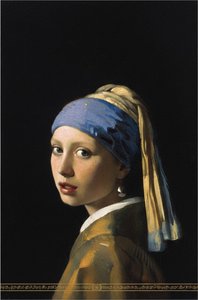
1650. Oil On Canvas, 97.0 x 132.0 cm. Muzeul Hermitaj.

§ 1Catalogue data

- 97.0 x 132.0 cm


§ 2Abstract
Descriere obiect de colecție
Paulus Potter’s ‘Wolf-Hound,’ a dignified 17th-century Dutch Golden Age portrait of a noble wolfhound rendered with luminous realism and subtle chiaroscuro, invites you to discover this timeless masterpiece.
 Vezi mai mult
Biografie artist
Paulus Potter (1625-1654) a fost un pictor olandez de Aurul Vechi renumit pentru scene detaliate cu animale în peisaje vaste, considerat precursor al romantismului cu opere iconice precum "Taurul Tânăr".
§ 3Commentary
A Moment of Quiet Dignity in the Dutch Golden Age
In the vast, storied halls of The Hermitage Museum, there exists a window into a simpler, more profound era of rural tranquility. Paulus Potter’s “Wolf-Hound”, painted between 1650 and 1652, is far more than a mere animal portrait; it is a masterclass in the art of observation. At first glance, the viewer is met with the striking presence of a solitary wolfhound, its noble form captured with such anatomical precision that one can almost sense the rhythmic rise and fall of its breath. Positioned before the weathered textures of a rustic shed or barn, the dog stands as a sentinel of the Dutch countryside, its gaze directed thoughtfully toward something unseen beyond the frame. This sense of dignified observation invites the spectator to pause, mirroring the very alertness exhibited by the subject itself.
The composition is a delicate dance of light and shadow, characteristic of the burgeoning realism that defined the Dutch Golden Age. Potter employs a sophisticated use of chiaroscuro, sculpting the musculature of the hound through subtle tonal gradations and a luminous surface that seems to catch the diffused sunlight filtering through the atmosphere. His technique—marked by smooth, almost invisible brushstrokes—creates a tactile reality; one can almost feel the coarse texture of the dog's coat and the rugged timber of the background structure. This meticulous attention to detail does not merely serve to document a breed, but to elevate the mundane elements of farm life into something monumental and poetic.
The Soul of the Landscape and Historical Resonance
To understand the profound impact of this work, one must look to the historical landscape of 17th-century Holland. This was an era of intense humanist inquiry, where artists moved away from the theatrical grandeur of the Baroque to find divinity in the natural world. Potter, a talent whose life was tragically cut short by tuberculosis at the age of twenty-eight, became a pioneer of this expressive realism. His ability to capture the humanist ethos—the empathy for the animal kingdom and the reverence for the earth—resonates deeply with modern sensibilities. In "Wolf-Hound," the inclusion of distant horses and a subtle human figure in the periphery suggests a larger, interconnected ecosystem of life, where every creature plays its part in the quiet drama of existence.
For the discerning collector or interior designer, this piece offers an unparalleled emotional depth. It possesses a calming, grounded energy that makes it a perfect centerpiece for spaces designed for reflection and sophistication. Whether placed in a sun-drenched library or a contemporary living space, a high-quality reproduction of this masterpiece brings with it a sense of timelessness and historical weight. The painting does not demand attention through loud colors or chaotic movement; instead, it commands the room through its understated elegance and its ability to evoke a sense of peace, making it an enduring choice for those who seek to surround themselves with art that speaks to the soul.
Întrebări și răspunsuri
Care este tehnica de execuție și dimensiunile pentru „Wolf-Hound”?
Tehnica utilizată pentru "Wolf-Hound" de Paulus Potter este Oil On Canvas, iar dimensiunile sale înregistrate sunt 97 x 132 cm.
Ce nivel de saturație a culorilor are "Wolf-Hound" de Paulus Potter?
Culorile din "Wolf-Hound" de Paulus Potter au o saturație de Balanced Soft. Saturația descrie cât de vii sau de tenue sunt culorile.
Ce paletă de culori este utilizată în "Wolf-Hound" de Paulus Potter?
Paleta lui "Wolf-Hound" de Paulus Potter este descrisă ca fiind Earthy, oferind o descriere concisă a culorilor lucrării.


 Comută pe versiunea Print


 Pentru opere de artă sau reproduceri care depășesc 105 cm (aproximativ 41 de inch) pe oricare dintre laturi, cadrul va fi livrat demontat, sub formă de kit. Această metodă asigură o livrare sigură și previne deteriorarea în timpul transportului.