Oil.

§ 1Date catalog


§ 2Abstract
Descriere obiect de colecție
Experience the dramatic tension of Raphael's Saint Michael and the Dragon, a Mannerist masterpiece capturing the epic battle between good and evil, perfect for adding timeless Renaissance grandeur to your private collection.
 Vezi mai mult
Biografie artist
Rafael (1483-1520): Maestru al Renașterii, renumit pentru Madonele sale serene și opere iconice precum "Școala Athinelor". Explorează viața sa din Urbino și moștenirea artistică!
§ 3Comentariu
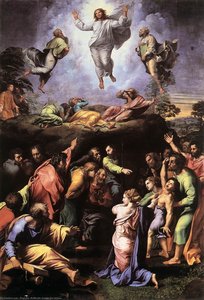
A Triumph of Mannerist Grace: Raphael’s St Michael and the Dragon
The painting “Saint Michael and the Dragon,” attributed to Raphael Sanzio da Urbino, stands as a testament to the artistic fervor of the High Renaissance's waning years—specifically, around 1513-1514. Executed during Raphael’s Florentine period, it represents more than just a depiction of biblical heroism; it embodies the stylistic complexities and intellectual ambitions characteristic of Mannerism, a movement that deliberately rejected the harmonious ideals of its predecessor while elevating dramatic tension and expressive gesture. This monumental work resides within the Louvre Museum in Paris, offering visitors an unparalleled opportunity to experience firsthand the brilliance of Raphael’s artistic vision.- Subject Matter & Narrative: At its core, the painting recounts a pivotal episode from Christian lore—the confrontation between Saint Michael, Archangel and protector of Christendom, and Lucifer, the Dragon representing evil and temptation. The scene unfolds against a backdrop of a desolate landscape dominated by a fiery castle, symbolizing both divine judgment and earthly vulnerability. Raphael skillfully portrays Michael as a muscular figure radiating authority, engaged in a dynamic battle with the serpentine dragon—a visual representation of the eternal struggle between good and evil.
- Style & Technique: Raphael’s masterful technique distinguishes “St Michael and the Dragon” from earlier Renaissance works. He employs a pyramidal composition, a hallmark of Mannerist style, to create a sense of stability amidst turbulent movement. The artist utilizes chiaroscuro—the dramatic interplay of light and shadow—to heighten emotional impact and sculpt the figures with meticulous detail. Raphael’s brushstrokes are deliberate and expressive, conveying a palpable energy that surpasses mere realism.
Symbolism & Artistic Influences
The dragon itself is laden with symbolic significance, representing not only Satan but also primal forces of darkness and chaos—challenges to faith and moral fortitude. Raphael’s depiction draws inspiration from earlier depictions of Saint Michael battling dragons in Byzantine iconography and medieval illuminated manuscripts, demonstrating the artist's engagement with established artistic traditions. However, Raphael transcends mere imitation; he imbues the scene with a profound psychological depth, capturing the anguish and determination etched on Michael’s face—a reflection of the spiritual battle waged by humanity against temptation.Historical Context & Artistic Legacy
Painted during a period marked by political instability and religious reformation, “Saint Michael and the Dragon” reflects the anxieties of its time. Raphael's patronage by Pope Leo X underscores the importance of papal commissions in shaping artistic trends. Yet, beyond its immediate historical context, the painting occupies a place within the broader history of art—a pivotal work that solidified Raphael’s reputation as one of the greatest artists of his era and profoundly influenced subsequent generations of painters. Its dramatic composition and expressive handling of light continue to inspire admiration and serve as a benchmark for artistic excellence.Emotional Impact & Artistic Reproduction
“Saint Michael and the Dragon” transcends its narrative content to evoke a powerful emotional response in viewers—a sense of awe, reverence, and contemplation. Raphael’s ability to convey spiritual fervor through visual means is undeniable. For those seeking to appreciate this masterpiece's beauty and grandeur, AllPaintingsStore offers exceptional reproductions crafted with archival pigments on premium canvas—allowing you to bring the artistry of Raphael into your home or office.Întrebări și răspunsuri
Cât de cunoscută este opera „Saint Michael and the Dragon” de Rafael?
"Saint Michael and the Dragon" de Rafael are un nivel de popularitate Iconic. Această clasificare reflectă cât de larg este recunoscută lucrarea.
Este "Saint Michael and the Dragon" reprezentativ pentru temele abordate de obicei de Rafael?
Temele recurente ale lui Rafael includ divine struggle, renaissance ideal, religious narrative, federico montefeltro patronage, symbolic representation; „Saint Michael and the Dragon” se concentrează pe saint michael, dragon battle, renaissance art, christian mythology, divine power, medieval symbolism, italian painting.
Ce punct comun are "Saint Michael and the Dragon" cu restul creației lui Rafael?
"Saint Michael and the Dragon" face parte din perioada Mannerist Renaissance a lui Rafael, ale cărei teme recurente includ divine struggle, renaissance ideal, religious narrative, federico montefeltro patronage, symbolic representation.



 Comută pe versiunea Print


 Pentru opere de artă sau reproduceri care depășesc 105 cm (aproximativ 41 de inch) pe oricare dintre laturi, cadrul va fi livrat demontat, sub formă de kit. Această metodă asigură o livrare sigură și previne deteriorarea în timpul transportului.