Garanție de rambursare în 100 de zile Livrare gratuită în toată lumea
449.564opere de artă 30.613artişti 4.660muzee 32limbi
Catalogue entry

Counter composition XV

1925. Acrylic On Canvas.

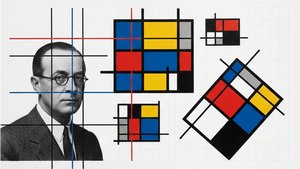
Fig. 1. Theo van Doesburg, Counter composition XV, 1925. Shown as the reproduction you are specifying: , .

§ 1Catalogue data

§ 2Abstract

Descriere obiect de colecție

Experience Theo van Doesburg's 'Counter Composition XV,' a pivotal De Stijl masterpiece. Bold geometric forms, primary colors, and dynamic asymmetry create a harmonious abstraction – explore its revolutionary impact on art & design.

Biografie artist

Theo van Doesburg (1883-1931): revoluționarul De Stijl, fondator al abstracționismului geometric și pionier al artei moderne. Geometrie, culoare pură și o viziune unică!

§ 3Commentary

The Geometry of Harmony: Unveiling Theo van Doesburg’s Counter Composition XV

Theo van Doesburg's "Counter Composition XV," painted in 1925, isn’t merely a painting; it’s a distilled essence of the De Stijl movement – a radical declaration of order and universal harmony. This deceptively simple work, executed against a stark white canvas, pulsates with an underlying tension born from the careful orchestration of geometric forms and primary colors. It represents a pivotal moment in 20th-century art, moving beyond representational imagery to explore the very foundations of visual language itself. The piece immediately commands attention not through elaborate detail or narrative, but through its profound sense of balance and its unwavering commitment to abstraction.

At first glance, the composition appears austere – a red rectangle dominating the upper left quadrant, juxtaposed with a blue counterpart in the lower right. However, this initial impression quickly gives way to an appreciation for the intricate grid that underpins the entire work. A network of black and white squares, meticulously arranged, creates a dynamic interplay of movement and stillness, suggesting both order and potential disruption. This isn’t haphazard placement; it's a deliberate choreography designed to evoke a feeling of controlled dynamism – a visual embodiment of De Stijl’s core philosophy.

Deconstructing the Language of Abstraction

The brilliance of "Counter Composition XV" lies in its reduction. Van Doesburg stripped away all extraneous elements, leaving only the fundamental building blocks of form and color: red, yellow, blue, black, and white. This limited palette wasn’t chosen arbitrarily; each hue was selected for its inherent purity and intensity, intended to be experienced without distraction. The application is equally crucial – flat, unmodulated areas devoid of shading or blending. This technique emphasizes the geometric shapes themselves, highlighting their sharp edges and creating a sense of crystalline clarity. It's a testament to the artist’s belief that beauty could be found in simplicity and precision.

The absence of perspective is equally significant. Van Doesburg deliberately rejects traditional spatial representation, opting instead for a two-dimensional plane where shapes are presented as independent entities. Overlapping elements and variations in size subtly suggest depth, but the overall effect is one of flattened planes interacting within a carefully constructed framework. This approach reflects De Stijl’s rejection of illusionism and its embrace of a purely conceptual understanding of space.

Symbolism and the Pursuit of Universal Harmony

Beyond its formal qualities, "Counter Composition XV" carries profound symbolic weight. The geometric forms – rectangles, squares, lines – are not merely decorative; they represent fundamental principles of order, balance, and harmony. The primary colors, stripped of their associations with natural phenomena, become pure expressions of energy and vibration. Van Doesburg believed that through the rigorous application of these abstract elements, artists could create a visual language capable of transcending individual expression and communicating universal truths. The piece is an attempt to build a new aesthetic based on mathematical ratios and geometric relationships – a blueprint for a harmonious world reflected in art.

Theo van Doesburg’s “Counter Composition XV” stands as a powerful testament to the transformative potential of abstraction. It's more than just a painting; it’s an invitation to contemplate the underlying order of the universe and the possibility of creating beauty through pure geometric form. Its stark simplicity, combined with its profound symbolic depth, continues to resonate with viewers today, cementing its place as a cornerstone of modern art.

Întrebări și răspunsuri

Ce dimensiune de imprimare este recomandată pentru "Counter composition XV"?

Pentru "Counter composition XV" de Theo van Doesburg, recomandăm o reproducere de dimensiunea Large. Dimensiunea poate fi ajustată păstrând proporțiile intacte.

Pot vedea "Counter composition XV" de Theo van Doesburg pe propriul meu perete înainte de achiziție?

Pagina Previzualizare în AR pentru "Counter composition XV" de Theo van Doesburg folosește realitatea augmentată pentru a vizualiza opera de artă în propriul tău spațiu, pe un dispozitiv compatibil.

Cât de armonioase sunt culorile din "Counter composition XV" de Theo van Doesburg?

Culorile din "Counter composition XV" de Theo van Doesburg prezintă o armonie Discordant Palette. Armonia descrie modul în care culorile interacționează între ele.

§ 4The artist

Theo van Doesburg

Theo van Doesburg

1883 - 1931, Olanda

Quick facts about Theo van Doesburg

  • Artistic Movement Or Style: De Stijl, Neoplasticism
  • Artists Or Movements Influenced By This Artist:
    • Bauhaus
    • Minimalism
  • Artists Who Influenced This Artist:
    • Kandinsky
    • Van Gogh
  • Date Of Birth: 30 august 1883
  • Date Of Death: 7 martie 1931
  • Full Name: Theo van Doesburg
  • Nationality: Olandez
  • Notable Artworks:
    • Compoziție cu roșu...
    • Compoziție II cu linii...
    • Danci
  • Place Of Birth: Utrecht, Olanda

Biografie artist

The Architect of Abstraction: A Life in Geometric Harmony

Theo van Doesburg, born Christian Emil Marie Küpper in 1883 in Utrecht, Netherlands, wasn’t merely a painter; he was a revolutionary force who fundamentally reshaped the very foundations of modern art. His journey began amidst the lingering echoes of Impressionism and Post-Impressionism, initially mirroring styles reminiscent of Vincent van Gogh – both in subject matter and emotional intensity. However, this early phase served as a crucial prelude, a necessary stepping stone toward the radical transformation that would define his enduring legacy. A pivotal moment arrived in 1913 with his encounter with Wassily Kandinsky’s *Rückblicke*. This text sparked within van Doesburg a profound realization: true artistic expression lay not in replicating the external world but in channeling an inner, spiritual reality through pure abstraction. It was this conviction that birthed Neoplasticism, more commonly known as De Stijl – a movement he founded and fiercely championed, becoming its most ardent advocate.

Forging a New Visual Language: The Principles of De Stijl

De Stijl wasn’t merely an artistic style; it was a comprehensive philosophical manifesto translated into visual form. Van Doesburg believed in stripping art down to its most essential elements – straight lines, right angles, and the primary colors of red, yellow, and blue, alongside black, white, and gray. This austere palette wasn't born from limitation but from a desire for universality—a belief that these fundamental forms resonated with an underlying cosmic order. He envisioned a *total* work of art, extending beyond the canvas to encompass architecture, design, and even everyday objects. Collaboration was key; van Doesburg worked closely with architects like J.J.P. Oud and Gerrit Rietveld, designing stained glass windows, furniture, and entire interiors that embodied the principles of De Stijl. His collaborations extended to fellow artists such as Piet Mondrian, with whom he co-founded the influential journal *De Stijl*, a platform for disseminating their ideas and attracting like-minded creatives. However, despite their shared origins, tensions arose between van Doesburg and Mondrian regarding the rigidity of Neoplasticism. Van Doesburg introduced “Elementarism” in 1926, advocating for diagonal lines and more dynamic compositions – a departure that ultimately led to a schism within the movement, revealing his restless spirit and constant pursuit of artistic evolution.

The Early Years & The Seeds of Abstraction

Theo van Doesburg’s early life was marked by a surprising lack of formal artistic training. Born into a family of artists—his father, Wilhelm Küpper, was a photographer—he initially pursued acting and singing before finding his calling as a shop assistant. This seemingly mundane occupation provided him with a keen eye for detail and an appreciation for the beauty of everyday objects – qualities that would later inform his artistic vision. It wasn’t until 1908, when he exhibited his paintings in the Hague, that he began to establish himself as a serious artist. His early works were characterized by a sensitivity reminiscent of Vincent van Gogh—both in subject matter and emotional intensity. However, this initial phase served as a crucial prelude, a necessary stepping stone toward the radical transformation that would define his enduring legacy. The turning point arrived in 1913 with his encounter with Wassily Kandinsky’s *Rückblicke*. This text sparked within van Doesburg a profound realization: true artistic expression lay not in replicating the external world but in channeling an inner, spiritual reality through pure abstraction.

The Birth of De Stijl & The Pursuit of Totality

In 1917, amidst the turmoil of World War I, Theo van Doesburg, along with Piet Mondrian, Bart van der Leck, and others, founded *De Stijl* (The Style), a journal dedicated to exploring the principles of pure abstraction. They sought to create a “total work of art” – an encompassing aesthetic that extended beyond painting to encompass architecture, design, and all aspects of human experience. This ambition led them to develop a rigorous set of rules: only primary colors, straight lines, right angles, and black and white were permitted. The goal was to achieve a sense of harmony and universality through the reduction of form to its most essential elements. *De Stijl* quickly became a focal point for avant-garde artists and designers, shaping the visual language of the interwar period.

Beyond Painting: A Multifaceted Artistic Vision

While celebrated as a painter, van Doesburg’s artistic pursuits were remarkably diverse. He was a prolific writer, poet, critic, and designer, using his pen to articulate the theoretical underpinnings of De Stijl and challenge conventional notions of art. His engagement with Dadaism in the early 1920s further broadened his artistic horizons, leading to experimental works that incorporated collage and typography. This period also saw him teaching at the Bauhaus, where he shared his ideas with a new generation of artists and designers. He wasn’t content to remain within the confines of traditional art forms; van Doesburg actively sought to integrate art into everyday life, believing it had the power to transform society. His designs for interiors and furniture weren't merely aesthetic exercises but attempts to create harmonious living spaces that reflected the principles of De Stijl.

Legacy & Lasting Influence

Theo van Doesburg’s life was tragically cut short in 1931 at the age of 47, yet his impact on modern art remains profound. De Stijl, though relatively short-lived as a cohesive movement, exerted an enormous influence on subsequent artistic developments, including Bauhaus design, Minimalism, and Constructivism. His emphasis on geometric abstraction, pure color, and functionalism continues to resonate with artists and designers today. His work serves as a reminder that art is not merely about representation but about the exploration of fundamental forms and ideas. Van Doesburg’s legacy extends beyond his paintings and designs; it lies in his unwavering commitment to artistic innovation and his belief in the transformative power of abstraction. His vision of a unified, harmonious world – expressed through the language of De Stijl – continues to inspire those who seek to create a more beautiful and meaningful environment.

§ 5Comparanda

§ 6Questions

Informații rapide

  • Notable elements: Geometric abstraction
  • Year: 1925
  • Artistic style: Neoplasticism
  • Artist: Theo van Doesburg
  • Medium: Oil on canvas

Test de cunoștințe despre artă

Fiecare întrebare are un singur răspuns corect.

Întrebare 1:
What artistic movement is most closely associated with Theo van Doesburg’s ‘Counter Composition XV’?
Întrebare 2:
The primary colors used in ‘Counter Composition XV’ are:
Întrebare 3:
What is the dominant geometric element in ‘Counter Composition XV’?
Întrebare 4:
Which of the following best describes the overall effect created by the arrangement of shapes in ‘Counter Composition XV’?
Întrebare 5:
Theo van Doesburg’s work, including ‘Counter Composition XV’, aimed to achieve what overarching goal?

§ 7Cite this entry

AllPaintingsStore.com, “Theo van Doesburg, Counter composition XV (1925)”, https://allpaintingsstore.com/ro/art/theo-van-doesburg-counter-composition-xv-8XZ2J2-en/ (accessed 5 Octombrie 2026).

§ 8The reproduction

Reproducere pictată manual în ulei

Pictură în ulei pe pânză, pictată manual de artiștii noștri la dimensiunea și ramele dorite de dumneavoastră, pe comandă. ( Comută pe versiunea Print Comută pe Imagine Digitală)

It is specified on the order sheet in the margin; the present state of that sheet reads as follows.

Counter composition XV

Tehnică de reproducere

Dimensiune reproducere

-

Selecție de artiști de elită

Mai multe detalii, rafinament și timp suplimentar de execuție

-

Ramă pentru reproducere artistică

-

-

Pentru opere de artă sau reproduceri care depășesc 105 cm (aproximativ 41 de inch) pe oricare dintre laturi, cadrul va fi livrat demontat, sub formă de kit. Această metodă asigură o livrare sigură și previne deteriorarea în timpul transportului.

Este necesară asamblarea profesională – acest produs nu este de tip DIY (de făcut singur).
Kitul trebuie asamblat, iar pânza întinsă, de către un legător de cadre experimentat, utilizând adeziv pentru lemn (neinclus în colet), o cheie pentru întinderea pânzei și cleme pentru a menține barele la unghi drept în timp ce adezivul se usucă. Asamblarea incorectă sau tensiunea neuniformă a pânzei pot deteriora permanent opera de artă și nu sunt acoperite de garanția noastră.

  • Toate barele din lemn masiv sunt incluse, tăiate cu precizie la dimensiunea necesară.

  • Asamblat cu șuruburile incluse, plus adeziv pentru lemn pentru îmbinările de colț, care nu este furnizat și trebuie achiziționat de către tâmplarul dumneavoastră.

  • Sunt necesare unelte profesionale care nu sunt incluse: o șipte de întindere a pânzei (tensionator) și cleme pentru a menține barele la unghi drept în timp ce adezivul se usucă.

Important:
Îmbinările de colț necesită adeziv pentru lemn, barele trebuie fixate cu clești de strângere până când adezivul este complet uscat, iar întinderea pânzei pe cadrul asamblat necesită un clește pentru întins pânza. Niciunul dintre aceste elemente nu este inclus în kit. Vă rugăm să consultați un încadrator profesionist cu experiență înainte de a comanda această dimensiune.

Etichetă de prezentare

-

-

Lac de protecție

Lac lucios (intensifică nuanțele și oferă protecție împotriva luminii și a umidității)

-

Personalizează opera mea de artă

Exemple de elemente ce pot fi personalizate: Înlocuirea feței cu fotografia clientului; Adăugarea unui animal de companie (de exemplu, înlocuirea unei pisici cu un câine); Includerea unui mesaj ascuns în fundal; Modificarea peisajului sau a elementelor din fundal.

-

Livrare rapidă

Livrare la nivel mondial () în 3-4 săptămâni, în loc de cele 5 săptămâni standard. (2 Noiembrie). Fără compromisuri când vine vorba de calitate.

-

Livrare rapidă

Livrare la nivel mondial () în 5 săptămâni. (9 Noiembrie).

Inclus

Preț total calculat

lei 1226

Included with every order

  • Livrare expres gratuită la nivel mondial
  • Pânză de in de înaltă calitate
  • Asigurare completă pentru transport
  • Garanție de rambursare a taxelor vamale
  • Garanția fidelității culorilor
  • Politica de retur în 100 de zile (doar pentru defecte de fabricație)
  • Garanție de rambursare 100%
  • Ofertă pentru comenzi multiple
Explorați opere de artă organizate pe teme, stiluri și caracteristici.
Order sheet