


 Vezi în context
 Trimite
 Distribuie
 Detalii
 Ghidul

 Descarcă
 Produse similare
 Radiografie
 Diaporama
 Statistici
Profane Love (Vanity)


 Citește mai mult
Giclée / Imprimare artistică
Printuri giclée sau pe canvas de calitate muzeală, cu proces de producție rapid și opțiuni flexibile de finisare. ( Comandă pictură realizată manual Treci la imagine digitală)




P118B lei10

P118H lei10

P118W lei10

P438Z lei10

P508JH lei12

P508YH lei12

P805H lei10

P805Z lei10

P919BZ lei10

P919G lei10

P919XJ lei10

P959ZH lei10

P968JZ lei12

W106C lei8

W218G lei10

W218JH lei8

W218Y lei10

W307PJ lei10

W316G lei10

W316PJ lei8

W316Y lei10

W398PJ lei8

W4111J lei10

W500HY lei15

W500JH lei15

W692G lei12

W849H lei8

W940BG lei15

W953PJ lei8




Alegeți dintre dimensiunile noastre prestabilite, care respectă proporțiile originale ale operei de artă.

Introduceți lățimea și înălțimea de care aveți nevoie, pentru a se potrivi ramei sau peretelui dumneavoastră. O printare poate fi doar tăiată, niciodată extinsă dincolo de dimensiunea imaginii originale, astfel încât o dimensiune cu o formă diferită va pierde o parte din imagine. Vă trimitem o simulare digitală pentru aprobare înainte de a imprima orice. Imaginea afișată pe această pagină nu prezintă tăierea reală — doar simularea arată acest lucru.
Livrare în întreaga lume () în 2 săptămâni, în loc de cele 4/5 săptămâni standard. (25 Octombrie)

Livrare expres gratuită la nivel mondial

Pânză de in premium

Asigurare completă pentru transport

Garanție de rambursare a taxelor vamale

Garanția fidelității culorilor

Politica de retur în 100 de zile (doar pentru defecte)

Garanție de rambursare 100%

Reducere pentru comenzi multiple
 Opțiunea cu sticlă este disponibilă doar pentru dimensiuni de sub 110 cm

Profane Love (Vanity)
Giclée / Imprimare artistică
Dimensiune reproducere
-


Preț total
lei 296
The Allure of the Unresolved: Titian's Masterpiece
Titian’s Sacred and Profane Love, painted in 1514 during the artist’s formative years, isn’t merely a portrait; it’s an invitation to a profound meditation on desire, mortality, and the very nature of love itself. Commissioned for the wedding celebration of Niccolò Aurelio, a secretary within Venice's powerful Council of Ten, the painting immediately captivated viewers with its arresting composition and enigmatic figures. Yet, beyond the initial visual impact lies a complex web of symbolism that has fueled centuries of debate among art historians – a testament to Titian’s genius and his willingness to challenge conventional representations.
The scene unfolds within a meticulously rendered Roman sarcophagus, transformed into an unexpected water trough. Two women, their identities deliberately obscured, occupy this liminal space, seemingly adrift between the earthly and the divine. One, draped in luxurious fabrics and adorned with jewels, embodies the sensual pleasures of worldly love – a vibrant celebration of beauty and indulgence. Her pose is relaxed, almost languid, suggesting an enjoyment of the present moment. The other woman, starkly nude and holding a torch, represents a more austere form of devotion, perhaps hinting at spiritual purity or even mourning. The contrast between these two figures immediately establishes a tension—a dialogue between earthly desires and higher aspirations.
A Symphony of Color and Technique
Titian’s mastery of color is instantly apparent in Sacred and Profane Love. He employs a rich, velvety palette – deep reds, blues, and greens – that imbues the scene with an almost palpable sense of warmth and luxury. His brushwork is loose and expressive, characteristic of his mature style, yet remarkably controlled, particularly in the rendering of the fabrics and the subtle gradations of light and shadow. The use of *sfumato*, a technique perfected by Titian himself, creates a hazy, atmospheric effect that softens the edges of the figures and blurs the boundaries between reality and illusion.
Technically, the painting demonstrates a shift in Titian’s approach. While earlier works showcased his meticulous detail and precise rendering, here we see a move towards greater spontaneity and emotional intensity. The background landscape—a dramatic vista of mountains, shepherds, and a distant church—is painted with broad, confident strokes, creating a sense of depth and perspective that anchors the figures within their environment. The inclusion of classical motifs – the sarcophagus, the Roman ruins – further reinforces the painting’s connection to Renaissance ideals of beauty, harmony, and intellectual inquiry.
Decoding the Symbols: A Layered Narrative
The symbolism embedded within Sacred and Profane Love is notoriously complex and open to interpretation. The sarcophagus itself—a symbol of death and transition—suggests a contemplation of mortality and the fleeting nature of earthly pleasures. The water flowing from the spout, nourishing a plant, could represent fertility, renewal, or even the cyclical nature of life and death. The cherubic figure swirling the water adds to this sense of mystery, hinting at divine intervention or perhaps simply the playful spirit of youth.
- The Women: Often interpreted as representing different aspects of love – earthly passion versus spiritual devotion.
- The Torch: Symbolizes enlightenment, guidance, and potentially a warning against worldly temptations.
- The Sarcophagus: Represents the passage from life to death, prompting reflection on mortality and legacy.
- The Landscape: A complex tapestry of classical and biblical imagery, suggesting themes of virtue, sin, and redemption.
Interestingly, the painting’s title itself—*Sacred and Profane Love*—is debated. Some scholars believe it reflects the dual nature of love as both a divine gift and a source of earthly desire. Others argue that it simply represents two different types of love – one based on physical attraction and the other on spiritual connection. The painting’s enduring appeal lies in its refusal to offer easy answers, inviting viewers to engage in their own interpretations.
A Timeless Reflection on Human Experience
Sacred and Profane Love remains a profoundly moving work of art, captivating audiences with its beauty, mystery, and emotional depth. It’s more than just a portrait; it's a meditation on the complexities of human experience—a reminder that love takes many forms and that even in moments of pleasure, we are inevitably confronted with the shadow of mortality. Its enduring power lies not only in Titian’s technical brilliance but also in his ability to capture the essence of our deepest desires and anxieties.
Întrebări și răspunsuri
La ce vârstă a creat Titian opera „Profane Love (Vanity)”?
Titian a creat "Profane Love (Vanity)" la vârsta de 24. Artistul s-a născut în 1490, iar lucrarea datează din 1514.
Ce punct comun are "Profane Love (Vanity)" cu restul creației lui Titian?
"Profane Love (Vanity)" face parte din opera de Renaissance Italian Painting a lui Titian, ale cărei teme recurente includ venetian colorism, renaissance love, courtly romance, symbolic imagery, titian’s vision.
Cu ce sentiment este asociată opera „Profane Love (Vanity)”?
Tonul emoțional înregistrat pentru "Profane Love (Vanity)" de Titian este Mysterious. Acesta rezumă sentimentul exprimat de operă.
Opere similare


Biografie artist
The Venetian Titan: A Life in Color and Canvas
Tiziano Vecellio, cunoscut în întreaga lume drept Titian, reprezintă o figură monumentală a Renașterii italiene – poate cea mai celebră coloristă și un maestru care a redefinit posibilitățile picturii în ulei. Născut aproximativ în 1490 în Pieve di Cadore, adâncimea dramatică a Alpilor Venețieni, călătoria sa de la origini modeste la recunoaștere internațională este o mărturie a talentului prodigios și a unei devotări neclintite față de inovația artistică. Detaliile din viața timpurie a lui Titian rămân parțial învățate, dar știm că el era unul dintre mai multe copii născuți pentru Gregorio Vecellio, un militar, și Lucia. Familia a recunoscut potențialul fiilor lor și i-a trimis pe Tiziano și fratele său Francesco să fie ucenici la un artist în Veneția – o decizie care a schimbat irevocabil cursul istoriei artei. Veneția de la începutul secolului al XVI-lea era un centru vibrant de comerț, cultură și ferment artistic. Primul antrenament al lui Titian a avut loc în atelierul lui Sebastiano Zuccato, un mozaicist, urmat de perioade scurte sub îndrumarea lui Gentile Bellini și, crucial, a fratelui său Giovanni. Cu toate acestea, asocierea sa cu Giorgione – un alt pictor venețian al cărui lucru posedă o calitate poetică eterică – s-a dovedit a fi cea mai formativă. Cele doi artiști au colaborat la mai multe proiecte, inclusiv frescele exterioare pentru Fondaco dei Tedeschi, o bază comercială aglomerată pentru comercianții germani. Chiar și în aceste lucrări timpurii, abilitatea excepțională a lui Titian era evidentă, câștigându-i recunoaștere printre contemporanii săi și anunțând strălucirea care avea să înflorească curând.A Master's Evolving Style
Dezvoltarea artistică a lui Titian poate fi caracterizată prin versatilitate remarcabilă și o explorare continuă a tehnicilor picturale. Lucrările sale timpurii, puternic influențate de Giorgione, prezintă un lirism delicat și o utilizare magistrală a culorii pentru a crea efecte atmosferice. Piese precum *A Man with a Quilted Sleeve* (circa 1509) demonstrează talentul său emergent în portretizare, capturând nu numai asemănarea fizică a subiecților săi, ci și personalitatea lor interioară. Pe măsură ce a maturizat, Titian a început să se îndepărteze de tonalitățile subtile ale lui Giorgione și să îmbrățișeze o abordare mai dramatică și mai bogată în culoare. *The Visitation of Mary and Elizabeth* (acum în Accademia din Veneția) exemplifică această schimbare, prezentând încrederea sa crescândă în gestionarea compozițiilor complexe și a nuanțelor vibrante. Pe parcursul vieții sale lungi, Titian a primit comenzi prestigioase de la patroni influenți din întreaga Europă. A fost pictor curte al Împăratului Carol V, Regele Filip al II-lea al Spaniei și Papilor Paul III, printre alții. Această protecție nu numai că i-a asigurat securitate financiară, ci și i-a permis să creeze opere monumentale care au demonstrat priceperea sa artistică la o scară grandioasă. Abilitatea sa de a se adapta gusturilor diferitelor curți, menținând în același timp vocea sa distinctivă, este un testament al abilităților sale excepționale și al diplomației sale.Patronage, Prestige and Lasting Influence
Impactul operei lui Titian s-a extins mult dincolo de viața sa. Lucrările sale sunt găsite în muzee din întreaga lume, inclusiv Galleria Palatina din Florența, Prado Museum din Madrid și National Gallery din Londra. Pentru a experimenta o operă de artă a lui Titian este să întâlnești un meșter priceput la apogeul puterii sale – un pictor care posedă o capacitate fără egal de a captura frumusețea, drama și complexitatea condiției umane. Titian a murit în Veneția în 1576, lăsând în urmă un corp extraordinar de lucrări care continuă să inspire admirație și apreciere. Piese sale pot fi găsite în muzee din întreaga lume, inclusiv Scuola del Santo din Padova și San Salvador din Veneția, ambele prezentând frescele sale uimitoare.Major Achievements
Printre realizările majore ale lui Titian se numără: * **Frescele Fondaco dei Tedeschi:** Colaborarea cu Giorgione a creat o operă de artă influentă. * **The Assumption of the Virgin:** O capodoperă care a marcat o schimbare semnificativă în stilul său, demonstrând capacitatea sa de a combina armonia clasică cu culori vibrante și mișcare. * **Venus of Urbino:** Un tablou revoluționar care a redefinit reprezentarea nudului feminin și a stabilit Titian ca figură proeminentă în pictura venețiană. * **Bacchus and Ariadne:** O operă dramatică care demonstrează abilitatea lui Titian de a crea compoziții dinamice și scene pline de viață.Historical Significance
Titian este considerat o figură cheie în tranziția din Renașterea timpurie în perioada Barocului, deschizând calea pentru noi stiluri artistice și abordări. El a influențat generații de artiști, de la Peter Paul Rubens și Rembrandt până la Eugène Delacroix și Édouard Manet. Stilul său unic, caracterizat prin utilizarea inovatoare a culorii, prin tehnici de pensulare libere și prin accent pe capturarea esenței emoționale a subiecților săi, rămâne o sursă de inspirație pentru artiștii contemporani.Exploring Further
- Muzee & Colecții: Descoperiți operele lui Titian la Scuola del Santo din Padova și San Salvador din Veneția, ambele prezentând frescele sale uimitoare.
- Artiști Relacionați: Explorați influența lui Giorgione asupra stilului său timpuriu și impactul mai târziu al lui Titian asupra artiștilor precum Rubens și Delacroix.
- Context Istoric: Imersați-vă în lumea Renașterii italiene și a picturii venețiene pentru a aprecia pe deplin realizările artistice ale lui Titian.
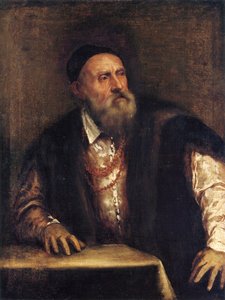
Titian
1490 - 1576 , Italia
Informații rapide
- Artistic Movement Or Style: Pictură Venețiană
- Artists Or Movements Influenced By This Artist:
- Artisti occidentali
- Pictură Venețiană tardivă
- Artists Who Influenced This Artist:
- Giovanni Bellini
- Giorgione
- Date Of Birth: c. 1490
- Date Of Death: 1576
- Full Name: Tiziano Vecellio
- Nationality: Italian
- Notable Artworks:
- A Man cu mânecă brodată
- Vizitație Maria și Elisabeta
- Place Of Birth: Pieve di Cadore, Italia
Articole conexe
Capodopere la National Gallery of Art: Cele mai Iubite Lucrări pentru Decorul Casei Tale
Descoperă cele mai frumoase 25 de picturi din National Gallery of Art, Washington! Cézanne, Matisse, Picasso și alți maeștri te așteaptă. Reproduceri de artă de calitate muzeală pentru un decor rafinat. Explorează colecția completă pe AllPaintingsStore.com!

Titian: Innovation, Technique & the Venetian Renaissance Portrait Tradition
Explore the revolutionary techniques & enduring legacy of Titian, the master of Venetian Renaissance portraiture. Discover insights for collectors & appreciate his impact on art history.

Capodopere la National Gallery Londra: 25 de picturi iconice pentru iubitorii de artă și decor rafinat
Descoperă cele mai iconice 25 de picturi din National Gallery Londra! Explorează poveștile lui Van Gogh, Monet, Da Vinci și Rembrandt. Găsește inspirație pentru decorul casei tale cu reproduceri de artă de calitate muzeală pe AllPaintingsStore.com.

Top 10 Opere de Artă Plină de Emoție Romantică | AllPaintingsStore.ro
Descoperă top 10 opere de artă romantică ce inspiră emoție și pasiune! Explorează poveștile artiștilor, tehnicile folosite și simbolismul picturilor celebre. Reproduceri de calitate muzeală pe AllPaintingsStore.ro. Explorează colecția online!

The Enduring Motif of Love in Art History: A Cross-Cultural Exploration of Representation and Emotion
Explore the rich history of love in art! Discover iconic masterpieces, artistic techniques & cultural symbolism from antiquity to modern times. Expert analysis for collectors.


