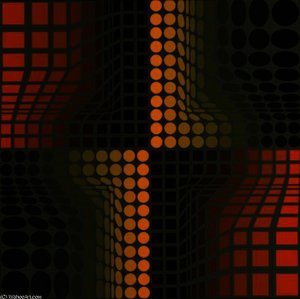
1956. Acrylic On Canvas.

§ 1Catalogue data


Această lucrare este protejată de drepturile de autor
Lucrarea de artă afișată pe această pagină este protejată de legile privind drepturile de autor, ceea ce înseamnă că nu putem crea sau vinde în mod legal o reproducere identică. Această protecție este garantată prin acorduri internaționale, precum Convenția de la Berna și de legile naționale, inclusiv cele prevăzute de Legea dreptului de autor din S.U.A. – Titlul 17. Toate drepturile rezervate. Orice reproducere neautorizată este interzisă.
Ca alternativă respectuoasă și legală, oferim tablouri pictate manual, personalizate, inspirate de original. Artistii noștri experimentați și profesioniști studiază cu atenție stilul, starea de spirit și esența artistică a originalului pentru a crea o piesă nouă și unică, care evocă aceeași emoție – rămânând, în același timp, o creație originală în sine.
Această metodă respectă pe deplin reglementările privind drepturile de autor, deoarece nu implică copierea sau duplicarea operei protejate. În schimb, este o reinterpretare creativă – o pictură nouă, influențată de original, dar care nu este identică cu acesta.
 Citește mai mult
§ 2Abstract
Descriere obiect de colecție
Experience Victor Vasarely's 'Our': A mesmerizing Op Art masterpiece of interlocking geometric shapes and vibrant colors, creating an illusion of movement and dynamic depth. Explore the captivating world of optical illusions.
Biografie artist
Victor Vasarely, Károly Vaszary, Op Art, Kinetic Art, Abstractie geometrica, Iluzie optica, Arta maghiara, Arta moderna
§ 3Commentary
Victor Vasarely’s “Our”: A Dive into the Psyche of Op Art
Victor Vasarely's "Our," created in 1956, isn't merely a painting; it’s an invitation to a perceptual dance. This seminal work from the heart of the Op Art movement embodies a fascination with how our eyes and brains interpret visual information – a captivating exploration of illusion, rhythm, and the very nature of seeing. Born in Pécs, Croatia (then part of Austria-Hungary), Vasarely’s journey into abstraction began unexpectedly, initially pursuing medicine before finding his true calling in the world of art. His relocation to Paris marked a turning point, immersing him within the vibrant circles of post-war European artistic innovation and ultimately leading him to develop his signature style – one deeply rooted in geometric precision and optical stimulation.
"Our" immediately commands attention with its densely packed composition. Interlocking rectangles and trapezoids, rendered in shades of rich red, orange, and punctuated by grounding browns and blacks, create a complex tapestry that seems to shift and shimmer before the viewer’s eyes. The absence of a clear focal point is deliberate; Vasarely wasn't aiming for a singular point of interest but rather to orchestrate an experience of continuous movement across the entire canvas. The subtle gradient effects within each hue add depth, suggesting variations in tone and creating a sense of spatial ambiguity – it’s as if the forms are subtly receding or advancing, playing with our perception of distance.
Decoding the Language of Op Art
At its core, “Our” is a quintessential example of Op Art. This movement, pioneered by artists like Bridget Riley and Vasarely himself, sought to evoke an illusion of three-dimensionality through purely two-dimensional means. The crisp, precise lines that define each shape are crucial to this effect; they create a sense of order and control within the seemingly chaotic arrangement. The deliberate irregularities – slight asymmetries and variations in scale – prevent the composition from feeling overly rigid, mirroring the way our visual system actually processes information—not as perfectly ordered but with subtle distortions and shifts.
Vasarely’s meticulous technique is evident in the careful planning and execution of each geometric element. He employed acrylic paint on canvas, a medium that allowed for both vibrant color saturation and a degree of textural subtlety. The grainy texture observed in photographs suggests either an inherent quality of the original surface or the effects of the printing process – a deliberate choice to avoid a sterile, overly smooth appearance. This grain subtly enhances the visual dynamism, preventing the image from feeling static.
Symbolism and Emotional Resonance
While “Our” eschews representational imagery, it’s far from devoid of symbolic meaning. As an Op Art piece, it aims to trigger a visceral response – a sense of energy, rhythm, and perhaps even a touch of disorientation. The repetitive patterns can be interpreted as mirroring the rhythms of our own perception, highlighting how we actively construct reality through our visual processing. The color palette itself contributes to this emotional impact; the warm reds and oranges evoke feelings of excitement and vitality, while the darker browns provide grounding and contrast.
Considering Vasarely’s broader artistic philosophy, “Our” can be seen as an exploration of the relationship between perception and reality. It's a reminder that what we *see* is not necessarily what *is*, but rather a carefully constructed interpretation shaped by our individual visual systems. The work invites contemplation on how art can manipulate our senses and challenge our assumptions about the world around us. Reproductions, meticulously crafted to capture the original’s nuances, offer a remarkable opportunity to experience this captivating illusion firsthand.
Întrebări și răspunsuri
Unde pot găsi un ghid pentru "Our"?
Ghidul pentru "Our" reprezintă pagina de Fișă informativă a operei de artă – o fișă informativă imprimabilă care prezintă lucrarea împreună cu legenda sa, mențiunea de credit și tabelul de identificare (artist, date, tehnică, dimensiunea originală, colecție).
Unde pot vedea o previzualizare a unei reproduceri a operei "Our" de Victor Vasarely?
O previzualizare a lucrării "Our" de Victor Vasarely este disponibilă pe pagina de Previzualizare în spațiu a acesteia.
Este "Our" de Victor Vasarely o operă de artă cunoscută?
Nivelul de popularitate înregistrat pentru "Our" de Victor Vasarely este Recognized.


 Comută pe versiunea Print


 Pentru opere de artă sau reproduceri care depășesc 105 cm (aproximativ 41 de inch) pe oricare dintre laturi, cadrul va fi livrat demontat, sub formă de kit. Această metodă asigură o livrare sigură și previne deteriorarea în timpul transportului.