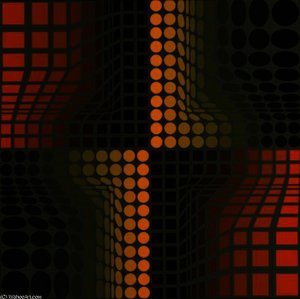
1969. Screenprint.

§ 1Date catalog


Această lucrare este protejată de drepturile de autor
Lucrarea de artă afișată pe această pagină este protejată de legile privind drepturile de autor, ceea ce înseamnă că nu putem crea sau vinde în mod legal o reproducere identică. Această protecție este garantată prin acorduri internaționale, precum Convenția de la Berna și de legile naționale, inclusiv cele prevăzute de Legea dreptului de autor din S.U.A. – Titlul 17. Toate drepturile rezervate. Orice reproducere neautorizată este interzisă.
Ca alternativă respectuoasă și legală, oferim tablouri pictate manual, personalizate, inspirate de original. Artistii noștri experimentați și profesioniști studiază cu atenție stilul, starea de spirit și esența artistică a originalului pentru a crea o piesă nouă și unică, care evocă aceeași emoție – rămânând, în același timp, o creație originală în sine.
Această metodă respectă pe deplin reglementările privind drepturile de autor, deoarece nu implică copierea sau duplicarea operei protejate. În schimb, este o reinterpretare creativă – o pictură nouă, influențată de original, dar care nu este identică cu acesta.
 Citește mai mult
§ 2Abstract
Descriere obiect de colecție
Experience the vibrant optical illusions of Victor Vasarely's 1969 Op Art masterpiece, Torony-Nagy, featuring geometric towers that play with depth and color; discover this modern vision today.
Biografie artist
Victor Vasarely, Károly Vaszary, Op Art, Kinetic Art, Abstractie geometrica, Iluzie optica, Arta maghiara, Arta moderna
§ 3Comentariu
The Illusion of Structure: Exploring Vasarely's Geometric Vision
To stand before Victor Vasarely’s "Torony-Nagy" is not merely to observe paint on canvas; it is to engage in a sophisticated dialogue with perception itself. This vibrant 1969 composition plunges the viewer into a world governed by pure geometry, where structure becomes both subject and illusion. The piece presents four stylized tower forms arranged in a meticulously balanced square. These are not representations of buildings as we know them, but rather abstract meditations on architectural permanence and visual dynamism. Vasarely, a master cartographer of the eye, uses color and line to construct an environment that seems simultaneously solid and utterly ephemeral.
Mastery of Op Art: Technique and Visual Vibration
The defining characteristic of "Torony-Nagy" is its unwavering commitment to Op Art. This style, which flourished in the mid-20th century, challenges the viewer's assumptions about pictorial space. Vasarely achieves this breathtaking effect through rigorous geometric construction. Notice how the grid-like patterns within each tower appear to recede into an impossible depth, despite the flatness of the surface. The artist employs a bold, contrasting palette—vivid blues against sharp greens, punctuated by warm yellows and reds—all held together by crisp white lines that define every plane. This precise application of color and line creates what art historians call optical vibration; your eye is forced to work overtime, oscillating between recognizing pattern and experiencing the dizzying sense of depth.
A Dialogue with Modernity: Symbolism and Context
Created in 1969, this work sits at a fascinating intersection of post-war modernism and burgeoning technological optimism. The towers themselves can be interpreted as allegories for the skyscraper age—symbols of human ambition, industrial scale, and the relentless march of progress. However, Vasarely resists simple narrative reading. Instead, he invites contemplation on how we perceive reality itself. Are these structures real? Do they exist in physical space or only within the mechanics of our vision? This ambiguity is the core strength of the piece; it speaks to the intellectual currents of the era—the rise of abstract thought and man's increasing reliance on constructed systems.
Bringing Geometric Brilliance Home
For collectors, interior designers, or anyone seeking a focal point imbued with intellectual energy, "Torony-Nagy" offers unparalleled visual impact. Reproducing this piece allows one to incorporate high art that is both visually arresting and conceptually rich into any space. Its bold color blocking means it anchors a room without adhering to traditional decorative motifs. It demands attention while simultaneously inviting quiet study. Owning a reproduction of this work is acquiring not just decoration, but a conversation starter—a testament to the enduring power of abstract thought rendered in breathtaking, vibrant form.
Întrebări și răspunsuri
În ce măsură subiectul operei „Torony-Nagy” se regăsește în temele obișnuite ale lui Victor Vasarely?
Temele recurente ale lui Victor Vasarely includ bauhaus geometric abstraction influence, exploration of visual perception, modernist architectural representation, key op art period work; „Torony-Nagy” se concentrează pe op art, geometric, abstract, towers, pattern, illusion, modernism.
Culorile din "Torony-Nagy" de Victor Vasarely sunt saturate sau tenue?
"Torony-Nagy" de Victor Vasarely prezintă o saturație de Balanced Soft.
"Torony-Nagy" de Victor Vasarely este o compoziție de tip portret, peisaj sau pătrată?
"Torony-Nagy" de Victor Vasarely are un format Square. Formatul descrie proporțiile compoziției.


 Comută pe versiunea Print


 Pentru opere de artă sau reproduceri care depășesc 105 cm (aproximativ 41 de inch) pe oricare dintre laturi, cadrul va fi livrat demontat, sub formă de kit. Această metodă asigură o livrare sigură și previne deteriorarea în timpul transportului.