Garanție de rambursare în 100 de zile Livrare gratuită în toată lumea
449.587opere de artă 30.613artişti 4.660muzee 32limbi
Catalogue entry

Gigantii primitivi

Acrilic pe pânză întinsă.

Fig. 1. William Blake, Gigantii primitivi. Shown as the reproduction you are specifying: , .

§ 1Catalogue data

§ 2Abstract

Descriere obiect de colecție

Descoperă reproducerea impresionantă în alb și negru a picturii "Gigantii primitivi" de William Blake! O analiză profundă despre simbolism și mitologia lui Blake, perfect pentru iubitorii artei romantice.

Biografie artist

Descoperă operele fascinante ale lui William Blake! Poet și pictor romantic inovator, cunoscut pentru simbolism puternic și ilustrații impresionante precum „Job și Familia Sa Restaurată la Prosperitate”. Explorează mitologia britanică!

§ 3Commentary

Primitive Giants: A Vision of Blake’s Mythological Landscape

William Blake's "Primitive Giants" stands as a haunting testament to the Romantic imagination—a monumental depiction rendered in stark monochrome that captures not merely a scene, but an entire cosmology. Painted sometime around 1820-1822, this artwork embodies Blake’s profound engagement with mythology and symbolism, reflecting his belief in a primal order underlying the perceived chaos of human experience. The painting portrays a dramatic vista: towering figures dominate a mountainous expanse bathed in ethereal clouds, hinting at an otherworldly realm governed by forces beyond human comprehension.

Composition & Technique: Illuminated Printing's Revolutionary Impact

Blake’s masterful use of illuminated printing—a technique he pioneered—is immediately apparent. Unlike conventional oil paintings, this image was created using watercolor and ink on paper, meticulously transferred from a copper plate etched with intricate designs. This method allowed for unparalleled tonal control and textural richness, capturing the sublime beauty of the landscape while simultaneously conveying Blake’s characteristic spiritual intensity. The careful layering of washes creates depth and luminosity, emphasizing the grandeur of the mountains and the solemn presence of the colossal figures. The etching process itself ensured exceptional precision and detail—a radical departure from artistic conventions of the time.

Mythological Roots & Symbolic Representation

“Primitive Giants” draws heavily upon Blake’s own mythology, specifically referencing his seminal poem “The Four Zoas.” The central figures represent Urizen and Tharmas, archetypal opposites embodying reason and instinct respectively – forces locked in perpetual conflict yet inextricably intertwined within the fabric of creation. These giants ascend a mountain peak—a symbol of aspiration and transcendence—representing humanity’s struggle to grasp the divine order. The clouds surrounding them symbolize obscurity and uncertainty, mirroring the challenges faced by individuals seeking spiritual enlightenment. Blake's meticulous attention to detail extends beyond mere visual representation; every element contributes to a complex tapestry of symbolic meaning.

Historical Context & Aesthetic Influence

Blake’s work emerged during the fervent crucible of Romanticism—a movement characterized by an embrace of emotion, imagination, and individualism. He deliberately rejected academic art conventions, prioritizing personal vision over stylistic imitation. “Primitive Giants” aligns perfectly with the aesthetic ideals of Pre-Raphaelitism and Symbolism, influencing artists like Dante Gabriel Rossetti and William Morris who sought to recapture the spiritual grandeur of medieval art. Blake’s uncompromising artistic stance challenged prevailing societal norms and cemented his legacy as a visionary artist whose work continues to inspire awe and contemplation.

Emotional Resonance & Artistic Legacy

Ultimately, “Primitive Giants” transcends mere visual depiction; it communicates profound emotional resonance—a palpable sense of majesty mingled with melancholy. The painting compels viewers to confront existential questions about humanity’s place in the cosmos and its relationship to divine forces. Blake's enduring influence can be seen in subsequent artistic movements and continues to captivate audiences today. A high-quality reproduction offers a window into this extraordinary artwork, allowing admirers to experience its breathtaking beauty and contemplate its timeless symbolism. Explore AllPaintingsStore’s collection for exquisite prints of “Primitive Giants.”

Întrebări și răspunsuri

Cât de cunoscută este opera „Gigantii primitivi” în cadrul mișcării Romantic Symbolism?

„Gigantii primitivi” este înregistrat ca fiind Iconice printre lucrările de tip Romantic Symbolism din catalog.

Din ce țară provine lucrarea de Romantic Symbolism „Gigantii primitivi”?

Lucrarea de Romantic Symbolism „Gigantii primitivi” a fost creată de un artist născut în Regatul Unit.

Unde pot găsi un ghid pentru "Gigantii primitivi"?

O pagină de Fișă informativă este disponibilă pentru "Gigantii primitivi" de William Blake: o fișă informativă imprimabilă despre operă, concepută pentru elevi și utilizare în mediul școlar.
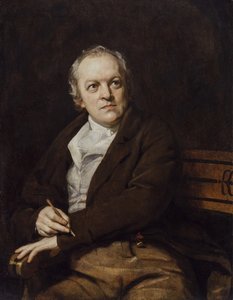
§ 4The artist

William Blake

William Blake

1757 - 1827, Regatul Unit

Quick facts about William Blake

  • Artistic Movement Or Style: Romanticism
  • Artists Who Influenced This Artist:
    • Raphael
    • Michelangelo
  • Date Of Birth: 1757
  • Date Of Death: 1827
  • Full Name: William Blake
  • Nationality: Britanic
  • Notable Artworks:
    • Songs of Innocence & Exp.
    • The Tyger
    • Jerusalem
  • Place Of Birth: Londra, UK

Biografie artist

A Visionary’s Journey: The Life and Art of William Blake

William Blake, born in London on November 28, 1757, was a figure perpetually out of step with his time, yet destined to become one of the most celebrated artists and poets of the Romantic Age. His life unfolded against the backdrop of a rapidly changing England—a world grappling with industrialization, political upheaval, and shifting spiritual beliefs. From humble beginnings as the son of a hosier, Blake’s early years were marked by an intensely vivid imagination and a propensity for visionary experiences that would profoundly shape his artistic trajectory. Though largely self-taught in formal academics, he received drawing instruction at a young age, quickly revealing a talent that hinted at the extraordinary path ahead. His apprenticeship with engraver James Basire proved pivotal, providing him not only with technical mastery but also an understanding of printmaking techniques he would later revolutionize. These early influences—the Gothic grandeur of Westminster Abbey, the classical forms of Raphael and Michelangelo—served as foundational elements in his developing aesthetic, though Blake was never one to remain bound by convention.

Early Influences and Artistic Training

Blake’s formative years instilled within him a deep appreciation for both beauty and terror – sensations he would translate into his art with unparalleled sensitivity. The architectural majesty of Westminster Abbey captivated his youthful imagination, exposing him to the grandeur of classical sculpture and inspiring a fascination with artistic ideals. Simultaneously, he absorbed the stylistic innovations of Raphael and Michelangelo, recognizing their mastery of form and composition as benchmarks for excellence. Despite lacking formal training in traditional academic disciplines—a rarity for artists of his era—Blake possessed an innate aptitude for drawing that quickly surpassed expectations. Encouraged by Basire’s guidance, he honed his skills in engraving, mastering techniques that would become integral to his groundbreaking artistic process. This apprenticeship wasn't merely about acquiring technical proficiency; it was about immersing himself in the world of printmaking and gaining firsthand experience with the challenges inherent in translating visual ideas into durable images.

The Illuminated World: Technique and Innovation

Blake’s artistic innovation wasn’t merely about subject matter; it resided fundamentally in *how* he created. Dissatisfied with conventional engraving methods, he developed a unique process known as “illuminated printing.” This involved etching both text and illustrations onto copper plates, then hand-coloring the resulting prints—a laborious but deeply personal approach that allowed for complete artistic control. This wasn’t simply illustration accompanying poetry; it was an integrated art form where image and verse were inextricably linked, each enhancing the meaning of the other. His relief etching technique, born from a claimed visionary experience following his brother's death, further distinguished his work, granting it a distinctive textural quality and allowing for greater artistic freedom than traditional methods. Beyond printmaking, Blake also worked with watercolors and tempera paints, often depicting biblical scenes or fantastical subjects imbued with symbolic weight. A key characteristic of his style was a deliberate rejection of linear perspective in favor of a more emotive, symbolic representation—a flattening of space that drew the viewer into the heart of his visionary world. He believed that true artistic expression demanded a departure from accepted conventions and an embrace of subjective experience.

Major Works and Artistic Themes

Blake’s oeuvre encompasses a remarkable range of poetic and visual creations, reflecting his multifaceted intellectual and spiritual concerns. Among his most celebrated works are *Songs of Innocence & of Experience* (1794), a dual collection exploring the contrasting facets of human consciousness—the purity of childhood juxtaposed with the anxieties of adulthood. This seminal poem exemplifies Blake’s preoccupation with moral allegory and psychological insight, presenting characters as embodiments of archetypal virtues and vices. Equally significant is *The Marriage of Heaven & Hell* (1793), a provocative prose poem that challenges conventional morality, celebrating energy, desire, and rebellion against restrictive doctrines. Blake's illustrations for Dante’s *Divine Comedy*, commissioned by John Flaxman, demonstrate his extraordinary ability to translate complex narratives into powerful visual imagery—a testament to his mastery of symbolism and dramatic composition. His magnum opus, *Jerusalem* (1820), is a sprawling epic poem that delves into biblical prophecy and explores themes of redemption and divine justice. Blake’s artistic vision consistently prioritized symbolic representation over realistic depiction, conveying profound spiritual truths through evocative imagery and carefully crafted narratives.

Legacy and Influence

Blake's impact on subsequent generations of artists and writers remains undeniable. His pioneering technique of illuminated printing influenced the Pre-Raphaelites, who adopted his stylistic innovations to create stunningly detailed paintings inspired by medieval literature and mythology. Furthermore, Blake’s emphasis on imagination and subjective experience resonated deeply with Symbolists and Modernist thinkers—artists who sought to express inner realities beyond the confines of observable phenomena. His unwavering commitment to artistic freedom continues to inspire creatives today, reminding us that true beauty lies in challenging conventions and embracing unconventional perspectives. William Blake stands as a beacon of visionary creativity—a testament to the transformative power of imagination and an enduring symbol of Romantic idealism. He remains one of the most influential artists of his time and continues to captivate audiences worldwide with his haunting imagery and profound philosophical ideas.

§ 5Comparanda

§ 6Questions

Informații rapide

  • Subject or theme: Mythology
  • Artist: William Blake
  • Notable elements or techniques: Illuminated printing
  • Title: Primitive giants
  • Influences: Blake's Mythology

Test de cunoștințe despre artă

Fiecare întrebare are un singur răspuns corect.

Întrebare 1:
¿Ce este caracteristic pentru pictura "Primitive giants"?
Întrebare 2:
¿În ce perioadă artistică este considerat William Blake?
Întrebare 3:
¿Ce tehnică de imprimare a folosit William Blake pentru operele sale?
Întrebare 4:
¿Cum este descrisă atmosfera picturii "Primitive giants"?
Întrebare 5:
¿Ce rol avea James Basire în dezvoltarea carierei lui William Blake?

§ 7Cite this entry

AllPaintingsStore.com, “William Blake, Gigantii primitivi”, https://allpaintingsstore.com/ro/art/william-blake-gigantii-primitivi-8EWSD4-ro/ArtistReproduction/ (accessed 4 Octombrie 2026).

§ 8The reproduction

Reproducere pictată manual în ulei

Pictură în ulei pe pânză, pictată manual de artiștii noștri la dimensiunea și ramele dorite de dumneavoastră, pe comandă. ( Comută pe versiunea Print Comută pe Imagine Digitală)

It is specified on the order sheet in the margin; the present state of that sheet reads as follows.

Gigantii primitivi

Tehnică de reproducere

Dimensiune reproducere

-

Selecție de artiști de elită

Mai multe detalii, rafinament și timp suplimentar de execuție

-

Ramă pentru reproducere artistică

-

-

Pentru opere de artă sau reproduceri care depășesc 105 cm (aproximativ 41 de inch) pe oricare dintre laturi, cadrul va fi livrat demontat, sub formă de kit. Această metodă asigură o livrare sigură și previne deteriorarea în timpul transportului.

Este necesară asamblarea profesională – acest produs nu este de tip DIY (de făcut singur).
Kitul trebuie asamblat, iar pânza întinsă, de către un legător de cadre experimentat, utilizând adeziv pentru lemn (neinclus în colet), o cheie pentru întinderea pânzei și cleme pentru a menține barele la unghi drept în timp ce adezivul se usucă. Asamblarea incorectă sau tensiunea neuniformă a pânzei pot deteriora permanent opera de artă și nu sunt acoperite de garanția noastră.

  • Toate barele din lemn masiv sunt incluse, tăiate cu precizie la dimensiunea necesară.

  • Asamblat cu șuruburile incluse, plus adeziv pentru lemn pentru îmbinările de colț, care nu este furnizat și trebuie achiziționat de către tâmplarul dumneavoastră.

  • Sunt necesare unelte profesionale care nu sunt incluse: o șipte de întindere a pânzei (tensionator) și cleme pentru a menține barele la unghi drept în timp ce adezivul se usucă.

Important:
Îmbinările de colț necesită adeziv pentru lemn, barele trebuie fixate cu clești de strângere până când adezivul este complet uscat, iar întinderea pânzei pe cadrul asamblat necesită un clește pentru întins pânza. Niciunul dintre aceste elemente nu este inclus în kit. Vă rugăm să consultați un încadrator profesionist cu experiență înainte de a comanda această dimensiune.

Etichetă de prezentare

-

-

Lac de protecție

Lac lucios (intensifică nuanțele și oferă protecție împotriva luminii și a umidității)

-

Personalizează opera mea de artă

Exemple de elemente ce pot fi personalizate: Înlocuirea feței cu fotografia clientului; Adăugarea unui animal de companie (de exemplu, înlocuirea unei pisici cu un câine); Includerea unui mesaj ascuns în fundal; Modificarea peisajului sau a elementelor din fundal.

-

Livrare rapidă

Livrare la nivel mondial () în 3-4 săptămâni, în loc de cele 5 săptămâni standard. (1 Noiembrie). Fără compromisuri când vine vorba de calitate.

-

Livrare rapidă

Livrare la nivel mondial () în 5 săptămâni. (8 Noiembrie).

Inclus

Preț total calculat

lei 1224

Included with every order

  • Livrare expres gratuită la nivel mondial
  • Pânză de in de înaltă calitate
  • Asigurare completă pentru transport
  • Garanție de rambursare a taxelor vamale
  • Garanția fidelității culorilor
  • Politica de retur în 100 de zile (doar pentru defecte de fabricație)
  • Garanție de rambursare 100%
  • Ofertă pentru comenzi multiple
Order sheet