


 Previzualizare
 Trimite prin felicitare
 Distribuie
 Detalii despre lucrare
 Ghid
Ghid

 Descarcă imaginea
 Produse similare
 Radiografie
 Galerie foto
 Statistici
Landscape
 Other
Other 134.0 x 64.0 cm
 Vezi mai mult
Giclée / Imprimare artistică
Printuri giclée sau pe canvas de calitate muzeală, cu proces de producție rapid și opțiuni flexibile de finisare. ( Comandă pictură realizată manual Comută pe Imagine Digitală)




P118B lei10

P118H lei10

P118W lei10

P438Z lei10

P508JH lei12

P508YH lei12

P805H lei10

P805Z lei10

P919BZ lei10

P919G lei10

P919XJ lei10

P959ZH lei10

P968JZ lei12

W106C lei8

W218G lei10

W218JH lei8

W218Y lei10

W307PJ lei10

W316G lei10

W316PJ lei8

W316Y lei10

W398PJ lei8

W4111J lei10

W500HY lei15

W500JH lei15

W692G lei12

W849H lei8

W940BG lei15

W953PJ lei8




Alegeți dintre dimensiunile noastre prestabilite, care respectă proporțiile originale ale operei de artă.

Introduceți lățimea și înălțimea necesare pentru a se potrivi ramei sau peretelui dumneavoastră. O printare poate fi doar tăiată, niciodată extinsă dincolo de dimensiunea imaginii originale, astfel încât o dimensiune cu o formă diferită va pierde o parte din imagine. Vă trimitem o simulare digitală pentru aprobare înainte de a imprima orice. Imaginea afișată pe această pagină nu prezintă tăierea reală — doar simularea arată acest lucru.
Livrare în întreaga lume () în 2 săptămâni, în loc de cele 4/5 săptămâni standard. (26 Octombrie)

Livrare expres gratuită la nivel mondial

Pânză de in de înaltă calitate

Asigurare completă pentru transport

Garanție de rambursare a taxelor vamale

Garanția fidelității culorilor

Politica de retur în 100 de zile (doar pentru defecte de fabricație)

Garanție de rambursare 100%

Ofertă pentru comenzi multiple
 Opțiunea cu sticlă este disponibilă doar pentru dimensiuni de sub 110 cm

Landscape
Giclée / Imprimare artistică
Dimensiune reproducere
-


Preț total calculat
lei 296
Opere similare


Biografie artist
A Master of Blossoms and Breath
Born in the turbulent year of 1633 in Wujin, Jiangsu province, Yun Shouping—often revered by his sobriquet Nantian—emerged from a period of profound historical upheaval. As the Ming Dynasty crumbled and the Qing era took hold, Yun found himself navigating a world in transition. Though born into an impoverished family that could not afford the formal education required for the civil service examinations, he did not allow circumstance to stifle his spirit. Instead, he turned inward toward the natural world, devoting himself to the pursuit of the three perfections: painting, poetry, and calligraphy. From his earliest years, his soul was entwined with the delicate beauty of nature, a passion famously captured in his childhood compositions of poetry centered around lotus blossoms.
His artistic journey was one of remarkable evolution and profound transformation. While he initially trained in the rigorous traditions of landscape painting, a pivotal encounter with the works of the master Wang Hui altered the course of his career forever. Captivated by new possibilities, Yun transitioned from the grand vistas of mountains and rivers to the intimate, vibrant world of flora and fauna. This shift led to the founding of the Ch'ang-chou school, a movement that would redefine Chinese aesthetics for generations. He became a central figure among the celebrated Six Masters of the early Qing period, standing alongside luminaries such as Wu Li and the Four Wangs, creating a legacy that bridged the gap between classical tradition and a new, expressive vitality.
The Revolution of the Boneless Style
What truly set Yun Shouping apart from his contemporaries was his masterful command of the mogu, or "boneless" technique. Moving away from the rigid, ink-defined outlines that characterized much of traditional Chinese painting, Yun sought to capture the very essence and inner breath of his subjects through soft washes of color and delicate gradations. By imitating the 11th-century methods of Xu Xi, he achieved a sense of organic fluidity that made his flowers and birds appear to pulse with life. His palette was daring for its time; he embraced rich, saturated hues of reds and purples—colors that some traditionalists dismissed as gaudy—to convey the true splendor of a blooming peony or a sun-drenched petal.
This technique allowed him to achieve a breathtaking balance between structure and spontaneity. In his hands, a branch was not merely a line on paper, but a living limb, and a blossom was not just a shape, but a fleeting moment of seasonal beauty. His work often embodied the following characteristics:
- Expressive Vitality: A profound ability to depict the "spirit resonance" or life force of plants and animals.
- Coloristic Innovation: The use of vibrant, layered washes to create depth without the need for harsh borders.
- Poetic Symbiosis: An inseparable connection between his visual imagery and the lyrical sentiment of his calligraphy and poetry.
- Naturalism through Abstraction: A way of capturing the true likeness of nature through soft, impressionistic strokes rather than anatomical precision.
A Lasting Legacy in the Qing Dynasty
The historical significance of Yun Shouping cannot be overstated. He did not merely participate in the art of his era; he revitalized it. By breathing new life into the flower-and-bird genre, he provided a much-needed aesthetic refreshment to a landscape painting tradition that had become increasingly preoccupied with imitating ancient styles. His Ch'ang-chou school became a beacon of individual expression, emphasizing a deep, emotional connection to the natural world that resonated with the literati class. Even as his techniques were refined and passed down through generations—notably by his daughter, Bing—the core of his vision remained: a celebration of the ephemeral beauty found in the smallest corner of the earth.
Today, Yun Shouping is remembered not just as a painter of petals, but as a poet of the brush. His ability to find the infinite within the minute remains a cornerstone of Chinese art history. Through his "boneless" mastery, he taught the world that strength does not always require a hard edge, and that true beauty often resides in the softest, most delicate transitions of light and color.

Yun Shouping
1633 - 1690
Detalii rapide
- Full Name: Mary Beale Cradock
- Nationality: English
- Date Of Birth: 1633
- Date Of Death: 1690
- Place Of Birth: Barrow, Suffolk, England
- Notable Artworks:
- Discourse on Friendship
- Observations
- Artistic Movement Or Style: Portrait painting
- Artists Who Influenced This Artist:
- Sir William Sanderson
- Sir Peter Lely
- Artists Or Movements Influenced By This Artist: ['Later Stuart']
Articole similare
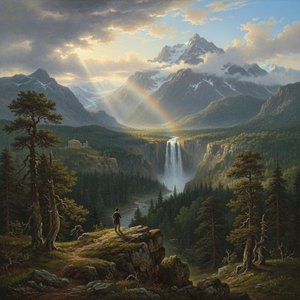
Evoking Nature's Sublime: A Comprehensive Exploration of 19th-Century Landscape Painting
Explore the captivating world of 19th-century landscape painting! Discover renowned artists like Friedrich & Monet, key movements, and find the perfect artwork to bring nature's serenity into your home. Expert insights at AllPaintingsStore.

Evocations of Place: A Historical Journey Through Landscape Art
Explore the rich history of landscape art with AllPaintingsStore. Discover renowned artists, movements like Impressionism & Romanticism, and expert guidance for collecting timeless pieces. Find your perfect serene escape today!

Peisaje Romantice Iconice: 10 Capodopere Artistice pentru Decorul de Lux
Descoperă 10 capodopere romantice iconice de Caspar David Friedrich, Turner și alți maeștri. Explorează istoria artei, emoțiile din peisaje și găsește tablouri canvas perfecte pentru decorul tău pe AllPaintingsStore.com!

John Constable: Cele Mai Frumoase 25 de Capodopere – Artă Clasică pentru Decorul Casei Tale
Descoperă cele mai frumoase 25 de picturi ale lui John Constable, maestru al peisajului englezesc! Explorează stilul romantic, Dedham Vale și capodopere precum The Hay Wain. Reproduceri artă clasică pentru decorul casei tale – AllPaintingsStore.com.

Evocations of Place: A Historical Journey Through Landscape Art
Explore the rich history of landscape art with AllPaintingsStore. Discover renowned artists, movements like Impressionism & tonalism, and expert guidance for collecting timeless pieces. Find your perfect serene escape today!

