


 Предпросмотр
 Поделиться
 Поделиться
 Детали произведения

 Скачать
 Похожие работы
 Рентгенография
 Слайд-шоу
Work P
 89.0 x 55.0 cm
 Читать далее
Масляная репродукция ручной работы
Картина маслом на холсте в выбранном вами размере и раме, написанная на заказ нашими художниками. ( Купить принт Купить изображение)




































Выберите один из наших стандартных размеров, соответствующих оригинальным пропорциям произведения искусства.

Вы можете указать собственные размеры, чтобы картина идеально вписалась в выбранную раму или пространство. Если выбранный вами размер не соответствует пропорциям оригинала, мы либо обрежем полотно, либо расширим его за счет дополнительных элементов, написанных вручную. Цифровой макет будет отправлен вам на утверждение перед началом производства.
Обратите внимание, что предварительный просмотр на экране не отражает фактическую обрезку или расширение. Только макет точно покажет окончательную композицию.
Хотя доступны индивидуальные размеры, мы рекомендуем выбирать вариант из предопределенного списка, чтобы сохранить исходные пропорции.
После оформления заказа команда AllPaintingsStore.com свяжется с клиентом по электронной почте для уточнения деталей и предоставит предварительный макет
Доставка по всему миру () за 3–4 недели вместо стандартных 5 недель. (18 Август). Без компромиссов в качестве.

Бесплатная экспресс-доставка по всему миру

Высококачественный льняной холст

Полное страхование доставки

Гарантия возмещения таможенных пошлин

Гарантия точного соответствия цветов

Политика возврата в течение 60 дней (только при наличии дефектов)

Гарантия возврата 100% средств

Предложение оптовых скидок
 Вариант со стеклом доступен только для размеров менее 110 см

Work P
Техника репродукции
Размер репродукции
-


Итоговая стоимость
$ 258
Похожие произведения




Биография художника
Atsuko Tanaka: A Life in Art
- Born: Osaka, Japan (February 10, 1932)
- Died: Nara, Japan (December 3, 2005)
Early Life and Artistic Development
- Tanaka began her artistic journey in the early 1950s, studying at the Art Institute of Osaka Municipal Museum of Art and later at Kyoto Municipal College of Art.
- During this period, she encountered Akira Kanayama, who significantly influenced her exploration of new artistic territories.
- She initially worked in a figurative style but soon transitioned towards abstraction, experimenting with various materials and techniques.
- Her early works included collages featuring handwritten numbers on diverse surfaces like hemp cloth and tracing paper, reflecting a fascination with numerical signs and their potential for deconstruction.
The Gutai Years (1955-1965)
- In 1955, Tanaka joined the Gutai Art Association, a pioneering avant-garde group known for its experimental performances and radical approach to art.
- Her time with Gutai was pivotal in shaping her artistic identity, leading to the creation of some of her most iconic works.
- Key Works from this Period:
- Work (Bell) (1955): A participatory installation featuring a string of electric bells that visitors could activate.
- Work (Pink Rayon) (1955): An exploration of space and form using stretched fabric.
- Electric Dress (1956): Perhaps her most famous creation, this wearable sculpture comprised hundreds of lightbulbs and explored themes of technology, the body, and performance.
- Stage Clothes (1957): A multi-part ensemble involving a large red dress with exceptionally long sleeves, worn during a Gutai performance.
- Tanaka's work within Gutai challenged conventional notions of art by incorporating everyday objects and emphasizing the artist’s physical presence in the creative process.
Post-Gutai Period and Artistic Evolution
- Following her departure from Gutai in 1965, Tanaka continued to evolve as an artist, moving away from performance-based works towards large-scale paintings.
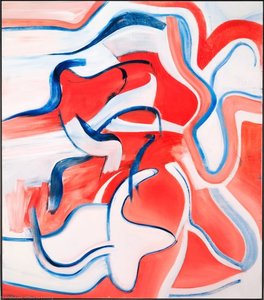
- She developed a distinctive style characterized by vibrant colors, organic abstract shapes, and intricate patterns of circles and lines.
- Her post-Gutai paintings often referenced earlier motifs from her Electric Dress and Bell series, demonstrating a continuous exploration of recurring themes.
- These works showcased a refined sense of composition and color harmony, solidifying her reputation as a significant figure in Japanese abstract art.
Legacy and Historical Significance
- Atsuko Tanaka's work has gained increasing recognition internationally since the early 2000s, with major retrospectives held at prestigious institutions like the Grey Art Gallery (New York) and the Morris and Helen Belkin Art Gallery (Vancouver).
- Her contributions to Gutai and her innovative use of materials have cemented her place in art history as a pioneer of performance art and abstract expressionism.
- Tanaka's Electric Dress remains an iconic symbol of postwar Japanese culture, reflecting themes of urbanization, technology, and the evolving role of women in society.
- Her work continues to inspire contemporary artists and scholars interested in exploring the intersection of art, performance, and everyday life.

Atsuko Tanaka
1932 - 2005 , Japan
Основные сведения
- Artistic Movement Or Style: Avant-garde, Gutai
- Artists Or Movements Influenced By This Artist: ['Performance art']
- Artists Who Influenced This Artist:
- Jiro Yoshihara
- Akira Kanayama
- Date Of Birth: February 10, 1932
- Date Of Death: December 3, 2005
- Full Name: Atsuko Tanaka
- Nationality: Japanese
- Notable Artworks:
- Work (Bell)
- Electric Dress
- Work (Pink Rayon)
- Place Of Birth: Osaka, Japan



