

.

§ 1Данные каталога
§ 2Абстракция
Биография художника
Explore the evocative works of Conrad Kiesel (1846-1921), a Düsseldorf artist known for his captivating scenes of daily life & exotic locales, including 'The Lesson' & 'Manuela'.
.
Explore the evocative works of Conrad Kiesel (1846-1921), a Düsseldorf artist known for his captivating scenes of daily life & exotic locales, including 'The Lesson' & 'Manuela'.

1846 - 1921, Germany
In the grand tapestry of nineteenth-century European art, certain threads shimmer with a subtle, enduring luster, even if they are not always the most boisterous. Conrad Kiesel (1846–1921) was such a thread. A master of the Düsseldorf school, Kiesel possessed an extraordinary ability to capture the fleeting essence of a moment, transforming ordinary scenes into profound meditations on light, texture, and human emotion. Born in Düsseldorf to the artist Karl Kiesel, Conrad was immersed in a world where the precision of academic training met the burgeoning romanticism of the era. His early years were shaped by the rigorous atmosphere of the Düsseldorf Academy, an institution that would provide him with the technical foundation necessary to navigate the complexities of realism and genre painting.
The trajectory of Kiesel’s artistry was significantly molded by his mentorship under the Norwegian landscape painter Anton Melbye. From Melbye, Kiesel inherited a deep reverence for atmospheric perspective and the delicate interplay of light and shadow. This influence is palpable in his more expansive works, where the air itself seems to possess weight and color. Yet, while he could command the vastness of a landscape, Kiesel found his most intimate expression within the confines of the interior and the human form. He became a celebrated chronicler of the Victorian era’s social nuances, specializing in salon paintings that depicted young girls and society ladies with a grace that felt both timeless and deeply rooted in the customs of his day.
To observe a Kiesel canvas is to enter a space of quiet contemplation. His technique was characterized by a meticulous attention to detail that never descended into mere clinical observation; rather, every brushstroke served the higher purpose of mood. In works such as ‘The Lesson’, one can almost feel the stillness of the classroom, where the soft, filtered light illuminates the scholarly focus of his subjects, creating an atmosphere of tranquil intellectualism. His palette was often muted, favoring tonal harmonies that allowed the textures of fabric, wood, and skin to emerge with lifelike vitality.
This technical prowess extended into his fascination with the natural world. Kiesel’s interest in botanical illustration breathed a unique life into his portraiture. In ‘Manuela’, for instance, the artist demonstrates a remarkable ability to marry psychological depth with physical precision. The delicate rendering of a floral robe is not merely a display of skill but a deliberate exploration of beauty and character, reflecting the nineteenth-century preoccupation with the organic elegance of nature. His ability to weave botanical accuracy into the fabric of his portraits allowed him to imbue his subjects with a sense of vitality that felt both grounded in reality and elevated by art.
As Kiesel’s career progressed, he moved beyond the traditional boundaries of his training, eventually settling in Berlin in 1885. This transition allowed him to engage with a broader, more cosmopolitan audience, further cementing his reputation as a premier painter of genre scenes and portraits. While some might categorize him strictly within the realm of German Romanticism, his work bridges the gap between the academic traditions of the past and the burgeoning realism that would define much of late nineteenth-century art.
The historical significance of Conrad Kiesel lies in his ability to capture the soul of an era through its most delicate details. He did not seek to shock or disrupt, but rather to refine and reveal. His legacy is found in:
Though he may remain a more obscure figure compared to the titans of Impressionism, Kiesel’s work offers a vital window into the sensibilities of the Victorian age. He remains an artist for those who find beauty in the understated, the meticulously rendered, and the profound peace found within a single, perfectly captured moment.

AllPaintingsStore.com, “Conrad Kiesel, At the window”, https://allpaintingsstore.com/ru/art/conrad-kiesel-at-the-window-9GZL59-en/ (дата обращения 13 Октябрь 2026).
Картина маслом на холсте в выбранном вами размере и раме, написанная на заказ нашими художниками. ( Перейти к печатным копиям Перейти к цифровым изображениям)
Это указано на полях заказного листа; текущее состояние этого листа выглядит следующим образом.
At the window
Размер репродукции
Более высокая детализация, изысканность и дополнительное время на создание работы
-
Для произведений искусства или репродукций, размер которых превышает 105 см (приблизительно 41 дюйм) по любой из сторон, рама будет доставлена в разобранном виде (в виде комплекта). Этот метод обеспечивает безопасную доставку и предотвращает повреждения при транспортировке.
Требуется профессиональная сборка — это не продукт для самостоятельной сборки (DIY).
Комплект должен быть собран, а холст натянут опытным мастером по багетным рамам с использованием клеевого ПВА (не входит в комплект), струбцин для натяжки холста и зажимов, чтобы удерживать подрамник ровным до полного высыхания клея. Неправильная сборка или неравномерное натяжение холста могут привести к необратимому повреждению произведения искусства и не являются гарантийным случаем.
В комплект входят все бруски из массива дерева, точно вырезанные по размеру.
Собирается с помощью предоставляемых винтов, а также столярного клея для угловых соединений, который не входит в комплект и должен быть приобретен вашим мастером.
Требуются профессиональные инструменты, не входящие в комплект: щипцы для натяжки холста (натяжитель) и зажимы, чтобы удерживать рейки ровно во время высыхания клея.
Важно:
Для соединения углов требуется клей для дерева, перекладины необходимо зафиксировать струбцинами до полного высыхания клея, а для натяжки холста на собранную раму требуются щипцы для натяжки холста. Ни один из этих инструментов не входит в комплект. Пожалуйста, убедитесь в наличии опытного мастера по багетным работам перед заказом рамы такого размера.
-
Глянцевый лак (насыщает цвета, защищает от воздействия света и влаги)
Примеры возможных изменений: замена лица на фото клиента; добавление домашнего питомца (например, замена кошки на собаку); добавление скрытого сообщения на фоне; изменение пейзажа или элементов фона.
Доставка по всему миру () за 3–4 недели вместо стандартных 5 недель. (10 Ноябрь). Без компромиссов в качестве.
Доставка по всему миру () в течение 5 недель. (17 Ноябрь).
Включено в каждый заказ

Explore the evolution of cityscape painting from historical maps to Impressionist masterpieces. Discover artists like Caillebotte, Utrillo & Matsumoto Shunsuke. Find museum-quality reproductions at AllPaintingsStore.
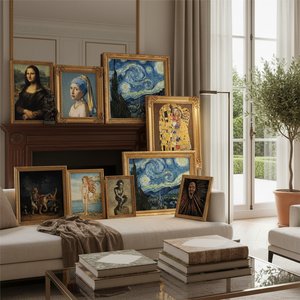
Погрузитесь в мир классического искусства! Откройте для себя 10 шедевров живописи – от Ван Гога до Моне. Узнайте истории художников, техники и вдохновение для создания элегантного интерьера с репродукциями картин на AllPaintingsStore.com.
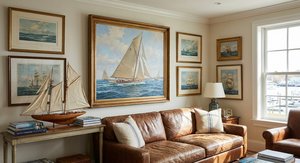
Откройте для себя 10 величайших шедевров искусства о лодках! Узнайте истории Ван Гога, Моне и других художников. Репродукции картин высокого качества для вашего интерьера на AllPaintingsStore.com.

Explore the captivating world of Dutch Golden Age still life with Abraham van Beyeren. Discover his innovative techniques, symbolic banquet scenes & lasting influence on art history. Learn about collecting these masterpieces.
 Читать далее


 Для произведений искусства или репродукций, размер которых превышает 105 см (приблизительно 41 дюйм) по любой из сторон, рама будет доставлена в разобранном виде (в виде комплекта). Этот метод обеспечивает безопасную доставку и предотвращает повреждения при транспортировке.


