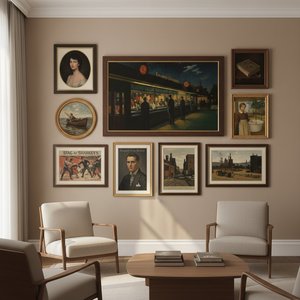
1933. Acrylic On Canvas, 92.0 x 127.0 cm.

§ 1Данные каталога

- 92.0 x 127.0 cm


Данное произведение защищено авторским правом
Произведение искусства, представленное на этой странице, защищено законом об авторском праве, что исключает возможность законного создания или продажи его точной репродукции. Данная защита обеспечивается международными соглашениями, такими как Бернская конвенция и национальным законодательством, включая положения, изложенные в Закон США об авторском праве — Раздел 17.
В качестве достойной и законной альтернативы мы предлагаем авторские картины ручной работы, вдохновленные оригиналом. Наши опытные профессиональные художники тщательно изучают стиль, настроение и художественную суть оригинала, чтобы создать новое, уникальное произведение, которое вызывает те же чувства, оставаясь при этом самостоятельным оригинальным творением.
Этот метод полностью соответствует нормам авторского права, так как он не предполагает копирования или дублирования защищенного произведения. Напротив, это творческая реинтерпретация — создание новой картины, которая вдохновлена оригиналом, но не является его точной копией.
 Узнать больше
§ 2Абстракция
Описание предмета коллекционирования
Биография художника
Эдвард Хоппер: Мастер американского реализма, передающий тишину и городскую жизнь через тонкое использование света и тени. Откройте для себя его культовые картины, такие как Нighthawks и Дом у железнодорожного пути.
§ 3Комментарий
A Portrait of Rural Isolation – Edward Hopper’s Ryder’s House
Edward Hopper’s “Ryder’s House,” completed in 1933, stands as a quintessential emblem of American Realism during the Depression era. More than just a depiction of a simple farmhouse nestled within a tranquil field, it's a masterful exploration of solitude and unspoken emotion—themes that would become hallmarks of Hopper’s oeuvre and continue to resonate with audiences today.
- Subject Matter: The painting centers around a modest white house adorned with a vibrant red door, positioned prominently in the middle of an expansive expanse of grass. Two chimneys punctuate the roofline on either side, anchoring the composition while simultaneously emphasizing the building’s isolation against the vastness of nature.
- Style: Hopper's signature style—characterized by stark lighting and geometric precision—is evident throughout “Ryder’s House.” The artist eschews dramatic narratives or exuberant color palettes, opting instead for a restrained aesthetic that prioritizes observation and psychological depth. This deliberate simplicity serves to heighten the painting’s emotional impact.
- Technique: Executed in oil on canvas, Hopper employs meticulous brushwork—often subtle and blended—to capture the textures of the house’s surfaces and the muted tones of the surrounding landscape. The artist skillfully utilizes chiaroscuro – the interplay between light and shadow – to sculpt form and convey a sense of stillness and melancholy.
Historical Context: Depression-Era America
Painted during the Great Depression, “Ryder’s House” reflects the pervasive anxieties and uncertainties of the time. Hopper's depiction of rural life—characterized by quiet desperation and unspoken longing—captures a mood that mirrored the experiences of many Americans grappling with economic hardship and social displacement. The painting speaks to a broader cultural preoccupation with themes of alienation and detachment.
Symbolism: Light, Shadow, and Absence
The dominant use of light in “Ryder’s House” is particularly significant. Hopper illuminates the interior space with a cool, diffused glow that casts long shadows across the walls—creating an atmosphere of profound stillness and hinting at hidden narratives. The absence of human figures contributes to the painting's sense of isolation, prompting viewers to contemplate the unspoken emotions conveyed by the scene.
Emotional Impact: A Meditation on Loneliness
"Ryder’s House" transcends mere visual representation; it invites contemplation and introspection. Hopper’s masterful composition—coupled with his subtle manipulation of light and shadow—elicits a feeling of melancholy and yearning, capturing the essence of human experience in its most vulnerable form. It remains a powerful reminder that beauty can reside in quietude and that art possesses the capacity to illuminate the complexities of the human condition.
Вопросы и ответы
Насколько выражен светотеневой контраст в работе «Ryder's House»?
Светотеневой контраст произведения «Ryder's House» составляет Bold. Контраст определяет степень различия между светлыми и темными участками.
Кто создал(а) «Ryder's House» и в каком году?
Эдвард Хоппер, Ryder's House, 1933 год
К какому художественному направлению относится «Ryder's House», Эдвард Хоппер?
Художественное направление, к которому относится «Ryder's House», Эдвард Хоппер, — это Contemporary Realism. Такая классификация позволяет соотнести данную работу с другими произведениями и мастерами того же периода.


 Перейти к печатным копиям


 Для произведений искусства или репродукций, размер которых превышает 105 см (приблизительно 41 дюйм) по любой из сторон, рама будет доставлена в разобранном виде (в виде комплекта). Этот метод обеспечивает безопасную доставку и предотвращает повреждения при транспортировке.