Гарантия возврата средств · 100 дней Бесплатная доставка по всему миру
449 587произведения искусства 30 613художники 4 660музеи 32языки
Валюта
    Язык
      Ателье · Осн. в 2015 г. · Париж, Франция
      AllPaintingsStore
      allpaintingsstore.com
      Catalogue entry

      untitled (7630)

      Acrylic On Canvas.

      Fig. 1. Шиле, untitled (7630). Shown as the reproduction you are specifying: , .

      § 1Catalogue data

      § 2Abstract

      Описание предмета

      Explore Egon Schiele’s haunting ‘Untitled (7630)’ – a black & white depiction of a house, steeple, and clock, reflecting his Expressionist themes of mortality and the modern condition. A timeless masterpiece.

      Биография художника

      Эгон Шиле – экспрессионист, чьи работы полны тревоги и страсти. Его портреты, автопортреты и символические пейзажи исследуют границы человеческого существования. Откройте для себя мир Шилля!

      § 3Commentary

      A Stark Portrait of Isolation: Unveiling Egon Schiele's "Untitled (7630)"

      Egon Schiele’s “Untitled (7630),” a deceptively simple black and white composition, is far more than a depiction of a modest house with a steeple. It’s a concentrated distillation of anxiety, mortality, and the profound loneliness that permeated the artist's life and work. Created around 1912-1914, during a period of intense personal turmoil and artistic experimentation, this painting offers a haunting glimpse into Schiele’s psychological landscape – a world where architectural solidity clashes with an underlying sense of unease. The photograph itself presents a stark, almost photographic quality, emphasizing the textures of the building materials and the subtle shifts in light and shadow, lending it a timelessness that belies its intensely personal origins.

      Architectural Echoes and Symbolism’s Weight

      The scene is dominated by a modest dwelling, its yellow roof a small beacon of warmth against the muted tones. The presence of multiple chimneys speaks to both domesticity and perhaps a hint of confinement – a suggestion that this space, while providing shelter, also holds within it a sense of restriction. A clock hangs prominently on the wall, an insistent reminder of time’s relentless march, further amplifying the painting's themes of mortality and the fleeting nature of existence. The steeple in the background, a traditional symbol of faith and stability, seems oddly isolated, almost dwarfed by the surrounding structures, mirroring the protagonist’s own feeling of being adrift. Schiele frequently employed architectural elements to explore themes of confinement and isolation, using them as visual metaphors for the psychological states he sought to capture.

      • The House: Represents stability, but also potential entrapment.
      • The Steeple: Symbolizes faith and tradition, juxtaposed with the painting’s overall sense of unease.
      • The Clock: A potent symbol of time's passage and the inevitability of death.

      Schiele’s Expressionist Vision – Line and Emotion

      Executed in a monochrome palette, “Untitled (7630)” exemplifies Schiele’s signature style: bold, expressive lines that convey raw emotion rather than precise representation. The artist's use of line is particularly striking—thick, gestural strokes define the contours of the buildings and create a sense of dynamism within the static composition. This technique, deeply rooted in Expressionism, allows him to imbue the scene with an almost palpable feeling of tension and vulnerability. Schiele’s meticulous attention to detail, particularly in rendering the textures of the walls and roof tiles, adds another layer of complexity to the work, highlighting the contrast between the rough materiality of the buildings and the underlying emotional turmoil.

      A Window into a Troubled Soul

      Born in Vienna in 1890, Egon Schiele’s life was tragically short, cut short by illness and war. His early exposure to loss—the deaths of his father and sister—deeply impacted his artistic vision, fueling an obsession with mortality and the fragility of human existence. “Untitled (7630)” can be interpreted as a reflection of this personal experience, capturing a sense of isolation and vulnerability that resonates powerfully across time. The painting’s quiet intensity invites viewers to contemplate the darker aspects of the human condition—the anxieties, fears, and uncertainties that lie beneath the surface of everyday life. Reproductions of this work offer a unique opportunity to engage with Schiele's intensely personal vision, allowing us to connect with his emotional world on a profound level.

      To explore more about Egon Schiele’s life and art, we encourage you to visit the artwork database or discover the Egon Schiele Art Centrum in Český Krumlov.

      Вопросы и ответы

      Для какого использования и в каком пространстве рекомендуется размещать «untitled (7630)», Шиле?

      Для «untitled (7630)», Шиле указаны две рекомендации по использованию (Statement) и размещению в пространстве (Living Room).

      Является ли «untitled (7630)», Шиле одним из самых востребованных произведений в стиле Expressionism?

      «untitled (7630)», Шиле классифицируется как Recognized и относится к направлению Expressionism.

      К какому стилю относится «untitled (7630)»?

      «untitled (7630)», Шиле относится к направлению Expressionism. Это направление определяет стилистический контекст произведения.
      § 4The artist

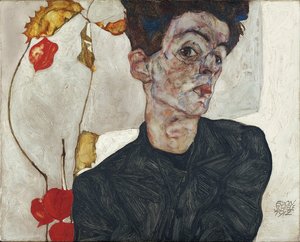
      Шиле

      Шиле

      1890 - 1918, Австрия

      Quick facts about Шиле

      • Artistic Movement Or Style: Экспрессионизм
      • Artists Or Movements Influenced By This Artist: ['Экспрессионизм']
      • Artists Who Influenced This Artist: ['Густав Климт']
      • Date Of Birth: 1890
      • Date Of Death: 1918
      • Full Name: Egon Leo Adolf Ludwig Schiele
      • Nationality: Австриец
      • Notable Artworks:
        • Автопортрет с физиалисом
        • Пара обнимаются
        • Полевая панорама (Крُمáу)
      • Place Of Birth: Тюльн, Австрия

      Биография художника

      A Life Forged in Expression

      Egon Schiele, born in Tulln an der Donau in 1890 – a town nestled amidst the rolling hills and vineyards of Austria – embarked on a life that was both intensely creative and profoundly marked by personal tragedy. His early years were shadowed by illness and loss; his father, Adolf Eugen Schiele, succumbed to syphilis when Egon was just fourteen, a devastating event that would indelibly shape the artist’s perspective and fuel an enduring preoccupation with mortality and the fragility of human existence. Raised initially by his mother and later under the somewhat controlling guardianship of his uncle Leopold Czihaczek, Schiele's childhood lacked the stability often associated with conventional upbringing, yet it fostered within him a remarkable independence of spirit – a characteristic that would become central to his artistic approach. Even as a young boy, he displayed an undeniable fascination with trains—a motif that subtly and repeatedly reappeared in his paintings, symbolizing both movement and perhaps, the relentless passage of time. Alongside this burgeoning interest in trains, Schiele cultivated a talent for drawing, though it was initially met with reservations from his father who viewed artistic pursuits as a distraction from more practical endeavors. The untimely death of his sister Elvira further deepened the emotional landscape of his youth, contributing to a sense of vulnerability and loss that would permeate much of his work. These formative experiences—a confluence of illness, grief, and familial constraints—instilled within Schiele a profound sensitivity and an emotional rawness that became defining features of his artistic expression, driving him to grapple with the fundamental questions of life, death, and the human condition.

      The Crucible of Vienna: Artistic Development

      Schiele’s formal artistic training commenced at the Kunstgewerbeschule (School of Arts and Crafts) in Vienna, but he quickly found himself stifled by its conservative curriculum and adherence to traditional methods. Seeking a more liberating environment, he transferred to the Akademie der bildenden Künste (Academy of Fine Arts), only to discover that even this institution failed to satisfy his artistic aspirations. The rigid academic traditions and restrictive approach left him feeling disillusioned, leading him to abandon formal training altogether in favor of forging his own path—a bold decision that underscored his unwavering conviction in his artistic vision. Crucially, Schiele’s early years were profoundly influenced by the work of Gustav Klimt, a celebrated figure of Viennese Secessionism. He admired Klimt's distinctive decorative style and his exploration of symbolism, even receiving mentorship from the established artist. However, Schiele soon diverged significantly from Klimt’s aesthetic, developing a uniquely personal style characterized by its stark honesty, psychological intensity, and unflinching portrayal of human vulnerability. This divergence was further solidified through his involvement in the *Neues Wiener Kunstgruppe* (New Viennese Art Group), an avant-garde collective that challenged prevailing artistic norms and embraced innovative approaches to artmaking. The group, comprised of artists like Anton Faistauer and Hans Ehrlich, provided a space for Schiele to experiment with new techniques and explore unconventional themes, solidifying his position as a leading figure in the burgeoning modern art scene of Vienna.

      Raw Emotion and Unflinching Truth

      Egon Schiele’s art is immediately recognizable for its raw honesty and psychological depth. He fearlessly confronted subjects often considered taboo – sexuality, death, anxiety, isolation – with an unflinching gaze. His distinctive style features elongated figures, contorted poses, and expressive lines that convey a sense of unease and emotional intensity. The human form, particularly the nude, became his primary subject, not as an object of idealized beauty but as a vehicle for exploring the complexities of human experience. Self-portraits constitute a significant portion of his oeuvre, offering intimate glimpses into his inner world—a world often marked by loneliness and self-doubt. He didn’t shy away from depicting himself in unflattering or vulnerable poses, revealing a profound level of self-awareness and introspection. Beyond self-portraiture, Schiele created numerous portraits of others, capturing their likenesses with an unsettling realism that seemed to penetrate beneath the surface. His landscapes, while less central to his work than his figurative paintings, demonstrate his mastery of form and color, often reflecting the same emotional intensity as his portraits. Recurring motifs like the *Physalis* plant – symbolizing death and transience with its delicate, papery husk – further underscore this preoccupation with mortality. The use of line is particularly striking in Schiele’s work; it's not merely a tool for defining shape but an expressive force that conveys emotion and psychological tension.

      A Legacy Cut Short: Achievements & Significance

      Despite facing censorship and legal challenges—including a brief imprisonment for allegedly corrupting minors with his art—Schiele gained recognition within Vienna’s avant-garde circles. His work challenged the conventions of the time, provoking both admiration and outrage. By the time of his untimely death during the Spanish flu pandemic in 1918 at the age of twenty-eight, he had established himself as a leading figure in Austrian Expressionism. Significant works such as *Self-Portrait with Physalis*, *Couple Embracing*, and *Field Landscape (Kreuzberg near Krumau)* stand as testaments to his artistic genius. His influence on subsequent generations of artists is undeniable, particularly those interested in exploring psychological themes and challenging conventional artistic norms. Schiele’s bold approach to form and subject matter continues to resonate with audiences today, making him one of the most important and influential figures in early 20th-century art. His paintings are now held in major museum collections worldwide, including the Leopold Museum in Vienna and the Egon Schiele Art Centrum in Český Krumlov, ensuring his artistic legacy endures. He left behind a body of work that is not merely aesthetically compelling but profoundly human—a testament to the power of art to confront the complexities of existence with honesty, courage, and unwavering vision.
      • Key Themes: Mortality, sexuality, isolation, psychological turmoil.
      • Influences: Gustav Klimt, Viennese Secession, personal trauma.
      • Style Characteristics: Elongated figures, contorted poses, expressive lines, raw emotion.

      § 5Comparanda

      § 6Questions

      Краткая справка

      • Notable elements: House, steeple, clock
      • Location: WahooArt.com
      • Medium: Black & White
      • Artistic style: Bold lines, intense
      • Movement: Expressionism

      Викторина по искусству

      В каждом вопросе только один правильный ответ.

      Вопрос 1:
      What is the dominant visual element in this black and white image?
      Вопрос 2:
      The presence of multiple chimneys in the image suggests which artistic style or theme?
      Вопрос 3:
      Egon Schiele was primarily associated with which artistic movement?
      Вопрос 4:
      Considering Egon Schiele's biography, what likely influenced his recurring themes of mortality and fragility?
      Вопрос 5:
      What is a key characteristic of Schiele's artistic style, evident in this image?

      § 7Cite this entry

      AllPaintingsStore.com, “Шиле, untitled (7630)”, https://allpaintingsstore.com/ru/art/egon-schiele-untitled-7630-9GEUBM-en/ArtistReproduction/ (accessed 2 Октябрь 2026).

      § 8The reproduction

      Масляная репродукция ручной работы

      Картина маслом на холсте в выбранном вами размере и раме, написанная на заказ нашими художниками. ( Переключиться на печать Перейти к цифровым изображениям)

      It is specified on the order sheet in the margin; the present state of that sheet reads as follows.

      untitled (7630)

      Материал репродукции

      Размер репродукции

      -

      Ведущий мастер элитного уровня

      Более высокая детализация, изысканность и дополнительное время на создание работы

      -

      Рама для репродукции

      -

      -

      Для произведений искусства или репродукций, размер которых превышает 105 см (приблизительно 41 дюйм) по любой из сторон, рама будет доставлена в разобранном виде (в виде комплекта). Этот метод обеспечивает безопасную доставку и предотвращает повреждения при транспортировке.

      Требуется профессиональная сборка — это не продукт для самостоятельной сборки (DIY).
      Комплект должен быть собран, а холст натянут опытным мастером по багетным рамам с использованием клеевого ПВА (не входит в комплект), струбцин для натяжки холста и зажимов, чтобы удерживать подрамник ровным до полного высыхания клея. Неправильная сборка или неравномерное натяжение холста могут привести к необратимому повреждению произведения искусства и не являются гарантийным случаем.

      • В комплект входят все бруски из массива дерева, точно вырезанные по размеру.

      • Собирается с помощью предоставляемых винтов, а также столярного клея для угловых соединений, который не входит в комплект и должен быть приобретен вашим мастером.

      • Требуются профессиональные инструменты, не входящие в комплект: щипцы для натяжки холста (натяжитель) и зажимы, чтобы удерживать рейки ровно во время высыхания клея.

      Важно:
      Для соединения углов требуется клей для дерева, перекладины необходимо зафиксировать струбцинами до полного высыхания клея, а для натяжки холста на собранную раму требуются щипцы для натяжки холста. Ни один из этих инструментов не входит в комплект. Пожалуйста, убедитесь в наличии опытного мастера по багетным работам перед заказом рамы такого размера.

      Экспликация

      -

      -

      Защитный лак

      Глянцевый лак (насыщает цвета, защищает от воздействия света и влаги)

      -

      Настроить мою картину

      Примеры возможных изменений: замена лица на фото клиента; добавление домашнего питомца (например, замена кошки на собаку); добавление скрытого сообщения на фоне; изменение пейзажа или элементов фона.

      -

      Срочно

      Доставка по всему миру () за 3–4 недели вместо стандартных 5 недель. (30 Октябрь). Без компромиссов в качестве.

      -

      Экспресс-доставка

      Доставка по всему миру () в течение 5 недель. (6 Ноябрь).

      Включено

      Итоговая стоимость

      $ 258

      Included with every order

      • Бесплатная экспресс-доставка по всему миру
      • Высококачественный льняной холст
      • Полное страхование при транспортировке
      • Гарантия возврата таможенных пошлин
      • Гарантия точного цветового соответствия
      • 100-дневный период возврата (только при обнаружении дефектов)
      • Гарантия возврата 100% средств
      • Скидка при заказе нескольких работ
      Order sheet