Гарантия возврата средств · 100 дней Бесплатная доставка по всему миру
449 564произведения искусства 30 613художники 4 660музеи 32язык
Запись в каталоге

San Pablo 4

Oil On Canvas.

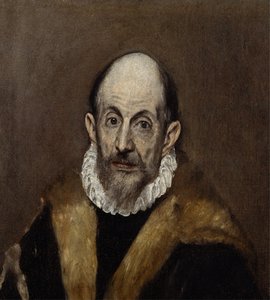
Рис. 1. Эль Греко, San Pablo 4. Показано в виде выбранной вами репродукции: , .

§ 1Данные каталога

§ 2Абстракция

Описание предмета коллекционирования

Explore El Greco’s ‘San Pablo 4’! A dramatic Baroque portrait featuring chiaroscuro lighting & intense emotion. Discover this masterpiece's spiritual depth & unique style.

Биография художника

Погрузитесь в мир Э Греко! Драматичные картины, длинные фигуры и экспрессивное использование света – гений испанского маньеризма вдохновил художников XX века и продолжает восхищать зрителей.

§ 3Комментарий

A Vision of Faith: The Spiritual Intensity of San Pablo 4

In the quiet, shadowed corners of art history, few figures command the room with as much profound gravity as El Greco’s San Pablo 4. This compelling portrait, widely believed to depict Saint Paul the Apostle, offers more than a mere likeness; it provides an intimate and reverent encounter with a soul in contemplation. The composition focuses intently on the figure from the waist up, pulling the viewer into a private moment of spiritual reflection. By utilizing a dark, undefined background, El Greco masterfully isolates the subject, stripping away the distractions of the material world to emphasize Paul’s inner spiritual presence. His gaze, directed slightly off-center, does not demand the viewer's attention through confrontation but rather invites a shared state of quiet meditation.

The painting serves as a breathtaking exemplar of the Baroque spirit, yet it is infused with the unmistakable, idiosyncratic voice of El Greco. While the work utilizes the dramatic chiaroscuro—the powerful interplay of light and shadow—characteristic of the era, it diverges from the typical exuberance found in many Baroque masterpieces. Instead, El Greco favors elongated forms and an intense emotionality that borders on the mystical. His figures are not merely anatomical representations; they are vessels of profound faith and inner turmoil. For the collector or interior designer, this piece brings a sense of dignified solemnity and intellectual depth to any space, acting as a window into a period where art and divinity were inextricably linked.

Mastery of Technique and the Byzantine Legacy

The technical execution of San Pablo 4 reveals the hand of a master who had synthesized the traditions of the East and West. Having been trained in the meticulous Byzantine tradition of Crete, El Greco brought a unique understanding of iconography to his later works in Spain. This is evident in the way he uses visible, textured brushstrokes to build volume within the rich drapery of Paul’s cloak. The layering of oil on canvas creates a luminous depth, allowing light to seemingly emerge from within the fabric itself. This technique lends a sense of realism to the textures while maintaining the stylized, ethereal aesthetic that defines his mature period.

The use of color and line further enhances the painting's emotional resonance. The palette is predominantly warm, creating an atmosphere of intensity and drama that contrasts sharply with the deep, enveloping shadows. Lines are used with precision to define the contours of the weathered face, the flowing beard, and the heavy folds of the clothing, providing a structural strength that anchors the more fluid, organic shapes. For those seeking to incorporate fine art into a curated environment, the painting’s ability to balance dramatic light with grounded, tactile textures makes it an extraordinary focal point for sophisticated decor.

Symbolism and the Eternal Echo of Devotion

Beyond its formal beauty, San Pablo 4 is rich with symbolic weight. The inclusion of a book—likely representing scripture or one of Paul’s influential epistles—is central to the narrative, signifying his role as an apostle and a teacher of wisdom. This element transforms the portrait from a simple study of a man into a tribute to the power of the written word and the endurance of faith. The painting evokes themes of wisdom, devotion, and the heavy responsibility of spiritual leadership.

As a precursor to both Expressionism and Cubism, El Greco’s work continues to resonate with modern sensibilities. His ability to capture the fragmentation of the human spirit through distorted forms and dramatic lighting ensures that his masterpieces remain timeless. Owning or displaying a high-quality reproduction of this work allows one to inhabit a space characterized by historical significance and spiritual depth, offering a constant source of inspiration and a profound connection to the golden age of Spanish art.

Вопросы и ответы

Можно ли примерить «San Pablo 4», Эль Греко на свою стену перед покупкой?

Вы можете примерить работу «San Pablo 4», Эль Греко на свою стену с помощью страницы Просмотр в AR, используя технологию дополненной реальности на совместимом устройстве.

Что изображено на картине «San Pablo 4», Эль Греко?

Темы, представленные в «San Pablo 4», Эль Греко, включают portrait, religious, apostle, chiaroscuro, spirituality, faith, baroque, symbolism. Вместе они раскрывают основной сюжет произведения.

«San Pablo 4», Эль Греко — это светлое или темное произведение искусства?

С точки зрения воспринимаемой яркости, «San Pablo 4», Эль Греко — это deep_shadow.
§ 4Автор работы

Эль Греко

Эль Греко

1541 - 1614, Греция

Краткая информация об авторе: Эль Греко

  • Artistic Movement Or Style: Маньеризм, Барокко
  • Artists Or Movements Influenced By This Artist:
    • Экспрессионизм
    • Кубизм
  • Artists Who Influenced This Artist:
    • Тициан
    • Тинторетто
  • Date Of Birth: 1541 г.
  • Date Of Death: 1614 г.
  • Full Name: Доминикс Феотокóпулос
  • Nationality: Греко-Испанский
  • Notable Artworks:
    • Положение Графа Оргаза
    • Вид Толедо
    • Одевание Христа
  • Place Of Birth: Крета, Греция

Биография художника

Doménikos Theotokópoulos, Known As El Greco – A Pioneer Of Expressionism And Cubism

Doménikos Theotokópoulos, universally recognized as El Greco – “the Greek” – stands apart in the annals of Western art history. Born in Crete, Greece, around 1541, his artistic journey traversed Venice and Rome before finding its definitive expression in the spiritual crucible of Toledo, Spain. He wasn’t merely a product of these locations; he synthesized their diverse influences into an unparalleled style that foreshadowed the emotional fervor of Expressionism and the fragmented forms of Cubism centuries ahead of time. His formative years within the Byzantine tradition instilled in him meticulous attention to detail and a profound understanding of religious iconography – principles that would permeate his entire oeuvre.

Early Training And Venetian Influence

El Greco’s artistic education began in Crete, where he absorbed the stylistic conventions of Byzantium—characterized by serene compositions, stylized figures, and luminous colors. However, his relocation to Venice around 1567 irrevocably altered his trajectory. Immersed in the bustling artistic milieu of the Serenissima Republic, he encountered titans of Venetian painting – Titian, Tintoretto, Veronese – absorbing their mastery of color palettes, compositional strategies, and dramatic lighting techniques. He deliberately loosened his brushwork, embracing the sensual qualities of oil paint and experimenting with dynamic poses that departed from traditional Byzantine conventions. This Venetian influence is palpable in early masterpieces like *St. Sebastian* (1600), where anatomical accuracy harmoniously blends with theatrical illumination—a testament to El Greco’s ability to synthesize disparate artistic traditions.

Roman Exposure And Mannerist Style

A subsequent pilgrimage to Rome exposed him to Mannerism, a stylistic movement that prioritized elongated figures, distorted perspectives, and sophisticated compositional arrangements. While he demonstrated considerable talent within the Roman art world – attracting commissions from prominent patrons – El Greco struggled to gain widespread acclaim amidst the competitive landscape of Florentine artistic circles. Despite facing challenges in establishing himself as a celebrated artist during his formative years, his unwavering dedication to experimentation and innovation would ultimately propel him toward his singular artistic vision.

Toledo And Spiritual Expression

El Greco’s final artistic home was Toledo, Spain—a city steeped in religious fervor during the Counter-Reformation. This environment fostered both patronage and an atmosphere conducive to exploring themes of spirituality and transcendence. It was here that he achieved his most profound artistic breakthroughs, producing works imbued with a palpable sense of emotional intensity and visionary grandeur. His distinctive style – characterized by elongated figures bathed in ethereal light—became synonymous with the expressive power of Mannerism and foreshadowed the stylistic innovations of Expressionism and Cubism. Consider *The Burial of the Count of Orgaz* (1586-1588), a monumental painting that exemplifies El Greco’s masterful blending of Byzantine tradition and Venetian realism. The depiction of a miraculous event—the descent of saints to bury a nobleman—captures the sublime beauty of religious devotion while simultaneously conveying an overwhelming sense of spiritual awe.

Legacy And Recognition

El Greco's artistic legacy extends far beyond his lifetime, resonating powerfully with artists across subsequent eras. His pioneering use of elongated figures and dramatic lighting captivated contemporaries like Picasso and Braque, who recognized him as a precursor to modern art—particularly Cubism—admiring his unconventional perspectives and stylistic boldness. Furthermore, El Greco’s emotive style found kinship with Expressionist painters who sought to convey profound psychological states through vibrant colors and forceful brushstrokes. Today, El Greco is revered as one of the most influential figures in Western art history—a visionary painter whose oeuvre continues to inspire awe and contemplation, securing his place among the titans of artistic innovation and spiritual expression. His paintings remain enduring symbols of faith, emotion, and the boundless capacity of human imagination.

§ 5Сравнимые работы

§ 6Вопросы

Основные сведения

  • title: San Pablo 4
  • artist: El Greco (Doménikos Theotokopoulos)
  • influences: Mannerism, Venetian Renaissance (Tintoretto, Titian)

Тест на знание искусства

В каждом вопросе только один правильный ответ.

Вопрос 1:
What artistic style is 'San Pablo 4' most closely associated with?
Вопрос 2:
A defining characteristic of 'San Pablo 4', as described, is the use of what lighting technique?
Вопрос 3:
Based on the description, who is the likely subject depicted in 'San Pablo 4'?
Вопрос 4:
Which artists are specifically mentioned as influences on El Greco’s style?

§ 7Как сослаться на эту запись

AllPaintingsStore.com, “Эль Греко, San Pablo 4”, https://allpaintingsstore.com/ru/art/el-greco-san-pablo-4-8EWFV3-en/ArtistReproduction/ (дата обращения 10 Октябрь 2026).

§ 8Репродукция

Масляная репродукция ручной работы

Картина маслом на холсте в выбранном вами размере и раме, написанная на заказ нашими художниками. ( Перейти к печатным копиям Перейти к цифровым изображениям)

Это указано на полях заказного листа; текущее состояние этого листа выглядит следующим образом.

San Pablo 4

Техника репродукции

Размер репродукции

-

Выдающийся мастер высокого класса

Более высокая детализация, изысканность и дополнительное время на создание работы

-

Оформление репродукции

-

-

Для произведений искусства или репродукций, размер которых превышает 105 см (приблизительно 41 дюйм) по любой из сторон, рама будет доставлена в разобранном виде (в виде комплекта). Этот метод обеспечивает безопасную доставку и предотвращает повреждения при транспортировке.

Требуется профессиональная сборка — это не продукт для самостоятельной сборки (DIY).
Комплект должен быть собран, а холст натянут опытным мастером по багетным рамам с использованием клеевого ПВА (не входит в комплект), струбцин для натяжки холста и зажимов, чтобы удерживать подрамник ровным до полного высыхания клея. Неправильная сборка или неравномерное натяжение холста могут привести к необратимому повреждению произведения искусства и не являются гарантийным случаем.

  • В комплект входят все бруски из массива дерева, точно вырезанные по размеру.

  • Собирается с помощью предоставляемых винтов, а также столярного клея для угловых соединений, который не входит в комплект и должен быть приобретен вашим мастером.

  • Требуются профессиональные инструменты, не входящие в комплект: щипцы для натяжки холста (натяжитель) и зажимы, чтобы удерживать рейки ровно во время высыхания клея.

Важно:
Для соединения углов требуется клей для дерева, перекладины необходимо зафиксировать струбцинами до полного высыхания клея, а для натяжки холста на собранную раму требуются щипцы для натяжки холста. Ни один из этих инструментов не входит в комплект. Пожалуйста, убедитесь в наличии опытного мастера по багетным работам перед заказом рамы такого размера.

Этикетка

-

-

Защитный лак

Глянцевый лак (насыщает цвета, защищает от воздействия света и влаги)

-

Персонализация картины

Примеры возможных изменений: замена лица на фото клиента; добавление домашнего питомца (например, замена кошки на собаку); добавление скрытого сообщения на фоне; изменение пейзажа или элементов фона.

-

Экспресс-доставка

Доставка по всему миру () за 3–4 недели вместо стандартных 5 недель. (7 Ноябрь). Без компромиссов в качестве.

-

Экспресс-доставка

Доставка по всему миру () в течение 5 недель. (14 Ноябрь).

Включено в стоимость

Итоговая стоимость

$ 258

Включено в каждый заказ

  • Бесплатная экспресс-доставка по всему миру
  • Высококачественный льняной холст
  • Полное страхование при доставке
  • Гарантия возмещения таможенных пошлин
  • Гарантия точного цветового соответствия
  • 100-дневная гарантия возврата (только при обнаружении дефектов)
  • Гарантия возврата 100% средств
  • Скидка при оптовом заказе
Форма заказа