Гарантия возврата средств · 100 дней Бесплатная доставка по всему миру
449 587произведения искусства 30 613художники 4 660музеи 32языки
Валюта
    Язык
      Ателье · Осн. в 2015 г. · Париж, Франция
      AllPaintingsStore
      allpaintingsstore.com
      Catalogue entry

      untitled (9075)

      Acrylic On Canvas.

      Fig. 1. Франц Марк, untitled (9075). Shown as the reproduction you are specifying: , .

      § 1Catalogue data

      § 2Abstract

      Описание предмета

      Franz Marc’s untitled (9075) bursts with vibrant color and spirit, depicting a dynamic scene of animals set within the German Expressionist style. Explore this captivating artwork and discover its profound connection to nature and spiritual seeking.

      Биография художника

      Фрэнк Марк (1880-1916) – немецкий экспрессионист, известный своими яркими живописными лошадьми и сине-голубым «Голубым Рейдером». Его работы полны духовности и символизма.

      § 3Commentary

      Franz Marc’s ‘Untitled (9075)’ – A Symphony of Spirit

      This captivating artwork, tentatively titled ‘Untitled (9075)’, offers a profound glimpse into the artistic soul of Franz Marc, one of the most significant figures in early 20th-century German Expressionism. Painted during a period of intense spiritual searching and burgeoning artistic innovation, the piece embodies Marc’s core philosophy: to capture not merely the outward appearance of nature, but its very essence – its spirit. The scene unfolds with a remarkable immediacy, presenting a tableau of human interaction interwoven with the silent wisdom of the animal kingdom. A kneeling man, rendered in bold, earthy tones, engages with a majestic horse, while a watchful cow stands nearby, creating a dynamic composition that speaks to themes of companionship, respect for nature, and perhaps even a yearning for connection beyond the purely rational.

      A Palette of Symbolism

      Marc’s masterful use of color is central to understanding this work. He eschews naturalistic representation in favor of symbolic hues, reflecting his belief that colors possessed inherent spiritual qualities. The dominant blues and greens evoke a sense of tranquility and connection to the earth – mirroring his deep reverence for the natural world. The warm tones applied to the animal figures suggest vitality, strength, and an almost otherworldly presence. The inclusion of birds and sheep further amplifies this symbolism; these creatures have long been associated with innocence, freedom, and spiritual guidance in Western art and mythology. The two chairs, strategically placed within the composition, introduce a subtle element of human intervention and contemplation, prompting the viewer to consider their own relationship with the natural world.

      Expressionist Roots & Technical Mastery

      Born in Munich in 1880, Franz Marc’s artistic journey was profoundly shaped by his early exposure to theological thought and his deep connection to the landscapes of Bavaria. He honed his skills at the Academy of Fine Arts in Munich, absorbing influences from Impressionism and Post-Impressionism before ultimately forging his own distinct path within Expressionism. ‘Untitled (9075)’ demonstrates Marc’s technical prowess – a confident brushstroke, a deliberate layering of color, and an intuitive understanding of form. The painting's textured surface adds to its tactile quality, inviting the viewer to engage with the artwork on a visceral level. His technique reflects his desire to convey not just what he *saw*, but what he *felt* – a profound emotional response to the beauty and mystery of life.

      Emotional Resonance & Artistic Legacy

      ‘Untitled (9075)’ transcends mere representation; it’s an evocative meditation on the interconnectedness of all living things. The scene's quiet dignity and palpable sense of harmony resonate with a timeless quality, inviting contemplation and offering a moment of respite from the complexities of modern life. Franz Marc’s work continues to captivate audiences today, solidifying his place as a pivotal figure in art history. A hand-painted reproduction of this artwork offers an unparalleled opportunity to experience the power and beauty of Marc's vision – a testament to his unwavering belief that art could be a pathway to spiritual understanding.

      Вопросы и ответы

      Можно ли приобрести «untitled (9075)» в виде художественной репродукции?

      Принт работы «untitled (9075)», Франц Марк можно заказать прямо на её странице Художественная печать: художественная печать на хлопковом холсте или архивной холст-бумаге.

      Каким образом «untitled (9075)», Франц Марк связывает German Expressionism с родиной художника?

      «untitled (9075)» связывает направление German Expressionism с Германия через место рождения его создателя.

      Какова яркость произведения «untitled (9075)», Франц Марк?

      Уровень яркости, зафиксированный для «untitled (9075)», Франц Марк, составляет Soft Shadow.
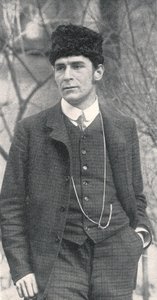
      § 4The artist

      Франц Марк

      Франц Марк

      1880 - 1916, Германия

      Quick facts about Франц Марк

      • Artistic Movement Or Style: Немецкий экспрессионизм
      • Artists Or Movements Influenced By This Artist:
        • Абстрактное искусство
        • Синий Rider
      • Artists Who Influenced This Artist:
        • Ван Гог
        • Деланье
      • Date Of Birth: 8 февраля 1880 г.
      • Date Of Death: 4 марта 1916 г.
      • Full Name: Франц Moritz Wilhelm Marc
      • Nationality: Германец
      • Notable Artworks:
        • Кот на красном полотне
        • Чёрный жеребец
        • Башня синих лошадей
      • Place Of Birth: Мюнхен, Германия

      Биография художника

      A Life Immersed in Color and Spirit

      Franz Moritz Wilhelm Marc, born in Munich in 1880, was a painter whose brief but intensely focused career irrevocably altered the course of German Expressionism. His story is one of profound spiritual seeking translated into a vibrant visual language, a quest to understand the essence of life through the purity he found in the natural world—particularly within the animal kingdom. Initially influenced by his father, Wilhelm Marc, a landscape painter, young Franz’s artistic path wasn't immediately certain. He briefly considered theology, grappling with questions of faith and existence before ultimately dedicating himself to art at the Academy of Fine Arts in Munich. These early explorations into religious thought would remain deeply embedded within his work, shaping his belief that art could be a conduit for spiritual experience. His academic training provided him with technical foundations, but it was encounters with the works of Vincent van Gogh during visits to Paris that truly ignited his artistic vision. Van Gogh’s emotive use of color and raw expression resonated profoundly with Marc, liberating him from conventional techniques and setting him on a path toward a more subjective and emotionally charged style.

      The Blue Rider and a New Artistic Vision

      Marc's artistic development wasn’t solitary; it flourished within the dynamic context of early 20th-century Munich. He experimented with various artist groups, including the Neue Künstlervereinigung München, before co-founding *Der Blaue Reiter* (The Blue Rider) in 1911 alongside Wassily Kandinsky. This wasn’t merely a group or an exhibition series; it was a philosophical and artistic revolution. *Der Blaue Reiter* sought to move beyond mere representation, aiming instead to express inner spiritual truths through abstraction and symbolic color. The journal of the same name became a platform for disseminating these ideas, showcasing not only their own work but also that of other forward-thinking artists and exploring diverse cultural influences from folk art to primitive sculpture. Marc’s contributions during this period were pivotal. He moved away from depicting landscapes as static scenes, instead focusing on animals—horses, deer, foxes—as vessels of spiritual energy. These weren’t simply animal portraits; they were symbolic representations of innocence, harmony, and a connection to the natural world that he believed humanity had lost. The influence of Robert Delaunay’s exploration of abstract forms and vibrant colors further propelled Marc toward simplification and heightened emotional expression in his work. Paintings like *The Tiger* (1912) and *Red Deer* (1912) exemplify this shift, showcasing bold color choices and a growing focus on the inherent qualities of his subjects rather than realistic depiction.

      Symbolism, Color, and the Essence of Being

      Marc’s artistic style is immediately recognizable for its distinctive use of color and form. He didn't employ color descriptively; instead, he imbued it with symbolic meaning. Blue represented spirituality and masculinity, yellow signified joy and femininity, and red embodied violence and materiality. These weren’t arbitrary choices but a carefully constructed system designed to convey specific emotional and philosophical ideas. His animals aren’t merely subjects; they are embodiments of these concepts. The simplification of forms—reducing figures to their essential shapes—further emphasized the underlying spiritual essence he sought to capture. *The Tower of Blue Horses* (1913), sadly lost during World War II, is perhaps the most iconic example of this approach, a powerful and evocative composition that encapsulates his artistic vision. He believed animals possessed an inherent purity and connection to nature that humans had forfeited through societal constraints and intellectualization. By portraying them with such reverence and symbolic weight, Marc sought to remind viewers of this lost harmony and inspire a deeper appreciation for the natural world. His work wasn’t about depicting *what* he saw but rather *how* he felt—a deeply personal and spiritual response to his surroundings.

      Influences and Development

      Marc's artistic journey was shaped by a confluence of influences. Initially, his father’s landscape paintings provided a foundation in observation and technique. However, it was the encounter with Vincent van Gogh that truly transformed his approach. Van Gogh’s expressive brushwork, intense colors, and emotional honesty resonated deeply with Marc, liberating him from academic constraints and encouraging him to prioritize feeling over representation. The Impressionists, particularly Monet, also played a role in broadening his palette and exploring new ways of capturing light and atmosphere. Furthermore, Marc's time in Paris exposed him to the burgeoning avant-garde movements, including Cubism and Fauvism, which subtly influenced his later work. He was fascinated by the works of Paul Gauguin, particularly Gauguin’s use of symbolism and vibrant colors to convey spiritual themes. The philosophical ideas of Eastern religions—particularly Buddhism—also exerted a significant influence on Marc's thinking, informing his belief in the interconnectedness of all things and the importance of living in harmony with nature.

      A Tragic End and Lasting Legacy

      The outbreak of World War I in 1914 dramatically altered Marc’s life and artistic trajectory. Despite seeking exemption due to his status as an artist, he was drafted into the German army, serving as a cavalryman. The horrors of war deeply affected him, yet even amidst the chaos, he continued to paint, finding solace and meaning in his art. Tragically, Franz Marc died on March 4, 1916, at the Battle of Verdun, a devastating loss for the art world. His untimely death cut short a career brimming with potential, but it also cemented his place as a pivotal figure in modern art history. His work continues to resonate today, influencing generations of artists and captivating audiences with its emotional depth and spiritual resonance. Marc’s paintings are exhibited in major museums worldwide, including the Lenbachhaus in Munich, which holds an extensive collection of his work. He is remembered not only as a pioneer of German Expressionism but also as a visionary artist who dared to explore the profound connection between art, spirituality, and the natural world—a legacy that continues to inspire awe and contemplation. His artistic vision remains a testament to the power of art to transcend the material realm and touch upon something deeper within the human spirit.

      § 5Comparanda

      § 6Questions

      Краткая справка

      • Artistic style: Color Field
      • Influences: Van Gogh
      • Subject or theme: Nature, Spirit
      • Notable elements: Animals, chairs

      § 7Cite this entry

      AllPaintingsStore.com, “Франц Марк, untitled (9075)”, https://allpaintingsstore.com/ru/art/franz-marc-untitled-9075-9GEVDZ-en/ArtistReproduction/ (accessed 1 Октябрь 2026).

      § 8The reproduction

      Масляная репродукция ручной работы

      Картина маслом на холсте в выбранном вами размере и раме, написанная на заказ нашими художниками. ( Переключиться на печать Перейти к цифровым изображениям)

      It is specified on the order sheet in the margin; the present state of that sheet reads as follows.

      untitled (9075)

      Материал репродукции

      Размер репродукции

      -

      Ведущий мастер элитного уровня

      Более высокая детализация, изысканность и дополнительное время на создание работы

      -

      Рама для репродукции

      -

      -

      Для произведений искусства или репродукций, размер которых превышает 105 см (приблизительно 41 дюйм) по любой из сторон, рама будет доставлена в разобранном виде (в виде комплекта). Этот метод обеспечивает безопасную доставку и предотвращает повреждения при транспортировке.

      Требуется профессиональная сборка — это не продукт для самостоятельной сборки (DIY).
      Комплект должен быть собран, а холст натянут опытным мастером по багетным рамам с использованием клеевого ПВА (не входит в комплект), струбцин для натяжки холста и зажимов, чтобы удерживать подрамник ровным до полного высыхания клея. Неправильная сборка или неравномерное натяжение холста могут привести к необратимому повреждению произведения искусства и не являются гарантийным случаем.

      • В комплект входят все бруски из массива дерева, точно вырезанные по размеру.

      • Собирается с помощью предоставляемых винтов, а также столярного клея для угловых соединений, который не входит в комплект и должен быть приобретен вашим мастером.

      • Требуются профессиональные инструменты, не входящие в комплект: щипцы для натяжки холста (натяжитель) и зажимы, чтобы удерживать рейки ровно во время высыхания клея.

      Важно:
      Для соединения углов требуется клей для дерева, перекладины необходимо зафиксировать струбцинами до полного высыхания клея, а для натяжки холста на собранную раму требуются щипцы для натяжки холста. Ни один из этих инструментов не входит в комплект. Пожалуйста, убедитесь в наличии опытного мастера по багетным работам перед заказом рамы такого размера.

      Экспликация

      -

      -

      Защитный лак

      Глянцевый лак (насыщает цвета, защищает от воздействия света и влаги)

      -

      Настроить мою картину

      Примеры возможных изменений: замена лица на фото клиента; добавление домашнего питомца (например, замена кошки на собаку); добавление скрытого сообщения на фоне; изменение пейзажа или элементов фона.

      -

      Срочно

      Доставка по всему миру () за 3–4 недели вместо стандартных 5 недель. (30 Октябрь). Без компромиссов в качестве.

      -

      Экспресс-доставка

      Доставка по всему миру () в течение 5 недель. (6 Ноябрь).

      Включено

      Итоговая стоимость

      $ 258

      Included with every order

      • Бесплатная экспресс-доставка по всему миру
      • Высококачественный льняной холст
      • Полное страхование при транспортировке
      • Гарантия возврата таможенных пошлин
      • Гарантия точного цветового соответствия
      • 100-дневный период возврата (только при обнаружении дефектов)
      • Гарантия возврата 100% средств
      • Скидка при заказе нескольких работ
      Order sheet